
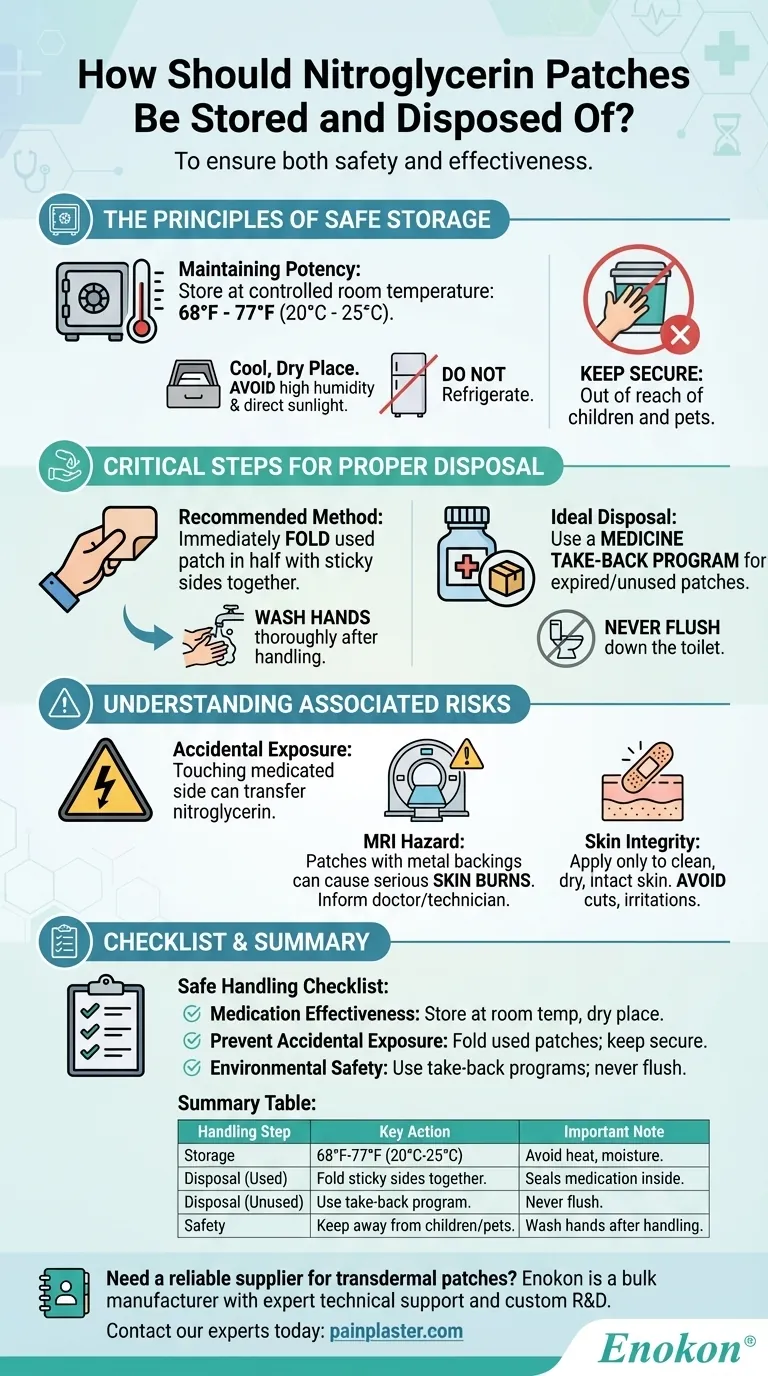
To ensure both safety and effectiveness, nitroglycerin patches must be stored at a controlled room temperature, away from heat and moisture, and kept out of the reach of children. When disposing of a used patch, fold it in half with the sticky sides together and discard it securely. For any unused or expired patches, the safest method is a medicine take-back program.
The core principle is that nitroglycerin requires careful handling from the moment you receive it to the moment you dispose of it. Proper storage preserves the medication's integrity, while correct disposal prevents accidental exposure to others and protects the environment.
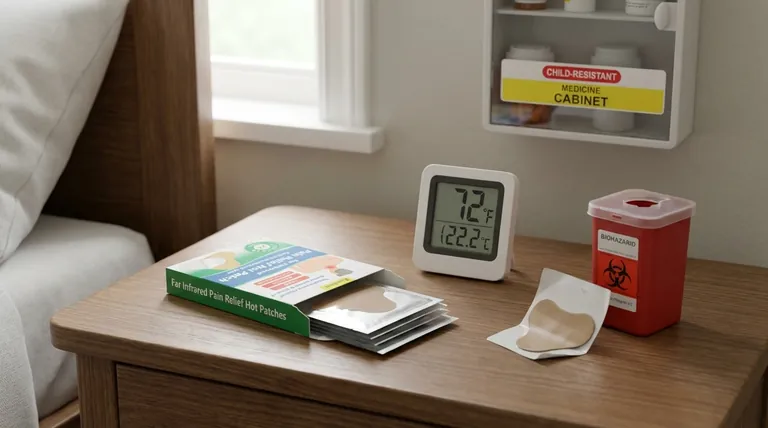
The Principles of Safe Storage
Proper storage is not just about keeping the patches organized; it is essential for maintaining the medication's potency and ensuring it works as intended to prevent angina.
Maintaining Potency with Temperature Control
Nitroglycerin patches should be stored at a controlled room temperature, ideally between 68°F and 77°F (20°C to 25°C).
Brief exposure to temperatures between 59°F and 86°F (15°C to 30°C) is generally acceptable, but prolonged exposure to heat or direct sunlight can degrade the medication.
Crucially, do not refrigerate the patches. Store them in a cool, dry place like a dresser drawer or cabinet, avoiding the high humidity of a bathroom.
Keeping the Medication Secure
Keep all nitroglycerin patches—both new and used—well out of the reach of children and pets. Accidental contact or ingestion can be extremely dangerous.
The Critical Steps for Proper Disposal
Disposing of nitroglycerin patches correctly is a critical safety measure. The active medication remaining in a used patch can still be potent enough to harm someone who comes into contact with it.
The Recommended Disposal Method
After removing a patch, immediately fold it in half with the sticky, medication-containing sides together. This seals the remaining drug inside and minimizes the risk of accidental exposure.
Wash your hands thoroughly after handling any patch, whether new or used.
Why Flushing is Dangerous
Never dispose of nitroglycerin patches by flushing them down the toilet. This can introduce the medication into the water supply, posing a risk to the environment.
Using Medicine Take-Back Programs
The ideal way to dispose of any outdated or unneeded patches is through a medicine take-back program. These programs ensure that medications are disposed of safely and responsibly.
Understanding the Associated Risks
Handling any potent medication requires awareness of potential hazards. Understanding these risks helps reinforce the importance of proper storage and disposal protocols.
The Risk of Accidental Exposure
Simply touching the medicated side of the patch can transfer nitroglycerin through your skin. This is why folding the patch is so important and why you should always wash your hands after application or removal.
The Hazard During an MRI
Some patches contain aluminum or other metal components in their backing. This metal can heat up during an MRI scan and cause serious skin burns. Always inform your doctor and the MRI technician that you use a nitroglycerin patch before any scan.
The Importance of Skin Integrity
Apply patches only to clean, dry, and intact skin. Avoid areas with cuts, scars, irritation, or rashes, as this can affect how the medication is absorbed. If a patch falls off, do not reapply it; use a new one.
A Checklist for Safe Handling
Your approach to handling these patches directly impacts their effectiveness and the safety of those around you.
- If your primary focus is medication effectiveness: Store patches at room temperature (20-25°C or 68-77°F) in a dry place, away from direct sunlight and moisture.
- If your primary focus is preventing accidental exposure: Always fold used patches sticky-side together before disposal and keep all patches securely out of the reach of children and pets.
- If your primary focus is environmental safety: Use a certified medicine take-back program for any expired or unused patches and never flush them.
By following these deliberate steps, you ensure you are managing your medication responsibly and safely.
Summary Table:
| Handling Step | Key Action | Important Note |
|---|---|---|
| Storage | Keep at 68°F-77°F (20°C-25°C) | Do not refrigerate; avoid heat and moisture. |
| Disposal (Used Patch) | Fold in half, sticky sides together. | Seals medication inside to prevent exposure. |
| Disposal (Unused/Expired) | Use a medicine take-back program. | Never flush patches down the toilet. |
| Safety | Keep out of reach of children and pets. | Wash hands after handling any patch. |
Need a reliable supplier for transdermal patches like nitroglycerin?
As Enokon, a bulk manufacturer of reliable transdermal patches and pain plasters, we provide healthcare and pharma distributors with high-quality products backed by expert technical support. Our custom R&D and development services ensure you get the exact patch formulation and design you need.
Contact our experts today to discuss your requirements and benefit from our manufacturing expertise.
Visual Guide
Related Products
- Far Infrared Heat Pain Relief Patches Transdermal Patches
- Icy Hot Menthol Medicine Pain Relief Patch
- Silicone Scar Sheets Patch Transdermal Drug Patch
- Menthol Gel Pain Relief Patch
- Mugwort Wormwood Pain Relief Patch for Neck Pain
People Also Ask
- Why is the selection of matrix materials critical when developing customized transdermal patches? Optimize Efficacy
- What are the clinical advantages of local transdermal delivery systems? Unlock Safer, More Effective Pain Relief Solutions
- What are the physical impacts of external heat exposure on the performance and safety of transdermal patches? - Guide
- What role does a skin tolerance scoring system play in the safety evaluation of transdermal patches? Key Safety Metrics
- How does high-purity far-infrared ceramic powder contribute to the efficacy of far-infrared physical therapy patches?
















