
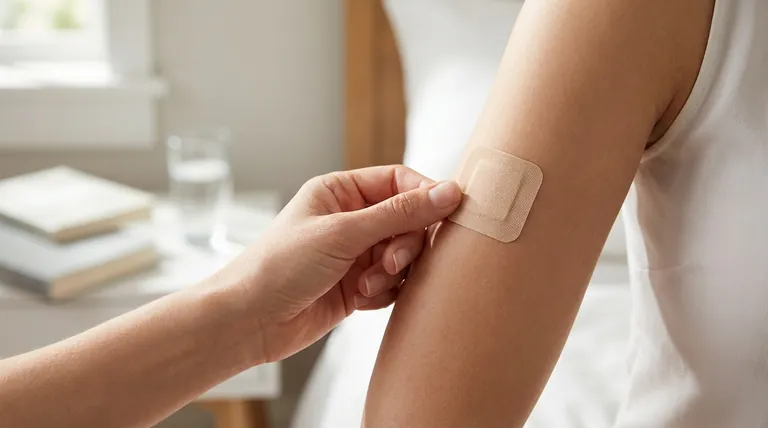
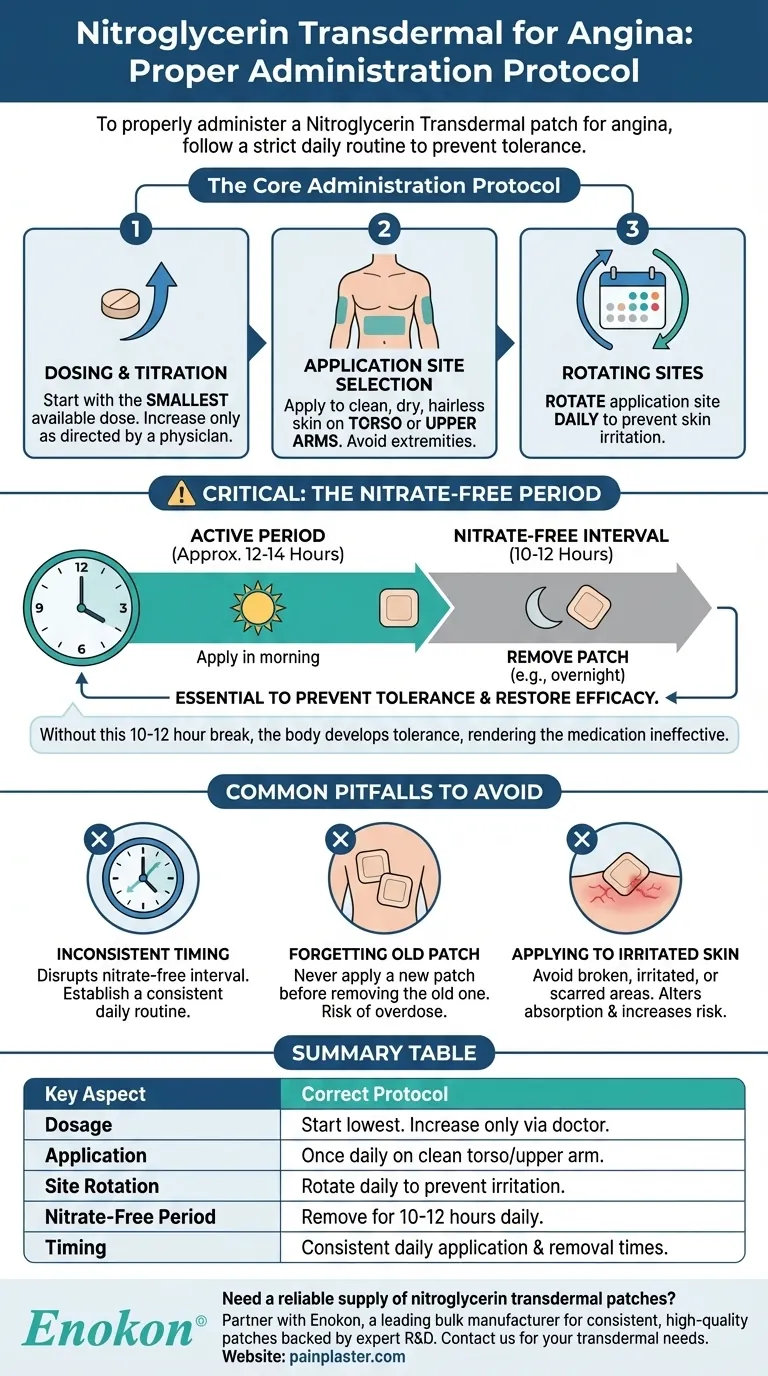
To properly administer a Nitroglycerin Transdermal patch for angina, apply one patch to the skin once daily, typically in the morning. It is crucial to start with the lowest available dose and only increase if directed by a healthcare professional. To maintain the medication's effectiveness, you must remove the patch for a "nitrate-free" period of 10 to 12 hours each day, usually overnight.
The single most critical factor for the long-term success of nitroglycerin patch therapy is the daily 10-12 hour nitrate-free interval. Without this break, the body develops tolerance, rendering the medication ineffective for preventing angina.
The Core Administration Protocol
Proper administration involves three key elements: correct dosing, strategic site selection, and precise timing. Each step is designed to ensure a consistent and effective therapeutic level of medication throughout the day.
Dosing and Titration
Treatment should always begin with the patch delivering the smallest available dose of nitroglycerin. This "start low, go slow" approach helps minimize potential side effects, such as headaches or dizziness, while still providing therapeutic benefit. Your physician will guide any necessary upward adjustments (titration) based on your specific response.
Application Site Selection
The patch should be applied to a clean, dry, and hairless area of skin. Recommended sites are on the torso or upper arms. Avoid applying patches to extremities below the knees or elbows, as absorption can be less reliable in these areas due to differences in skin and blood flow.
Rotating Application Sites
To prevent skin irritation, it is essential to rotate the application site each day. Do not use the same spot for several days. If you must shave an area, do so a day in advance to avoid irritating the skin right before patch application.
The Critical Role of the Nitrate-Free Period
Continuous exposure to nitrates causes the body to become less responsive to their effects, a phenomenon known as tolerance or tachyphylaxis. The prescribed "off" period is not an optional step; it is fundamental to the therapy's success.
How Tolerance Develops
When nitroglycerin is constantly present in the bloodstream, the blood vessels' ability to relax in response to the drug diminishes. Over time, the same dose produces less and less effect, leaving you unprotected from angina attacks.
How the "Off" Period Restores Efficacy
Removing the patch for 10 to 12 hours allows your body's cellular mechanisms to reset their sensitivity to nitrates. This ensures that when you apply a new patch the next day, it will be fully effective at preventing angina.
A Typical Schedule
The most common schedule involves applying the patch in the morning and removing it in the evening before bed. This provides protection during your most active hours and allows for the necessary nitrate-free interval while you sleep.
Common Pitfalls to Avoid
Understanding potential issues can help ensure your treatment remains safe and effective. Adherence to the prescribed regimen is the best way to prevent complications.
Inconsistent Timing
Applying and removing the patch at different times each day can disrupt the nitrate-free interval and lead to either breakthrough angina or the development of tolerance. Establishing a consistent daily routine is key.
Forgetting to Remove the Old Patch
Before applying a new patch, always ensure you have located and removed the old one. Leaving two patches on simultaneously can lead to an overdose, causing severe headaches, dizziness, and a dangerous drop in blood pressure.
Applying to Irritated Skin
Never apply a patch to broken, irritated, or scarred skin. This can alter the rate of medication absorption and increase the risk of adverse skin reactions.
Making the Right Choice for Your Goal
Adhering to the correct protocol ensures you get the maximum benefit from your medication. Your daily actions directly influence the therapy's success.
- If your primary focus is preventing tolerance: Strictly enforce the 10-12 hour nitrate-free period every single day.
- If your primary focus is minimizing side effects: Start with the lowest possible dose and only increase it under the direct supervision of your doctor.
- If your primary focus is consistent protection: Create a daily routine for applying and removing the patch at the same times each day.
Understanding how this therapy works empowers you to manage your condition effectively and safely.
Summary Table:
| Key Aspect | Correct Protocol |
|---|---|
| Dosage | Start with the lowest available dose. Increase only if directed by a doctor. |
| Application | Apply once daily to a clean, dry, hairless area on the torso or upper arm. |
| Site Rotation | Rotate the application site daily to prevent skin irritation. |
| Nitrate-Free Period | Remove the patch for 10-12 hours daily (e.g., overnight) to prevent tolerance. |
| Timing | Apply and remove the patch at the same time each day for consistent protection. |
Need a reliable supply of nitroglycerin transdermal patches?
As Enokon, a leading bulk manufacturer of medical-grade transdermal patches, we understand that precise dosing and consistent drug delivery are critical for effective angina management. Our technical expertise ensures every patch meets the highest standards for reliability and performance.
Partner with us for your transdermal needs:
- Healthcare & Pharma Brands: Offer your patients a trusted, effective delivery system for nitroglycerin and other APIs.
- Distributors: Source high-quality, consistent patches backed by rigorous R&D and quality control.
Let us support your product development with custom R&D and manufacturing solutions. Contact our experts today to discuss your requirements.
Visual Guide
Related Products
- Icy Hot Menthol Medicine Pain Relief Patch
- Menthol Gel Pain Relief Patch
- Far Infrared Heat Pain Relief Patches Transdermal Patches
- Silicone Scar Sheets Patch Transdermal Drug Patch
- Mugwort Wormwood Pain Relief Patch for Neck Pain
People Also Ask
- What should you consider when choosing between a pain relief patch and a cream? Key Factors for Effective Pain Management
- What are the benefits of using pain relief patches compared to oral medications? Targeted Relief with Fewer Side Effects
- What is the shelf-life of the pain relief patch? Ensure Potency and Safety for Your Patients
- What factors should be considered when choosing between pills and patches for pain relief? A Guide to Personalized Pain Management
- What is the duration of pain relief provided by the patches? Find the Right Patch for Your Pain



















