
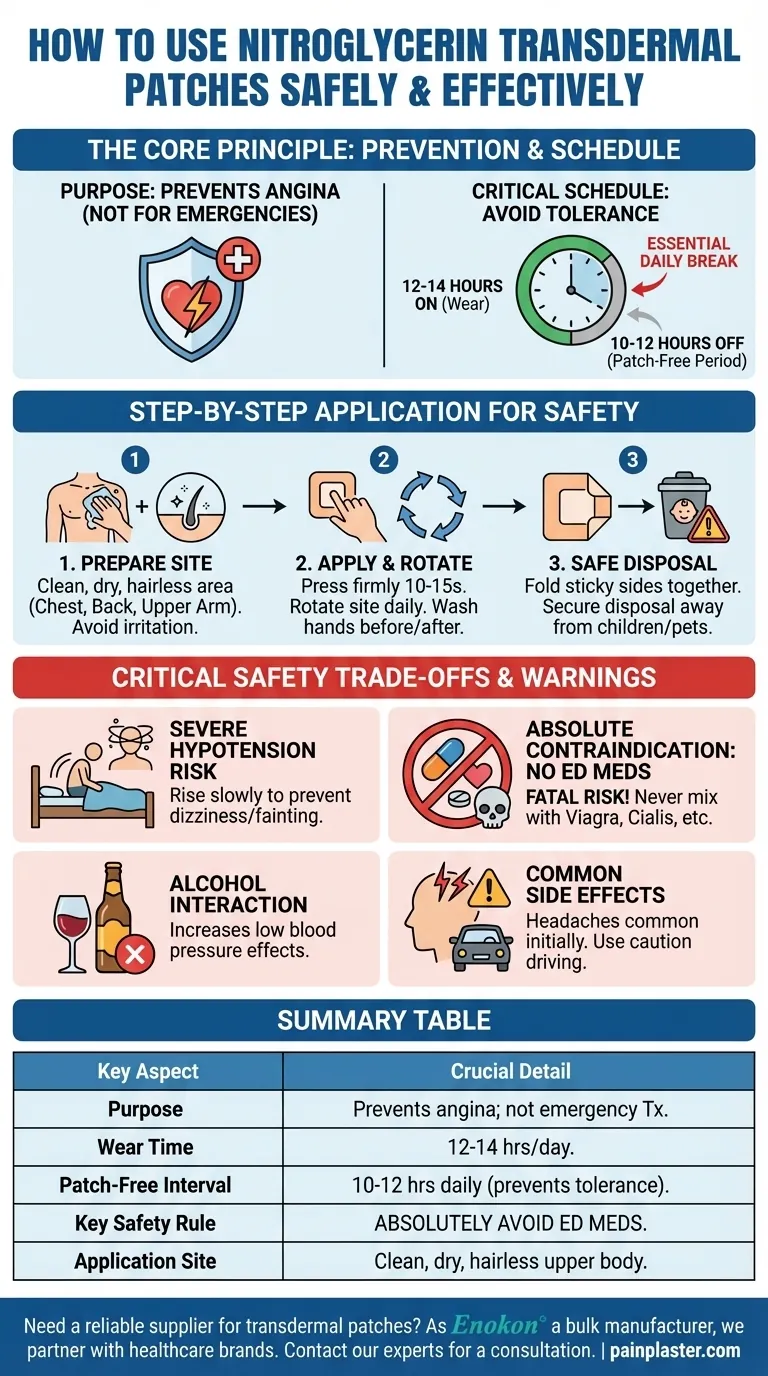
To use a nitroglycerin transdermal patch correctly, wash your hands and apply one patch to a clean, dry, and hairless area of skin on your upper body. The patch is typically worn for 12 to 14 hours and then removed, followed by a "patch-free" period of 10 to 12 hours. Never wear more than one patch at a time and always follow your doctor's prescribed schedule exactly.
The primary goal of the nitroglycerin patch is to prevent angina (chest pain), not to treat an attack that is already happening. Its effectiveness depends entirely on a strict daily schedule that includes a patch-free interval to prevent your body from building a tolerance to the medication.

The Core Principle: Preventing Angina
Nitroglycerin transdermal systems are designed for long-term management of angina pectoris, a type of chest pain caused by coronary artery disease. Understanding its purpose is key to using it correctly.
For Prevention, Not Emergency Treatment
The patch delivers nitroglycerin slowly through the skin. This gradual release is effective for preventing angina episodes over many hours.
However, it works too slowly to stop an acute, ongoing angina attack. For that, you would need a faster-acting form of nitroglycerin as prescribed by your doctor.
The Critical "Patch-Free" Interval
You will be instructed to wear the patch for part of the day (e.g., 12-14 hours) and remove it for the remainder (e.g., 10-12 hours).
This nitrate-free period is essential. Without this daily break, your body can develop a tolerance, making the medication less effective at preventing chest pain.
Why You Must Not Alter the Schedule
Adhering to the prescribed timing is non-negotiable for both safety and effectiveness.
Do not change the schedule to avoid side effects like headaches, and never stop using the medication suddenly without your doctor's guidance, as this can worsen your condition.
Step-by-Step Application for Maximum Safety
Proper application ensures you receive the correct dose and minimizes skin irritation.
Preparing the Application Site
Choose a clean, dry, and relatively hair-free area on your chest, back, or upper arm. Avoid any areas with cuts, rashes, or irritation.
Do not apply the patch to areas below the knee or elbow.
Applying and Removing the Patch
Wash your hands thoroughly with soap and water before and after handling a patch. When applying a new patch, press it firmly onto the skin with your palm for about 10-15 seconds.
Always remove the old patch before applying a new one. To avoid skin irritation, rotate the application site each day.
Safe Disposal
After removal, fold the used patch in half with the sticky sides together. Dispose of it in a manner that keeps it safely away from children and pets, as it still contains active medication.
Understanding the Critical Trade-offs
While highly effective, nitroglycerin carries significant risks if not used with caution.
Severe Hypotension (Low Blood Pressure)
Nitroglycerin widens blood vessels, which can cause a significant drop in blood pressure. This can lead to dizziness, lightheadedness, and fainting.
To minimize this risk, rise slowly when getting up from a sitting or lying position. The risk of hypotension is often greater in elderly patients.
Absolute Contraindication: ED Medications
Never take erectile dysfunction (ED) medicines such as sildenafil (Viagra), tadalafil (Cialis), or vardenafil (Levitra) while using nitroglycerin.
This combination can cause a sudden, severe, and potentially fatal drop in blood pressure.
Alcohol Interaction
Drinking alcohol can increase the blood pressure-lowering effects of nitroglycerin, worsening side effects like dizziness and lightheadedness.
Common Side Effects
Headaches are a common side effect, especially when you first start treatment. It is important not to alter your medication schedule to avoid them; discuss any persistent or severe headaches with your doctor.
Be cautious when driving or performing any activity that requires alertness until you know how the medication affects you.
Making the Right Choice for Your Health
Your active participation is crucial for managing your condition safely and effectively. Always have an open dialogue with your healthcare provider about your medical history, including any heart problems, stroke, or head injuries.
- If your primary focus is consistent angina prevention: Strictly follow the prescribed 12-14 hour "on" and 10-12 hour "off" schedule to prevent tolerance and ensure the medication works effectively.
- If your primary focus is personal safety: Immediately avoid all ED medications and alcohol, and make a habit of rising slowly from a seated or lying position to prevent dizziness and falls.
By understanding how and why the medication works, you can use it confidently to manage your health.
Summary Table:
| Key Aspect | Crucial Detail |
|---|---|
| Purpose | Prevents angina attacks; not for emergency treatment. |
| Wear Time | 12 to 14 hours per day. |
| Patch-Free Interval | 10 to 12 hours daily to prevent tolerance. |
| Key Safety Rule | Absolutely avoid ED medications (e.g., Viagra). |
| Application Site | Clean, dry, hairless skin on chest, back, or upper arm. |
Need a reliable supplier for nitroglycerin or other transdermal patches?
As Enokon, a bulk manufacturer of reliable transdermal patches and pain plasters, we partner with healthcare and pharmaceutical distributors and brands. Our technical expertise ensures high-quality, consistent products and supports custom R&D for your specific needs.
Let's discuss how we can support your product line. Contact our experts today for a consultation.
Visual Guide
Related Products
- Icy Hot Menthol Medicine Pain Relief Patch
- Menthol Gel Pain Relief Patch
- Far Infrared Heat Pain Relief Patches Transdermal Patches
- Silicone Scar Sheets Patch Transdermal Drug Patch
- Mugwort Wormwood Pain Relief Patch for Neck Pain
People Also Ask
- What should you consider when choosing between a pain relief patch and a cream? Key Factors for Effective Pain Management
- Can the pain relief patch be used with oral pain relief products? Avoid Dangerous Drug Interactions
- What alternatives exist for pain relief patches? Compare systemic meds & physical therapy
- What factors should be considered when choosing between pills and patches for pain relief? A Guide to Personalized Pain Management
- What are the benefits of using pain relief patches compared to oral medications? Targeted Relief with Fewer Side Effects



















