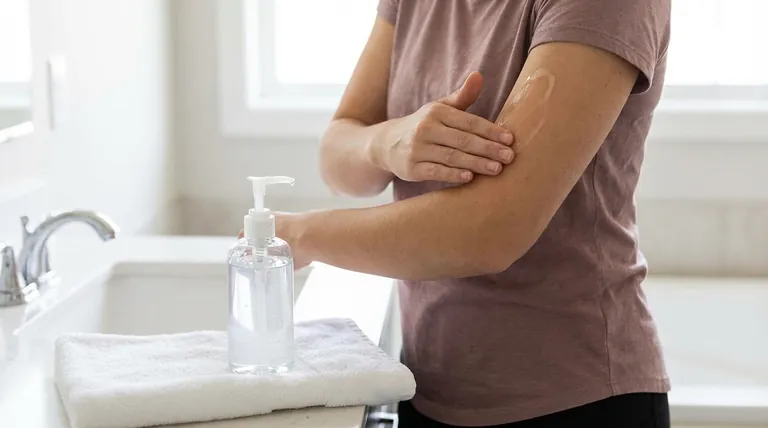
To properly apply oxybutynin gel, you must first wash and dry both your hands and the application site, which can be the abdomen, upper arms, shoulders, or thighs. Dispense the prescribed dose—either from a single-use packet or a metered-dose pump—and rub it gently into the skin until the gel is completely dry.
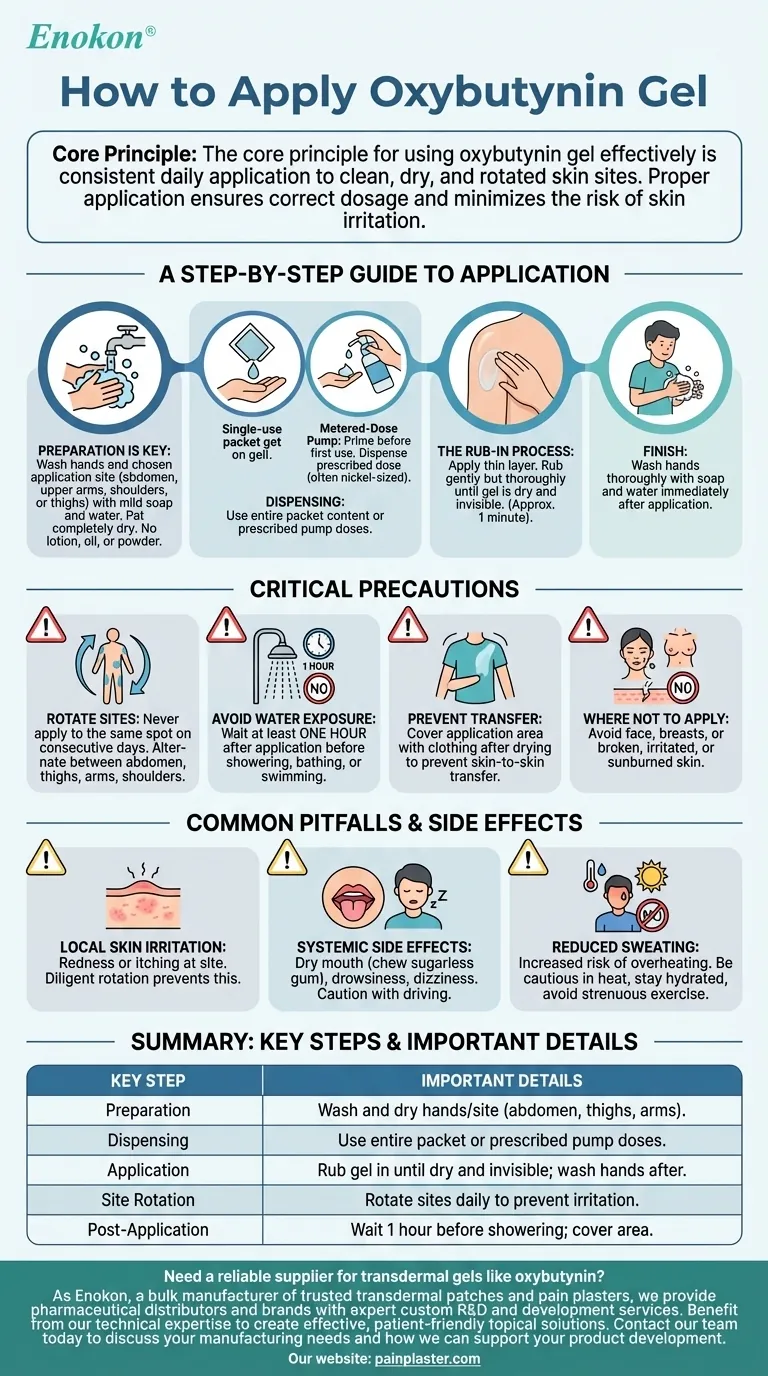
The core principle for using oxybutynin gel effectively is consistent daily application to clean, dry, and rotated skin sites. Proper application ensures correct dosage and minimizes the risk of skin irritation.
A Step-by-Step Guide to Application
Correct application is not just a suggestion; it is essential for the medication to work as intended. Following a consistent routine will ensure you receive the proper dose and minimize potential issues.
H3: Preparation is Key
Before touching the medication, wash your hands and the chosen application site with mild soap and water. Pat the skin completely dry. Do not apply lotion, oil, or powder to the area, as this can interfere with absorption.
H3: Dispensing the Medication
Your medication will come in one of two forms.
For single-use packets, simply tear open the packet and squeeze the entire contents onto your palm or directly onto the application site.
For a metered-dose pump, you may need to prime it before the first use by pumping it a few times as directed. Then, dispense the prescribed number of pumps. One dose is often about the size of a nickel.
H3: The Rub-in Process
Apply a thin layer of the gel to the skin. Rub it in gently but thoroughly until no gel is visible and the area is dry to the touch. This usually takes about a minute.
Once the application is complete, wash your hands thoroughly with soap and water.
Critical Precautions for Safety and Efficacy
Understanding what to do after application is just as important as the application itself. These steps protect you and others while ensuring the medication is fully absorbed.
H3: Rotate Your Application Sites
Never apply the gel to the exact same spot on consecutive days. Rotating sites between the abdomen, thighs, and upper arms/shoulders is crucial for preventing skin redness and irritation.
H3: Avoid Water Exposure
You must wait at least one hour after applying the gel before showering, bathing, or swimming. This waiting period allows the medication to be fully absorbed through your skin.
H3: Prevent Transfer to Others
After the gel has dried, cover the application area with clothing. This prevents the medication from accidentally transferring to another person through skin-to-skin contact.
H3: Where Not to Apply
Do not apply oxybutynin gel to your face, breasts, or any skin that is broken, irritated, or sunburned.
Common Pitfalls and Side Effects
While transdermal application reduces some side effects compared to oral tablets, you must remain aware of potential issues.
H3: Local Skin Irritation
The most common side effect is redness or itching at the application site. Diligently rotating sites is the most effective way to prevent this.
H3: Systemic Side Effects
Oxybutynin can cause dry mouth, drowsiness, or dizziness. Chewing sugarless gum can help with dry mouth. Avoid driving or operating heavy machinery until you know how the medication affects you.
H3: Reduced Sweating and Heat Sensitivity
This medication can decrease your body's ability to sweat, putting you at higher risk for overheating. Be cautious in hot weather, avoid strenuous exercise in the heat, and stay well-hydrated.
How to Apply This to Your Treatment
Consistency is the most important factor in managing your symptoms with this medication. Tailor your routine to maximize benefits and minimize risks.
- If your primary focus is maximizing absorption: Always apply the gel at the same time each day to completely clean, dry skin and strictly adhere to the one-hour waiting period before any water contact.
- If your primary focus is minimizing skin irritation: Create a clear rotation schedule for your application sites (e.g., left arm, right arm, left abdomen, right abdomen) and never re-use a site for several days.
- If your primary focus is managing potential side effects: Stay hydrated with water to combat dry mouth, be cautious about activities that require full alertness, and avoid situations that could lead to overheating.
By incorporating this simple process into your daily routine, you can ensure your treatment is both safe and effective.
Summary Table:
| Key Step | Important Details |
|---|---|
| Preparation | Wash and dry hands and application site (abdomen, thighs, arms). |
| Dispensing | Use entire single-use packet or prescribed number of pump doses. |
| Application | Rub gel in gently until dry and invisible; wash hands after. |
| Site Rotation | Rotate application sites daily to prevent skin irritation. |
| Post-Application | Wait 1 hour before showering; cover area with clothing. |
Need a reliable supplier for transdermal gels like oxybutynin?
As Enokon, a bulk manufacturer of trusted transdermal patches and pain plasters, we provide pharmaceutical distributors and brands with expert custom R&D and development services. Benefit from our technical expertise to create effective, patient-friendly topical solutions.
Contact our team today to discuss your manufacturing needs and how we can support your product development.
Visual Guide
Related Products
- Menthol Gel Pain Relief Patch
- Herbal Pain Relief Cream Pain Relieving Creams
- Icy Hot Menthol Medicine Pain Relief Patch
- Lidocaine Hydrogel Pain Relief Patch for Pain Relief
- Cooling Fever Patches Color Change Cold Fever Patch
People Also Ask
- How effective are pain relief patches for muscle pain? Target Localized Pain with Transdermal Delivery
- How do pain relief patches compare to other pain relief methods? Discover Targeted, Long-Lasting Relief
- Who should consult a healthcare professional before using pain relief patches? Ensure Your Safety with Medical Advice
- Can pregnant women use pain relief patches? Your Essential Guide to Safe Pain Management
- What are some common applications of pain relief patches? Effective Relief for Muscle & Joint Pain