
To properly manage your oxybutynin patches, you must store them in their original, sealed pouches at room temperature, away from heat and moisture. For disposal, the safest method is a medicine take-back program; you should never flush used or unneeded patches down the toilet.
The core principle is to handle both new and used patches with care. Proper storage preserves the medication's effectiveness, while correct disposal prevents accidental exposure to others and protects the environment.
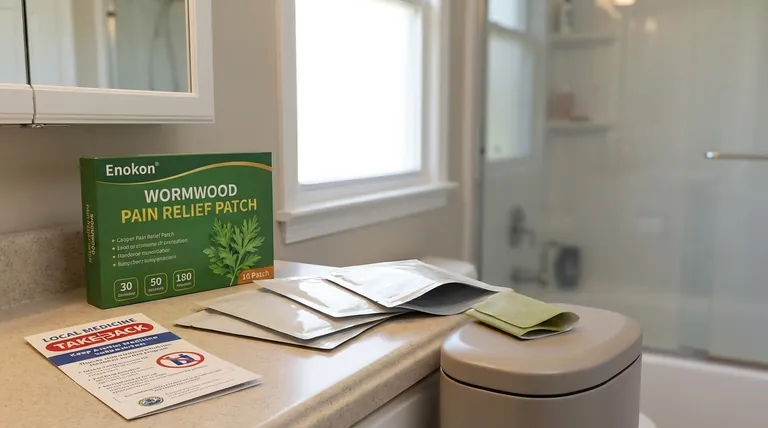
The Principles of Safe Storage
Proper storage is the first step in ensuring your medication works as intended and remains safe. It protects the patch from degradation that can alter its dosage delivery.
Keep Patches in Their Protective Pouch
Each patch is sealed in a protective pouch for a reason. This pouch shields the medication from air and moisture, which can compromise its integrity.
Only open a pouch immediately before you are ready to apply the patch.
Maintain a Stable Environment
Store the pouches at room temperature, away from sources of excess heat or humidity. A medicine cabinet in a bathroom, where steam and temperature fluctuate, is not an ideal location.
Keeping the patches in their original box also helps protect them and keeps the prescribing information readily available.
Ensure Patches Are Out of Reach
Always store oxybutynin patches, both new and used, in a location that is out of sight and reach of children and pets. Even a used patch contains a significant amount of residual medication that can be harmful if ingested or handled improperly.
Correct Disposal to Prevent Harm
A used patch is not inert; it still contains active medication. Disposing of it correctly is a critical safety measure.
Why Flushing Is Not an Option
Flushing patches or other medications down the toilet introduces active pharmaceutical ingredients into the water supply. This can have a negative impact on the environment and aquatic life.
The Gold Standard: Medicine Take-Back Programs
The most responsible way to dispose of unneeded patches is through a community medicine take-back program. These programs are often available at pharmacies, hospitals, or police departments and ensure medications are disposed of safely.
Handling Used Patches Before Disposal
After removing a patch, fold it in half with the sticky sides pressed firmly together. This simple step helps to seal in the remaining medication, reducing the risk of accidental contact or exposure.
Place the folded patch back in its original pouch if possible before discarding it in a trash can that is inaccessible to children or pets.
Understanding the Trade-offs and Risks
Failing to follow proper storage and disposal protocols introduces unnecessary risks. The goal is to get the full therapeutic benefit while minimizing potential harm.
Ineffective Treatment from Improper Storage
Storing patches in a hot or humid environment can damage the adhesive and alter the rate at which the medication is released. This can lead to inconsistent dosing and reduced effectiveness.
Risk of Accidental Exposure
A discarded patch that is not folded and secured can stick to a person or pet, leading to an unintended and potentially dangerous dose of medication. Children are particularly vulnerable to this risk.
Environmental Contamination
Improper disposal contributes to the growing issue of pharmaceutical pollution in our ecosystems. Following correct procedures is a key part of being a responsible medication user.
Making the Right Choice for Your Goal
Managing your medication correctly is simple when you focus on the underlying reason for each step.
- If your primary focus is treatment effectiveness: Always store patches in their sealed, original pouches at room temperature until the moment of application.
- If your primary focus is household safety: Immediately fold used patches sticky-side-in and ensure both new and used patches are stored and disposed of where children and pets cannot reach them.
- If your primary focus is environmental responsibility: Never flush patches and use a medicine take-back program as your default disposal method.
By handling your medication with care from start to finish, you ensure your treatment is safe for you, your family, and the environment.
Summary Table:
| Aspect | Key Action | Why It's Important |
|---|---|---|
| Storage | Keep in sealed pouch at room temperature. | Preserves medication integrity and dosage accuracy. |
| Disposal | Use a medicine take-back program. | Prevents environmental contamination and accidental exposure. |
| Handling Used Patches | Fold sticky sides together before disposal. | Seals in residual medication, reducing risk. |
Need reliable, high-quality transdermal patches? As Enokon, a bulk manufacturer of trusted transdermal patches and pain plasters, we provide pharmaceutical distributors and brands with custom R&D and development expertise. Let us help you deliver safe and effective products to your customers.
Contact our experts today to discuss your manufacturing needs.
Visual Guide

Related Products
- Menthol Gel Pain Relief Patch
- Lidocaine Hydrogel Pain Relief Patch for Pain Relief
- Icy Hot Menthol Medicine Pain Relief Patch
- Herbal Medicated Anti Diarrhea Patch for Digestive Relief
- Asthma Cough and Pain Relief Patch for Adults and Kids
People Also Ask
- How effective are pain relief patches for muscle pain? Target Localized Pain with Transdermal Delivery
- How do pain relief patches compare to other pain relief methods? Discover Targeted, Long-Lasting Relief
- Who should consult a healthcare professional before using pain relief patches? Ensure Your Safety with Medical Advice
- What are the potential side effects of pain relief patches? A Guide to Safe Use & Key Risks
- What are pain relief patches and how do they work? Discover Non-Invasive Pain Management



















