
To properly store a scopolamine transdermal patch, keep it in its sealed foil pouch at room temperature, which is typically between 59-86°F (15-30°C). It is critical to store it away from direct light, heat, and moisture, and always keep it out of the reach of children and pets.
The core principle behind storing and handling scopolamine patches is twofold: protecting the medication's integrity to ensure its effectiveness, and preventing accidental exposure to a potent drug, both before and after its intended use.
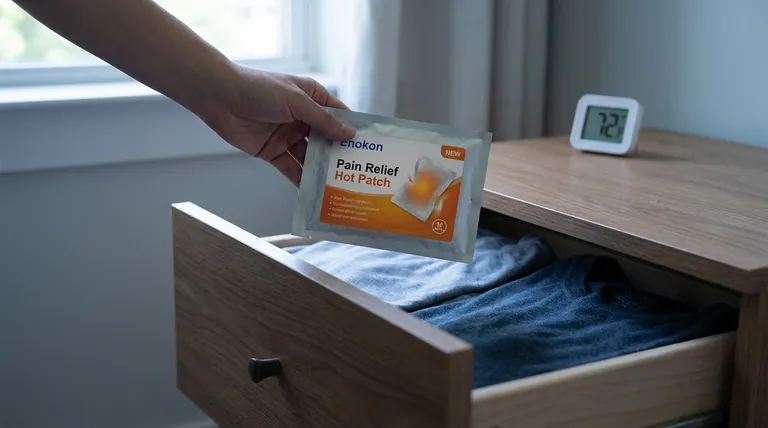
The Principles of Proper Scopolamine Patch Storage
How you store the patch directly impacts its ability to deliver the correct dose of medication. The goal is to maintain the stable environment it was packaged in until the moment of application.
Maintain Room Temperature
The medication is designed to be stable within a specific temperature range. Storing it in a place that gets too hot or too cold, like a car or near a window, can degrade the scopolamine and affect the patch's adhesive.
Keep It Sealed Until Use
Each patch is individually packaged in a foil pouch for a reason. This pouch protects it from air, light, and humidity, all of which can compromise the drug's effectiveness. Only open the pouch when you are ready to apply the patch.
Choose a Safe Location
Scopolamine can be very dangerous if accidentally ingested or applied, especially for children and pets. Store the patches in a secure location, such as a high cabinet or a locked medicine box, where they cannot be found.
Avoid Heat and Moisture
The bathroom medicine cabinet is often a poor choice for storage. The steam and humidity from showers can damage the patch's adhesive and potentially alter the medication over time. A bedroom drawer or closet is a much better option.
The Critical Steps for Safe Disposal
A used scopolamine patch is not empty. It still contains a significant amount of active medication that can be harmful if it comes into contact with someone else.
Why Disposal Matters
The residual drug in a used patch can be absorbed through the skin, causing serious side effects. Proper disposal is not just about being tidy; it is a crucial safety measure.
The "Fold and Throw" Method
The safest and most widely recommended method of disposal is to fold the used patch in half with the sticky sides firmly pressed together. This seals the remaining medication inside.
Secure in the Trash
After folding, immediately throw the patch away in a trash can that is inaccessible to children or pets. Consider a trash can with a secure lid.
Wash Your Hands Thoroughly
After handling a patch—both applying a new one and disposing of a used one—always wash your hands with soap and water. This prevents you from accidentally transferring medication to your eyes or mouth.
Common Pitfalls and Conflicting Advice
You may encounter different instructions for disposal, which can be confusing. It is important to follow the most current and safest guidelines.
To Flush or Not to Flush?
Some older instructions may mention flushing patches down the toilet. However, modern environmental and safety guidelines from health authorities generally advise against this to prevent contaminating the water supply.
The "fold and throw" method is the most consistently recommended and safest approach unless you have access to a specific drug take-back program or a dedicated patch disposal unit.
Never Cut the Patch
You should never cut a scopolamine patch. The patch is designed with a special membrane that controls the rate at which the drug is released. Cutting it destroys this system, which can lead to an unpredictable and potentially dangerous dose of medication.
Making the Right Choice for Your Goal
Following these specific actions will ensure you get the full therapeutic benefit of the patch while keeping yourself and others safe.
- If your primary focus is medication effectiveness: Store the patch in its sealed pouch in a cool, dry place like a bedroom drawer until the moment you apply it.
- If your primary focus is safety for others: Always keep patches—both new and used—out of the sight and reach of children and pets.
- If your primary focus is proper disposal: Immediately after removal, fold the used patch sticky-side-in and discard it in a secure trash receptacle.
By handling your scopolamine patches with care from storage to disposal, you ensure they work safely and effectively as intended.
Summary Table:
| Storage Aspect | Key Guideline |
|---|---|
| Temperature | Room temperature (59-86°F / 15-30°C) |
| Packaging | Keep sealed in original foil pouch until use |
| Location | Cool, dry place away from light, heat, and moisture |
| Safety | Store securely, out of reach of children and pets |
| Disposal | Fold used patch sticky-sides together, discard in secure trash |
Need a reliable supplier for transdermal patches like scopolamine? Partner with Enokon, a bulk manufacturer of high-quality, reliable transdermal patches and pain plasters for healthcare and pharmaceutical distributors and brands. Benefit from our technical expertise for custom R&D and development to create patches that meet strict storage and safety standards. Contact our experts today to discuss your manufacturing needs.
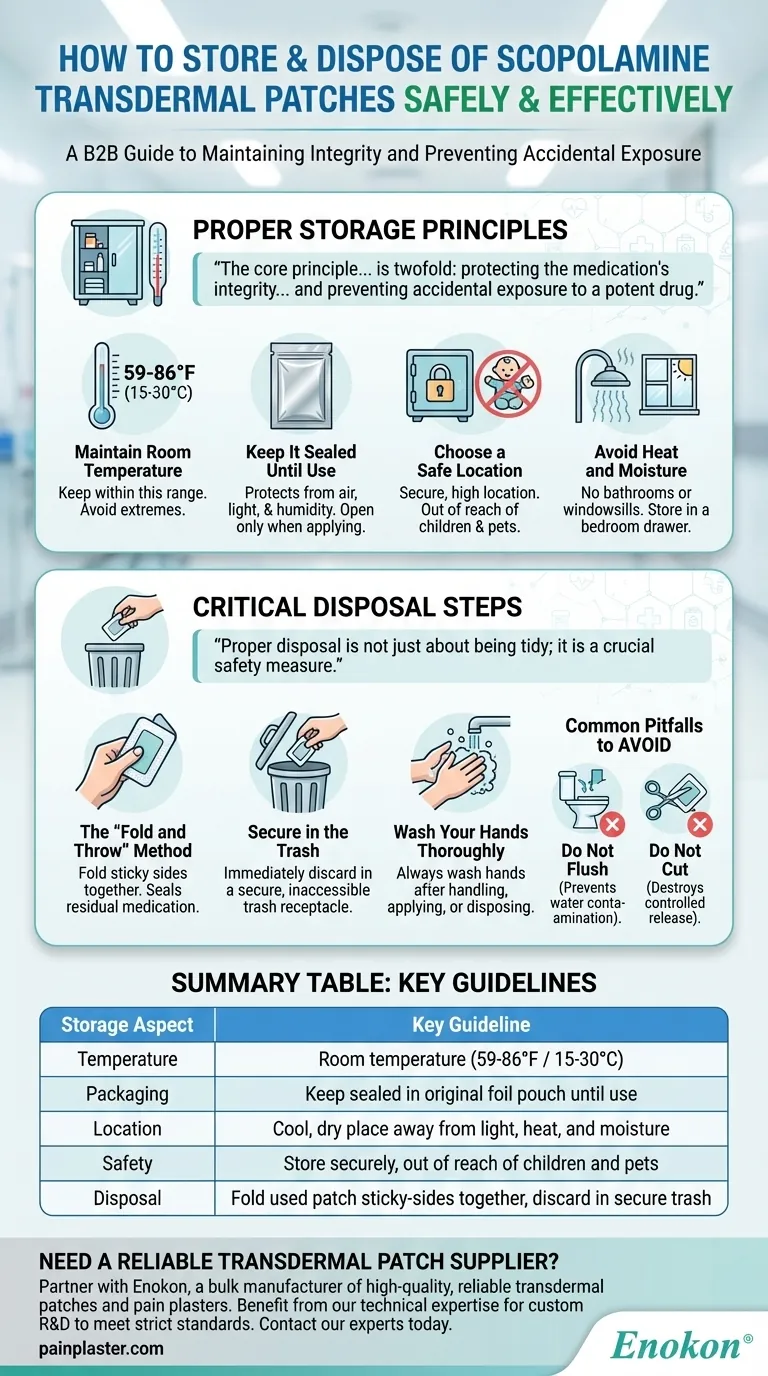
Visual Guide
Related Products
- Silicone Scar Sheets Patch Transdermal Drug Patch
- Far Infrared Heat Pain Relief Patches Transdermal Patches
- Menthol Gel Pain Relief Patch
- Icy Hot Menthol Medicine Pain Relief Patch
- Mugwort Wormwood Pain Relief Patch for Neck Pain
People Also Ask
- What role does a silicone-based transdermal delivery system play in Parkinson's? Enhancing Early-Stage Patient Care
- How is the long-term skin tolerance of silicone-based transdermal patches evaluated in clinical settings? R&D and Safety
- Why is a polarizing microscope used to evaluate the long-term stability of transdermal drug patches? Ensure Efficacy.
- What are common adverse effects of transdermal drug delivery? Risks & Prevention Tips
- What are the advantages of transdermal drug patches? Optimize Medication Delivery with Patches
















