
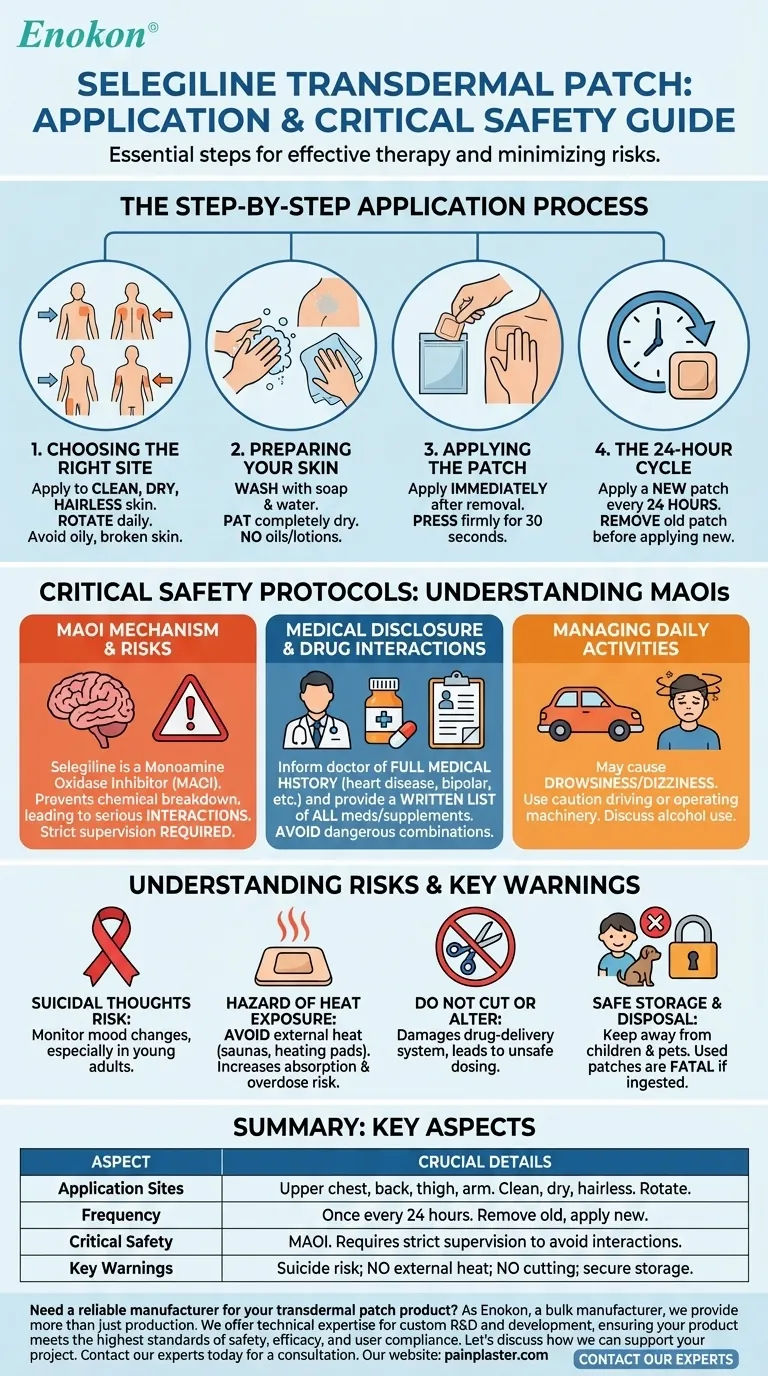
To use the selegiline transdermal patch correctly, you must apply it once every 24 hours to a clean, dry, and hairless area of skin. The patch should be placed on the upper chest, back, upper thigh, or the outer part of the upper arm. It is critical to press the patch firmly in place and rotate the application site daily to avoid skin irritation.
While the mechanics of applying the patch are straightforward, true safety comes from understanding its nature as a Monoamine Oxidase Inhibitor (MAOI). This requires strict adherence to medical guidance to prevent potentially dangerous drug and food interactions.
The Step-by-Step Application Process
Proper application ensures you receive a consistent, correct dose of medication. Follow these steps meticulously every day.
Choosing the Right Application Site
The patch must be applied to dry, smooth skin in one of four areas: the upper chest, back, upper thigh, or the outer surface of the upper arm.
Avoid skin that is oily, irritated, broken, or scarred. Choose a new location for each application to allow the skin to recover.
Preparing Your Skin
Before applying a new patch, wash the selected area with soap and warm water. Do not use oils, lotions, or creams, as they can prevent the patch from sticking properly.
Rinse the area thoroughly and pat it completely dry with a clean towel before application.
Applying the Patch
Remove the patch from its protective pouch and apply it to the prepared skin immediately. Do not save it for later use once it is out of the pouch.
Press down firmly on the patch with the palm of your hand for about 30 seconds to ensure it is sealed to the skin, especially around the edges. Always wash your hands after handling the patch.
The 24-Hour Cycle
A new patch should be applied once every 24 hours, typically at the same time each day. When you apply a new patch, remove the old one.
Rotating the application site is essential. Avoid using the same exact spot for at least one week to minimize the risk of skin irritation.
Critical Safety Protocols for Selegiline Use
Selegiline is a powerful medication that requires careful management beyond simple application. Understanding its function and risks is a non-negotiable part of your treatment.
What Selegiline Is and Why It's Different
Selegiline is a Monoamine Oxidase Inhibitor (MAOI) prescribed for major depressive disorder. It works by preventing the breakdown of certain chemicals in the brain that regulate mood.
Because of this mechanism, it can have serious interactions with other substances, which is why strict medical supervision is required.
The Importance of Full Medical Disclosure
Before using selegiline, you must inform your doctor about your entire medical history. It is especially critical to discuss conditions like pheochromocytoma (an adrenal gland tumor), heart disease, high blood pressure, seizure disorders, or bipolar disorder.
You must also disclose if you are pregnant, planning to become pregnant, or breastfeeding.
Avoiding Dangerous Drug Interactions
Provide your doctor with a written list of every medication and supplement you take. This includes all prescription drugs, over-the-counter medicines, vitamins, and herbal products.
Drug interactions with MAOIs can be severe and life-threatening, making this step absolutely essential for your safety.
Managing Daily Activities
The patch may cause drowsiness or dizziness. Do not drive, operate heavy machinery, or perform other hazardous tasks until you know how the medication affects you.
Discuss alcohol consumption with your doctor, as it can compound these side effects.
Understanding the Trade-offs and Risks
While effective, selegiline carries specific warnings that you must be aware of to use it safely.
Increased Risk of Suicidal Thoughts
Like many antidepressants, selegiline may increase the risk of suicidal thoughts or behaviors, particularly in adolescents and young adults. Family members and caregivers should be aware of any sudden changes in mood or behavior.
The Hazard of Heat Exposure
Do not expose the application site to external heat sources. This includes heating pads, electric blankets, saunas, hot tubs, or prolonged direct sunlight. Heat can increase the amount of medication absorbed into your body, leading to a potential overdose.
Do Not Cut or Alter the Patch
Never cut, damage, or alter a selegiline patch in any way. Doing so can damage the drug-delivery system, resulting in an incorrect and potentially unsafe dose.
Safe Storage and Disposal
Store patches at room temperature, away from heat and moisture. Keep both used and unused patches far out of the reach of children and pets.
Even a used patch contains enough residual medication to be fatal if chewed or ingested by a child or animal.
Making the Right Choice for Your Goal
Adhering to a comprehensive safety plan is just as important as the daily application of the patch.
- If your primary focus is correct application: Follow the four-step process meticulously: choose and prepare a clean site, apply the patch firmly, and rotate the location every 24 hours.
- If your primary focus is overall safety: Maintain constant and open communication with your doctor, providing a complete list of all medications and health conditions to prevent dangerous interactions.
- If you are a caregiver: Be extremely vigilant about proper storage and disposal, as even used patches pose a significant and potentially fatal poisoning risk to children and pets.
Your diligence in following these medical and procedural guidelines is the most important factor in achieving a safe and successful therapeutic outcome.
Summary Table:
| Key Aspect | Crucial Details |
|---|---|
| Application Sites | Upper chest, back, upper thigh, or outer upper arm. Must be clean, dry, and hairless. |
| Frequency | Apply a new patch once every 24 hours. Rotate the application site daily. |
| Critical Safety | Selegiline is an MAOI. Requires strict medical supervision to avoid dangerous drug/food interactions. |
| Key Warnings | Risk of suicidal thoughts; avoid external heat on patch; never cut the patch; store/dispose safely away from children/pets. |
Need a reliable manufacturer for your transdermal patch product?
As Enokon, a bulk manufacturer of reliable transdermal patches and pain plasters, we provide more than just production. We offer technical expertise for custom R&D and development, ensuring your product—whether for a pharmaceutical brand or healthcare distributor—meets the highest standards of safety, efficacy, and user compliance.
Let's discuss how we can support your project. Contact our experts today for a consultation.
Visual Guide
Related Products
- Far Infrared Heat Pain Relief Patches Transdermal Patches
- Silicone Scar Sheets Patch Transdermal Drug Patch
- Menthol Gel Pain Relief Patch
- Icy Hot Menthol Medicine Pain Relief Patch
- Mugwort Wormwood Pain Relief Patch for Neck Pain
People Also Ask
- Why is the selection of matrix materials critical when developing customized transdermal patches? Optimize Efficacy
- What are the clinical advantages of local transdermal delivery systems? Unlock Safer, More Effective Pain Relief Solutions
- What are the physical impacts of external heat exposure on the performance and safety of transdermal patches? - Guide
- What role does a skin tolerance scoring system play in the safety evaluation of transdermal patches? Key Safety Metrics
- How does high-purity far-infrared ceramic powder contribute to the efficacy of far-infrared physical therapy patches?



















