
To manage skin irritation from patches, the most effective strategies are systematically rotating the application site and, for mild cases, applying a small amount of 1% hydrocortisone cream to the area before placing a new patch. You must allow the cream to absorb completely first.
The core principle is prevention through rotation. While topical creams can manage mild irritation, consistently changing the patch location is the primary defense against skin issues and ensures you can continue treatment comfortably.
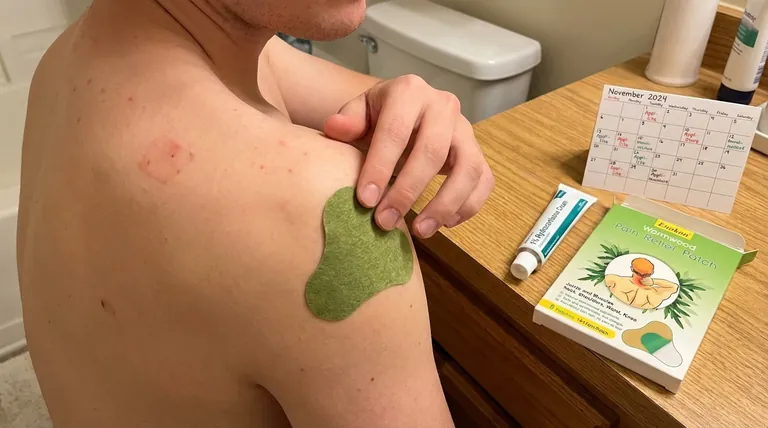
The Foundational Strategy: Proactive Site Rotation
The most common cause of skin irritation is not an allergy but rather the repeated stress on the same patch of skin from the adhesive and the trapped moisture underneath. A proactive rotation plan is your most powerful tool.
Why Rotation is Critical
Consistent application to the same spot prevents the skin underneath from breathing and recovering. This constant contact can lead to redness, itching, and discomfort, which can compromise both your skin's health and the patch's effectiveness.
How to Rotate Effectively
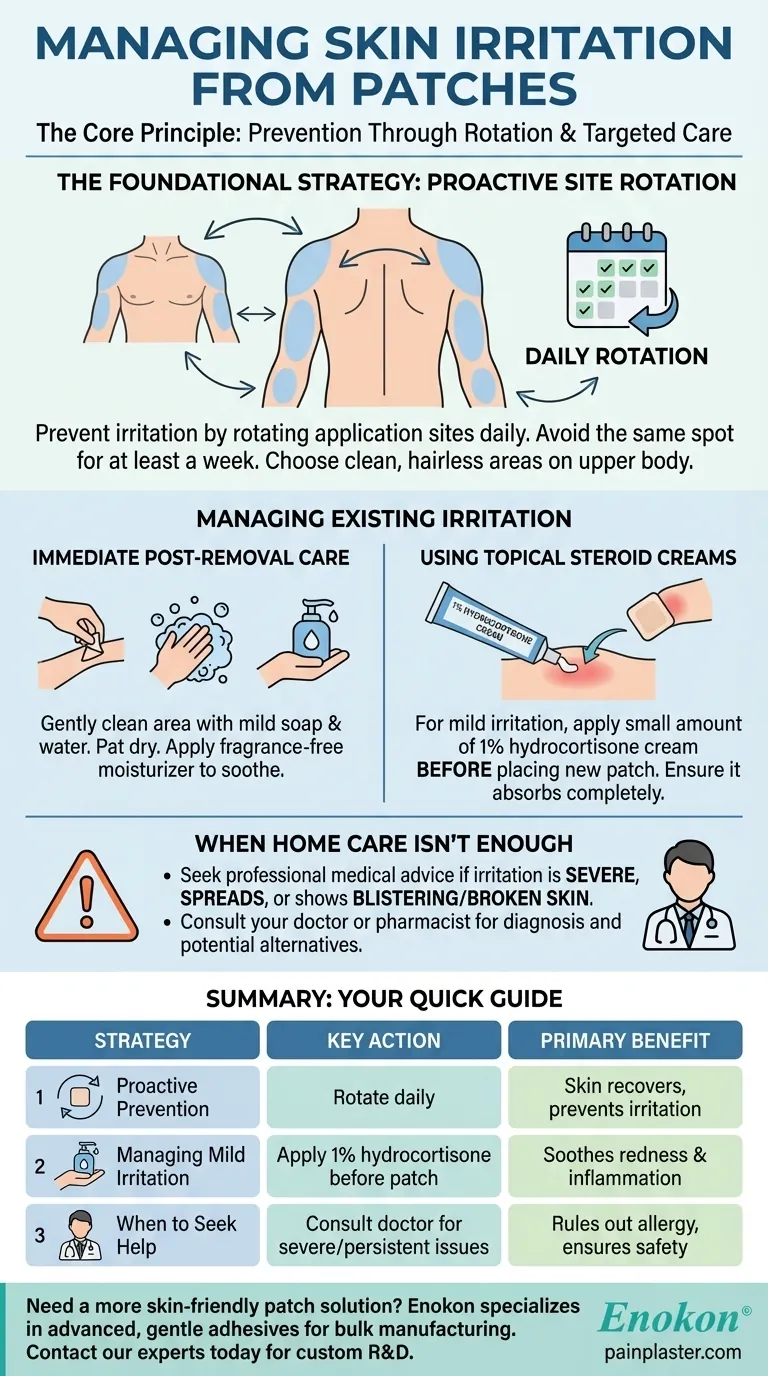
Establish a simple, consistent schedule. Apply the patch to a different, clean area of your upper body each day. A reliable rule is to avoid using the same exact spot more than once per week.
Choosing the Right Application Site
Focus on areas on the upper body, such as the upper chest, back, or outer arms. These locations are generally less prone to sweating and movement, which helps the patch adhere properly while minimizing irritation.
Managing Existing Irritation
If you are already experiencing redness or itching, you can take immediate steps to soothe the skin and prevent the issue from worsening.
Immediate Post-Removal Care
After you remove a patch, gently clean the area with mild soap and water. Pat the skin dry and apply a simple, fragrance-free moisturizer to help soothe and rehydrate the skin barrier.
Using Topical Steroid Creams
For mild irritation, a small amount of 1% hydrocortisone cream can be effective. Apply it to the irritated area before you place the patch, and ensure it is fully absorbed into the skin. This creates a minor barrier and reduces the inflammatory response.
Considering Different Brands
Sometimes, the issue is a sensitivity to the specific adhesive used by one brand. If irritation persists despite proper rotation and care, ask your pharmacist if an alternative brand with a different adhesive formulation is available.
When Home Care Isn't Enough
It is crucial to distinguish between mild, manageable irritation and a more significant reaction that requires professional medical advice.
Recognizing a More Serious Reaction
If irritation is severe, spreads, or is accompanied by blistering, broken skin, or significant pain, you should stop using the patch on that area immediately. These symptoms may indicate a more serious allergic contact dermatitis.
The Importance of Professional Consultation
Do not hesitate to consult your doctor or pharmacist if irritation persists or worsens. They can properly diagnose the issue and may recommend prescription-strength creams or an entirely different method for delivering your medication or nicotine.
Making the Right Choice for Your Goal
Your approach should depend on your specific situation.
- If your primary focus is preventing irritation: Make a strict site rotation schedule your number one priority.
- If your primary focus is treating mild, existing redness: Use post-removal moisturizers and consider applying 1% hydrocortisone cream before your next patch.
- If your primary focus is addressing persistent or worsening irritation: Stop applying patches to the affected area and consult a healthcare professional for guidance.
Ultimately, maintaining healthy skin is essential for making patch-based treatments successful and sustainable.
Summary Table:
| Strategy | Key Action | Primary Benefit |
|---|---|---|
| Proactive Prevention | Rotate application site daily | Allows skin to recover, prevents irritation |
| Managing Mild Irritation | Apply 1% hydrocortisone cream before patch | Soothes redness and reduces inflammation |
| When to Seek Help | Consult a doctor if severe or persistent | Rules out allergy and ensures safe treatment |
Need a more skin-friendly patch solution?
If you or your customers struggle with skin irritation from patches, Enokon can help. As a bulk manufacturer of reliable transdermal patches and pain plasters for healthcare/pharma distributors and brands, we specialize in developing formulations with advanced, gentle adhesives. Benefit from our technical expertise for custom R&D to create patches that maximize comfort and adherence.
Contact our experts today to discuss your custom patch development needs.
Visual Guide
Related Products
- Far Infrared Heat Pain Relief Patches Transdermal Patches
- Silicone Scar Sheets Patch Transdermal Drug Patch
- Icy Hot Menthol Medicine Pain Relief Patch
- Menthol Gel Pain Relief Patch
- Mugwort Wormwood Pain Relief Patch for Neck Pain
People Also Ask
- Why is the selection of matrix materials critical when developing customized transdermal patches? Optimize Efficacy
- What are the physical impacts of external heat exposure on the performance and safety of transdermal patches? - Guide
- What role does a skin tolerance scoring system play in the safety evaluation of transdermal patches? Key Safety Metrics
- What are the clinical advantages of local transdermal delivery systems? Unlock Safer, More Effective Pain Relief Solutions
- How does high-purity far-infrared ceramic powder contribute to the efficacy of far-infrared physical therapy patches?



















