
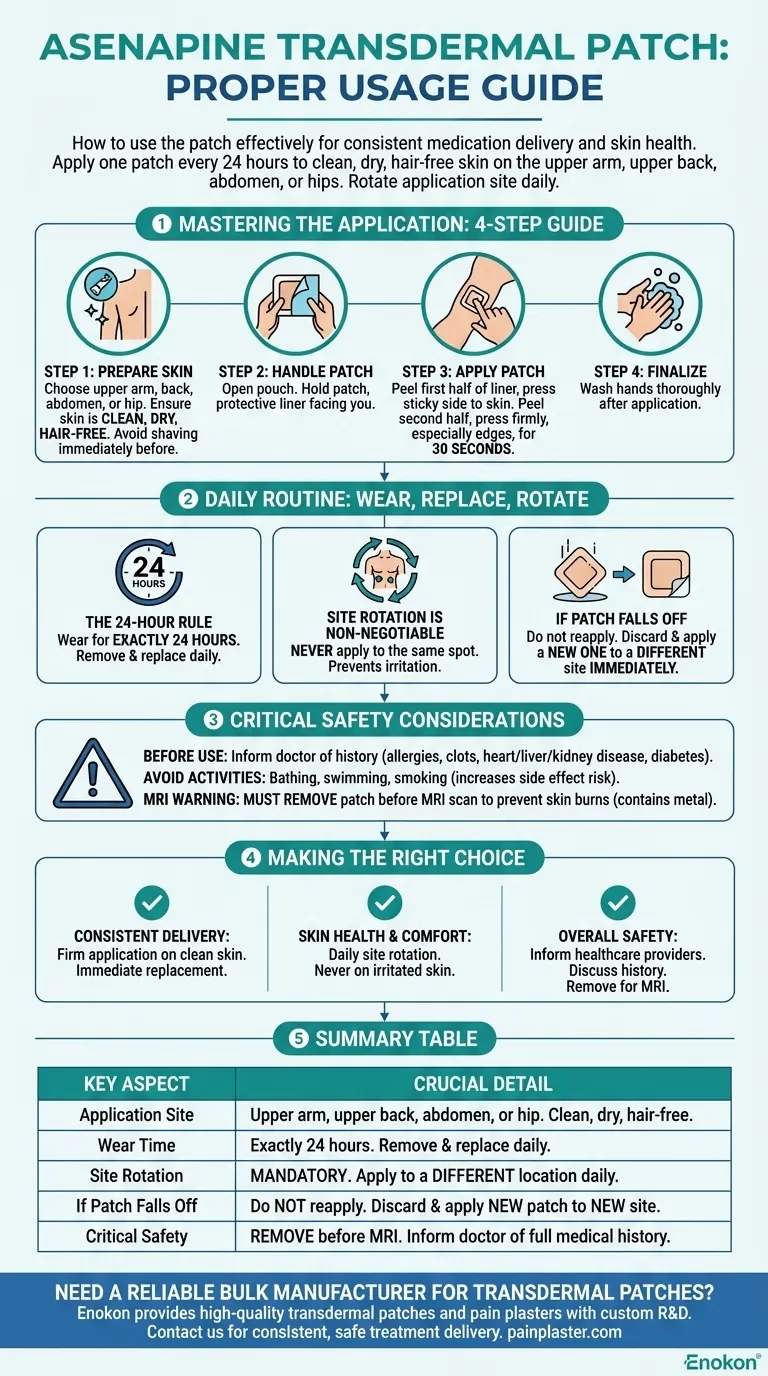
To properly use the asenapine transdermal patch, apply one patch every 24 hours to a clean, dry, and hair-free area of skin on your upper arm, upper back, abdomen, or hips. It is critical to press the patch firmly onto the skin and to rotate the application site each day to prevent skin irritation. Never wear a patch for more than 24 hours.
The key to effective asenapine patch therapy is not just the application itself, but the strict adherence to a daily routine of site rotation and removal. This ensures consistent medication delivery while protecting your skin and overall health.
Mastering the Application: A Precise Step-by-Step Guide
Proper application is the foundation of your treatment's success. Following these steps ensures the patch adheres correctly and delivers the medication as intended.
Step 1: Prepare the Skin Site
Choose an application site on your upper arm, upper back, abdomen, or hip. The skin must be clean, dry, and free of hair, lotions, oils, or injuries.
Avoid shaving the area immediately before application, as this can irritate the skin.
Step 2: Open the Pouch and Handle the Patch
Carefully cut open the sealed pouch and remove the patch.
Hold the patch with the protective liner facing you. It will likely be split into two pieces.
Step 3: Apply the Patch to the Skin
Peel off the first half of the protective liner, being careful not to touch the sticky adhesive side.
Press the exposed sticky side of the patch firmly onto your prepared skin site.
Next, peel off the second half of the liner and press the rest of the patch down. Ensure the entire patch, especially the edges, is sealed against your skin for at least 30 seconds.
Step 4: Finalize the Application
Once the patch is secure, wash your hands thoroughly with soap and water to remove any medication residue.
Daily Routine: Wearing and Replacing the Patch
Consistency is crucial for managing your condition. This daily rhythm of wearing and replacing the patch becomes a vital part of your treatment.
The 24-Hour Rule
Each patch is designed to be worn for only 24 hours. After this period, it must be removed and replaced with a new one.
Site Rotation is Non-Negotiable
Never apply a new patch to the same spot you used the day before. Rotating the application site is essential to prevent skin irritation and ensure proper medication absorption.
What to Do if the Patch Falls Off
If a patch becomes loose or falls off, do not attempt to reapply it. Discard the old patch and apply a new one immediately to a different skin site.
Safe Removal and Disposal
After 24 hours, slowly peel the patch off your skin.
Fold the used patch in half so the sticky sides press together, then dispose of it safely where children and pets cannot reach it. Apply your new patch to a different location.
Critical Safety Considerations You Cannot Ignore
Using the asenapine patch safely involves being aware of potential interactions and necessary precautions. Your health depends on understanding these warnings.
Before Your First Use
Inform your doctor about your complete medical history. This includes any allergies, a history of blood clots, heart or blood vessel disease, liver or kidney disease, or diabetes.
Activities to Avoid
You should avoid bathing or swimming while wearing the patch, as this can affect its adhesion.
Smoking is also discouraged, as it can increase the risk of serious side effects associated with this type of medication.
The MRI Warning
The patch may contain metal components. You must remove the patch before undergoing an MRI scan to prevent the risk of serious skin burns at the patch site.
Monitoring and Doctor Visits
Regular visits with your doctor are essential to monitor your progress and check for any unwanted side effects.
Making the Right Choice for Your Treatment
Adhering to the correct procedure ensures you get the full therapeutic benefit of the asenapine patch while minimizing potential issues.
- If your primary focus is consistent medication delivery: Ensure the patch is pressed firmly onto clean, dry, lotion-free skin and immediately replace it if it falls off.
- If your primary focus is skin health and comfort: Rotate the application site daily between the upper arm, back, abdomen, and hip, and never apply a patch to irritated skin.
- If your primary focus is overall safety: Always inform healthcare providers you are using the patch, especially before an MRI, and discuss your full medical history with your doctor.
Following these precise steps empowers you to manage your treatment safely and effectively.
Summary Table:
| Key Aspect | Crucial Detail |
|---|---|
| Application Site | Upper arm, upper back, abdomen, or hip. Skin must be clean, dry, and hair-free. |
| Wear Time | Exactly 24 hours. Remove and replace with a new patch daily. |
| Site Rotation | Mandatory. Apply each new patch to a different location to prevent skin irritation. |
| If Patch Falls Off | Do not reapply. Discard and apply a new patch to a new site immediately. |
| Critical Safety | Remove patch before an MRI. Inform your doctor of your full medical history. |
Need a reliable supplier for transdermal patches like asenapine?
As Enokon, a bulk manufacturer of high-quality transdermal patches and pain plasters, we provide pharmaceutical distributors and brands with the reliable supply and technical expertise needed for success. Benefit from our custom R&D and development services to create the precise patch solutions your patients require.
Contact our experts today to discuss your manufacturing needs and ensure consistent, safe treatment delivery.
Visual Guide
Related Products
- Far Infrared Heat Pain Relief Patches Transdermal Patches
- Menthol Gel Pain Relief Patch
- Silicone Scar Sheets Patch Transdermal Drug Patch
- Icy Hot Menthol Medicine Pain Relief Patch
- Mugwort Wormwood Pain Relief Patch for Neck Pain
People Also Ask
- Why is the selection of matrix materials critical when developing customized transdermal patches? Optimize Efficacy
- What role does a skin tolerance scoring system play in the safety evaluation of transdermal patches? Key Safety Metrics
- What are the physical impacts of external heat exposure on the performance and safety of transdermal patches? - Guide
- What are the clinical advantages of local transdermal delivery systems? Unlock Safer, More Effective Pain Relief Solutions
- How does high-purity far-infrared ceramic powder contribute to the efficacy of far-infrared physical therapy patches?













