
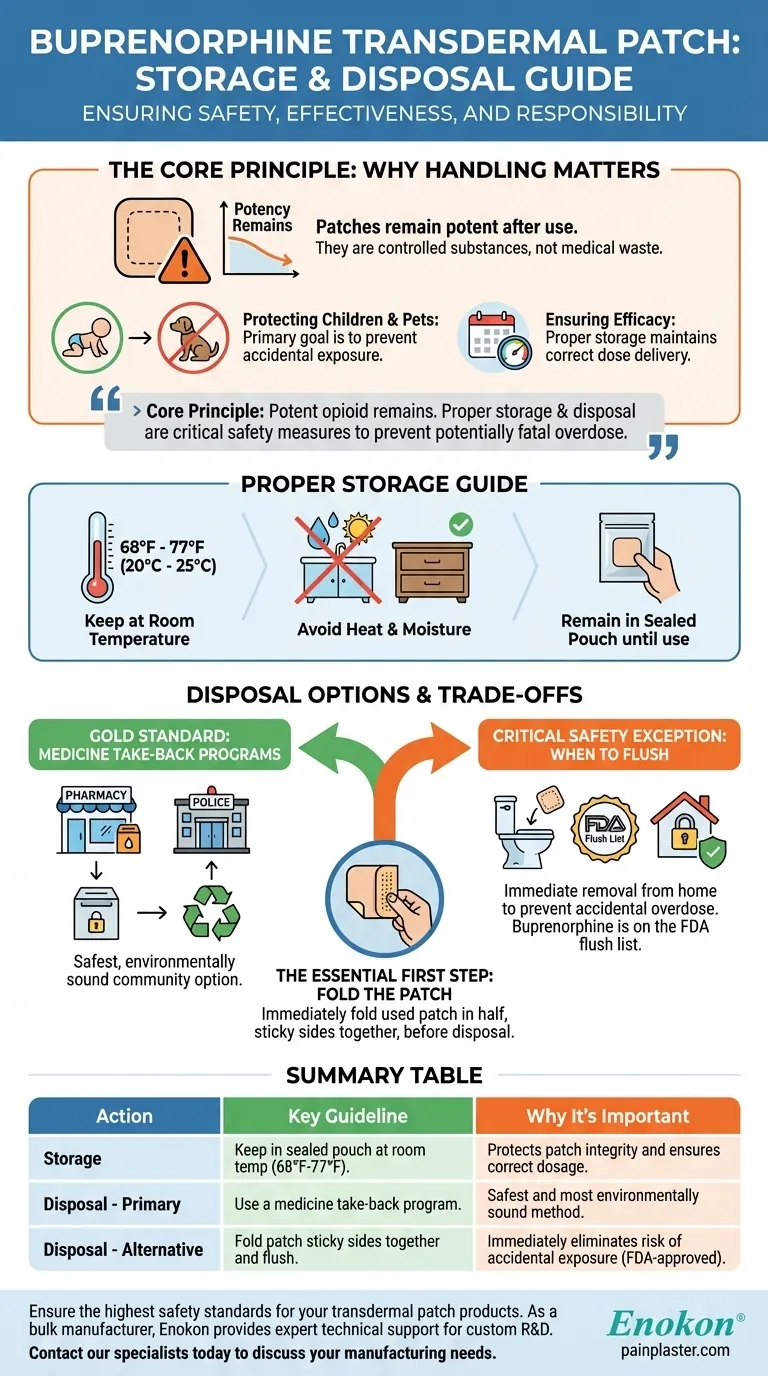
To ensure safety and effectiveness, the buprenorphine transdermal patch must be stored at room temperature in its sealed pouch and kept away from heat and moisture. For disposal, the safest methods are a medicine take-back program or, if one is not available, immediately folding the patch in half with the sticky sides together and flushing it down the toilet to prevent accidental exposure.
The core principle guiding these rules is that both used and unused buprenorphine patches contain a significant amount of potent opioid. Proper storage and disposal are not just about neatness; they are critical safety measures to prevent a potentially fatal overdose in children, pets, or others.
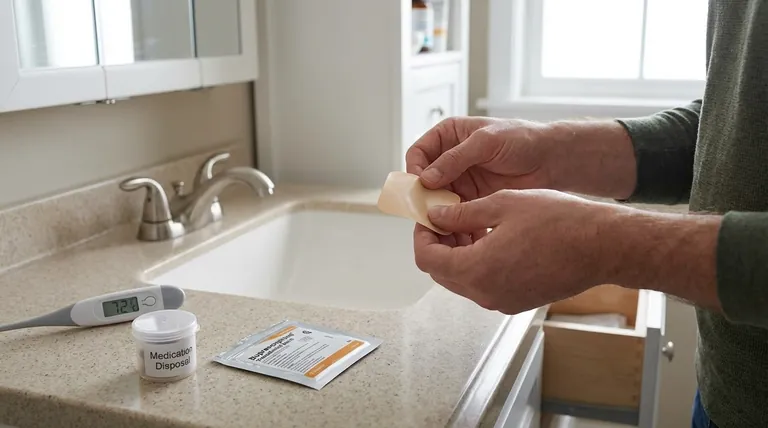
The Core Principle: Why Handling Matters
Handling a potent medication like a buprenorphine patch requires a high degree of responsibility. The active drug remains in the patch even after it has been worn for the prescribed time, posing a serious risk if not managed correctly.
Patches Remain Potent After Use
A used buprenorphine patch can still contain enough medication to cause serious harm or even death if accidentally ingested or applied to another person.
Think of a used patch not as medical waste, but as a controlled substance that must be secured until it is permanently destroyed or removed from your home.
Protecting Children and Pets
The primary goal of proper disposal is to prevent accidental exposure, especially to children and pets who may be attracted to a discarded patch. The consequences of such exposure can be catastrophic.
Ensuring Medication Efficacy
Proper storage ensures the patch delivers the correct dose of medication consistently. Exposing the patch to heat or moisture before use can damage it and compromise its effectiveness.
Step-by-Step Guide to Proper Storage
Storing your patches correctly is simple but essential for ensuring they work as intended.
Keep at Room Temperature
Store the patches in a controlled room temperature environment, generally between 68°F to 77°F (20°C to 25°C).
Avoid Heat and Moisture
Never store patches in places with high humidity or fluctuating temperatures, such as a bathroom medicine cabinet. A bedroom closet or a secure dresser drawer is a better choice.
Remain in the Sealed Pouch
Keep each patch in its original, sealed pouch until the moment you are ready to apply it. Opening the pouch exposes the medication to air and can reduce its stability.
Understanding Disposal Options and Trade-offs
Disposing of buprenorphine patches correctly is the most critical safety step. Conflicting advice exists, but it can be clarified by understanding the underlying risks.
The Gold Standard: Medicine Take-Back Programs
The most environmentally sound and safest community option is to use an authorized drug take-back program. These programs collect and destroy medications in a secure, controlled manner.
Many pharmacies, hospitals, and police stations offer this service. This should always be your first choice when available.
When to Flush: A Critical Safety Exception
The FDA maintains a specific "flush list" for medications that are exceptionally dangerous if accidentally ingested. Buprenorphine is on this list.
While flushing medications is generally discouraged, the immediate risk of an accidental overdose from a buprenorphine patch is considered greater than the potential environmental impact. Flushing ensures the potent opioid is immediately inaccessible within the home.
The Essential First Step: Folding the Patch
Regardless of your final disposal method, the first step is always the same. As soon as you remove a used patch, fold it in half so the sticky, medication-containing sides press firmly together.
This simple action seals the medication inside and makes it much more difficult for the drug to be accidentally transferred.
How to Apply This to Your Goal
Your choice of disposal method depends on balancing immediate home safety with community and environmental safety.
- If your primary focus is the highest level of safety for your community and the environment: Collect folded patches in a secure container and take them to an authorized drug take-back location.
- If your primary focus is immediately eliminating any risk of accidental exposure in your home: Fold the patch in half with the sticky sides together and flush it down the toilet immediately after removal.
- If you are disposing of unused or expired patches: The same rules apply, but with even greater urgency. These patches contain their full dose of medication and must be disposed of via a take-back program or by flushing.
Ultimately, responsible management of your medication is a key part of your treatment and protects those around you.
Summary Table:
| Action | Key Guideline | Why It's Important |
|---|---|---|
| Storage | Keep in sealed pouch at room temperature (68°F-77°F). | Protects patch integrity and ensures correct dosage. |
| Disposal (Primary) | Use a medicine take-back program. | Safest and most environmentally sound method. |
| Disposal (Alternative) | Fold patch sticky sides together and flush. | Immediately eliminates risk of accidental exposure (FDA-approved). |
Ensure the highest safety standards for your transdermal patch products. As a bulk manufacturer of reliable transdermal patches and pain plasters, Enokon provides healthcare and pharma distributors and brands with expert technical support for custom R&D and development. Let us help you deliver safe and effective solutions to your customers. Contact our specialists today to discuss your manufacturing needs.
Visual Guide
Related Products
- Menthol Gel Pain Relief Patch
- Far Infrared Heat Pain Relief Patches Transdermal Patches
- Icy Hot Menthol Medicine Pain Relief Patch
- Silicone Scar Sheets Patch Transdermal Drug Patch
- Mugwort Wormwood Pain Relief Patch for Neck Pain
People Also Ask
- How effective are pain relief patches for muscle pain? Target Localized Pain with Transdermal Delivery
- How do pain relief patches compare to other pain relief methods? Discover Targeted, Long-Lasting Relief
- Who should consult a healthcare professional before using pain relief patches? Ensure Your Safety with Medical Advice
- How do drug loading and permeation enhancers ensure patch efficacy? Achieve Superior Clinical-Grade Pain Relief.
- What are some common applications of pain relief patches? Effective Relief for Muscle & Joint Pain
















