
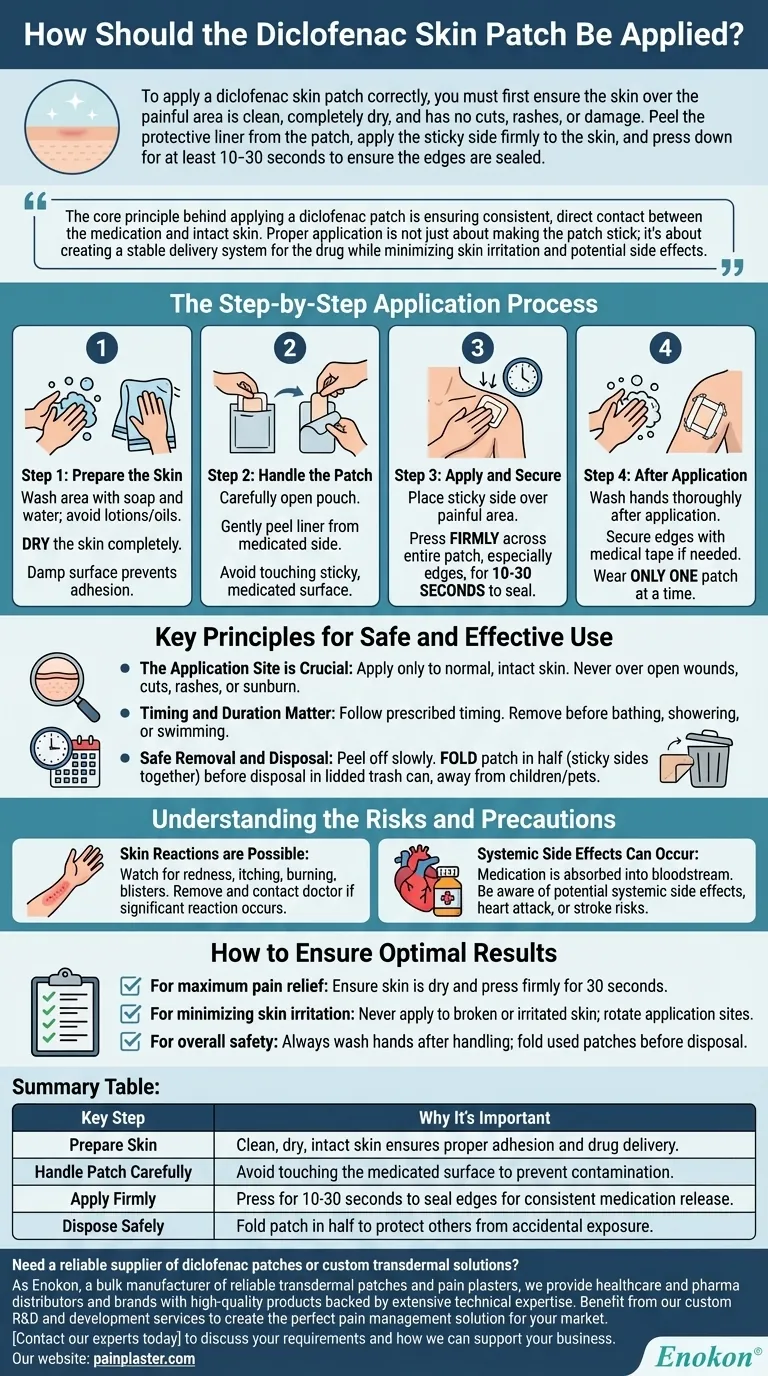
To apply a diclofenac skin patch correctly, you must first ensure the skin over the painful area is clean, completely dry, and has no cuts, rashes, or damage. Peel the protective liner from the patch, apply the sticky side firmly to the skin, and press down for at least 10-30 seconds to ensure the edges are sealed.
The core principle behind applying a diclofenac patch is ensuring consistent, direct contact between the medication and intact skin. Proper application is not just about making the patch stick; it's about creating a stable delivery system for the drug while minimizing skin irritation and potential side effects.

The Step-by-Step Application Process
Following a precise method ensures the patch delivers its medication effectively and stays in place for the intended duration.
Step 1: Prepare the Skin
Before anything else, prepare the application site. Wash the area with simple soap and water, avoiding any lotions, oils, or creams.
Most importantly, you must dry the skin completely. A damp surface will prevent the patch from adhering properly.
Step 2: Handle the Patch
Carefully cut or tear open the pouch and remove a single patch. Only open the pouch when you are ready to apply it.
To remove the clear protective liner, bend a corner of the patch and gently peel the liner away from the medicated side. Avoid touching the sticky, medicated surface as much as possible.
Step 3: Apply and Secure
Place the sticky side of the patch directly over the most painful area.
Press down firmly and evenly across the entire patch, paying special attention to the edges. Hold pressure for at least 10 to 30 seconds to warm the adhesive and ensure it is fully sealed against your skin.
Step 4: After Application
Once the patch is secure, wash your hands thoroughly with soap and water to remove any residual medication.
If the edges of the patch begin to lift during wear, you can secure them with medical tape. However, you should only ever wear one patch at a time unless specifically instructed otherwise by your doctor.
Key Principles for Safe and Effective Use
Understanding the "why" behind the steps is critical for avoiding common mistakes and achieving the best possible pain relief.
The Application Site is Crucial
The patch must only be applied to normal, intact skin. Never apply it over open wounds, cuts, scrapes, infections, rashes, or sunburnt areas. Doing so can cause excessive medication absorption and severe local irritation.
While some patches are designed for a specific area (like the hip or abdomen), most are intended for the direct site of pain. Always confirm the recommended location in your specific product's instructions.
Timing and Duration Matter
Follow the prescribed timing exactly. Some patches may be worn for up to 12 hours, while others may have shorter maximum wear times. Do not wear the patch for longer than directed.
Many patches should be removed before bathing, showering, or swimming, as prolonged water exposure can loosen the adhesive and affect medication delivery.
Safe Removal and Disposal
When it's time to remove the patch, peel it off slowly. To dispose of it, fold the patch in half with the sticky sides together.
This prevents leftover medication from being exposed. Dispose of it in a lidded trash can, safely out of the reach of children and pets.
Understanding the Risks and Precautions
Diclofenac is a nonsteroidal anti-inflammatory drug (NSAID), and even in patch form, it carries potential risks that require your attention.
Skin Reactions are Possible
Watch the application site for signs of a serious skin reaction, such as redness, itching, burning, or blisters. Remove the patch and contact your doctor if you experience a significant reaction.
Systemic Side Effects Can Occur
Although the risk is lower than with oral NSAIDs, the medication is still absorbed into your bloodstream. Be aware of the potential for systemic side effects, such as stomach pain or signs of bleeding.
Using this medication can increase your risk of heart attack or stroke. Discuss your personal risk factors with your healthcare provider before use.
How to Ensure Optimal Results
Your goal dictates which steps are most critical to follow.
- If your primary focus is maximum pain relief: Ensure the skin is completely dry before application and press firmly for 30 seconds to achieve a perfect seal for consistent drug delivery.
- If your primary focus is minimizing skin irritation: Never apply the patch to broken or already irritated skin, and be sure to use a new, clean area for each application if you use patches regularly.
- If your primary focus is overall safety: Always wash your hands after handling the patch and fold used patches in half before disposal to protect children and pets from accidental exposure.
By applying the patch with precision and care, you are taking an active role in managing your pain safely and effectively.
Summary Table:
| Key Step | Why It's Important |
|---|---|
| Prepare Skin | Clean, dry, intact skin ensures proper adhesion and drug delivery. |
| Handle Patch Carefully | Avoid touching the medicated surface to prevent contamination. |
| Apply Firmly | Press for 10-30 seconds to seal edges for consistent medication release. |
| Dispose Safely | Fold patch in half to protect others from accidental exposure. |
Need a reliable supplier of diclofenac patches or custom transdermal solutions?
As Enokon, a bulk manufacturer of reliable transdermal patches and pain plasters, we provide healthcare and pharma distributors and brands with high-quality products backed by extensive technical expertise. Benefit from our custom R&D and development services to create the perfect pain management solution for your market.
Contact our experts today to discuss your requirements and how we can support your business.
Visual Guide
Related Products
- Menthol Gel Pain Relief Patch
- Icy Hot Menthol Medicine Pain Relief Patch
- Lidocaine Hydrogel Pain Relief Patch for Pain Relief
- Capsaicin Chili Medicated Pain Relief Patches
- Cooling Fever Patches Color Change Cold Fever Patch
People Also Ask
- How effective are pain relief patches for muscle pain? Target Localized Pain with Transdermal Delivery
- How do pain relief patches compare to other pain relief methods? Discover Targeted, Long-Lasting Relief
- Who should consult a healthcare professional before using pain relief patches? Ensure Your Safety with Medical Advice
- Can pregnant women use pain relief patches? Your Essential Guide to Safe Pain Management
- What are some common applications of pain relief patches? Effective Relief for Muscle & Joint Pain













