
To apply the granisetron skin patch correctly, you must first wash and thoroughly dry both your hands and the application site on your upper outer arm. After removing the patch from its pouch, carefully peel off the protective liners and apply the sticky side to the clean skin, pressing firmly for at least 10 to 30 seconds to ensure the edges are completely sealed.
The primary goal of the application process is to create a secure, long-lasting seal between the patch and your skin. This ensures a consistent and effective delivery of medication to prevent the nausea and vomiting associated with chemotherapy.
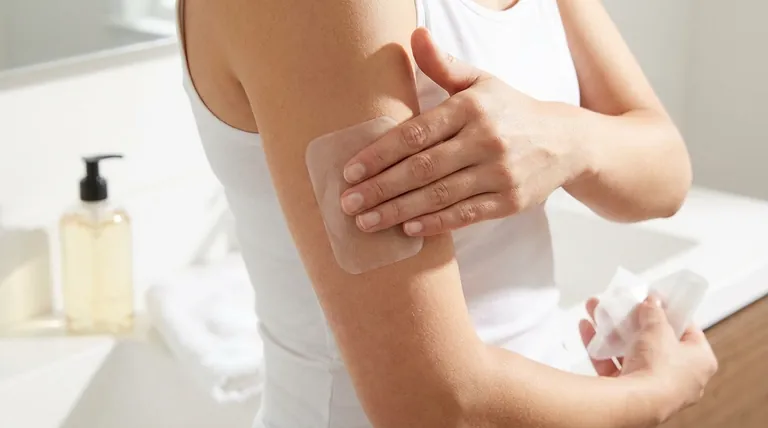
The Step-by-Step Application Process
Proper application is not just about making the patch stick; it's about ensuring it works correctly for its entire duration. Follow these precise steps for the best results.
Step 1: Prepare the Skin
The condition of your skin is the foundation for successful patch adhesion.
Choose an application site on the upper outer arm. The skin in this area should be clean, dry, and nearly hairless.
Wash the selected area with simple soap and water, then rinse and pat it completely dry with a clean towel. Do not use any oils, lotions, or powders on the area before application.
Step 2: Prepare the Patch
Handle the patch carefully to preserve the medication and adhesive.
Remove the patch from its sealed foil pouch. Never cut a granisetron patch, as this can damage the medication delivery system.
The patch has a multi-part liner. First, peel off the thin plastic liner from the printed (non-sticky) side. Then, gently bend the patch to lift one piece of the protective film from the sticky side.
Step 3: Apply the Patch
A firm, even press is critical for sealing the patch to your skin.
While holding the remaining plastic film, apply the exposed sticky part of the patch to the prepared skin area.
Carefully peel off the second piece of the plastic film and press the entire patch down firmly with the palm of your hand for 10 to 30 seconds. Pay special attention to the edges to ensure a complete seal.
Once the patch is secure, wash your hands immediately with soap and water to remove any medication residue.
Common Pitfalls and How to Avoid Them
Certain activities and conditions can compromise the patch's adhesion and effectiveness. Being mindful of these factors is crucial.
Avoid Moisture and Excessive Heat
Water and heat are the primary enemies of patch adhesion.
You should avoid swimming, saunas, and strenuous exercise that causes heavy sweating while wearing the patch. These activities can loosen the adhesive and cause the patch to fall off.
You must also protect the patch from direct heat sources, such as heating pads or direct sunlight, as this can affect how the medication is absorbed.
Ensure Proper Site Selection
The location you choose is as important as the application technique itself.
Always apply the patch to intact, healthy skin. Do not apply it over any cuts, scrapes, rashes, burns, or other forms of skin irritation.
Select an area where tight clothing will not rub against the patch and potentially peel it off. The upper outer arm is recommended specifically to minimize this risk.
Safe Removal and Disposal
When it's time to remove the patch, doing so properly protects you and others.
Peel the patch off slowly. If any adhesive residue remains on your skin, you can gently remove it with baby oil or lotion.
After removing it, fold the used patch in half with the sticky sides together. Dispose of it in a trash can with a secure lid, keeping it safely away from children and pets.
Summary Table:
| Step | Key Action | Important Note |
|---|---|---|
| 1. Prepare Skin | Wash and dry the upper outer arm. | Do not use oils, lotions, or powders. |
| 2. Prepare Patch | Remove from pouch and peel off protective liners. | Never cut the patch. |
| 3. Apply Patch | Press firmly for 10-30 seconds, sealing edges. | Wash hands immediately after application. |
| 4. During Wear | Avoid swimming, saunas, and direct heat. | Protects patch adhesion and medication release. |
| 5. Removal | Fold used patch in half with sticky sides together. | Dispose of safely away from children and pets. |
Need a reliable, high-quality transdermal patch for your product line?
As Enokon, a bulk manufacturer of reliable transdermal patches and pain plasters, we provide healthcare and pharmaceutical distributors and brands with expert technical support for custom R&D and development. Our expertise ensures your medicated patches, like a granisetron formulation, are designed for optimal patient adherence and therapeutic performance.
Contact our experts today to discuss your custom transdermal patch needs.
Visual Guide

Related Products
- Far Infrared Heat Pain Relief Patches Transdermal Patches
- Silicone Scar Sheets Patch Transdermal Drug Patch
- Icy Hot Menthol Medicine Pain Relief Patch
- Menthol Gel Pain Relief Patch
- Mugwort Wormwood Pain Relief Patch for Neck Pain
People Also Ask
- Why is the selection of matrix materials critical when developing customized transdermal patches? Optimize Efficacy
- What are the physical impacts of external heat exposure on the performance and safety of transdermal patches? - Guide
- What role does a skin tolerance scoring system play in the safety evaluation of transdermal patches? Key Safety Metrics
- What are the clinical advantages of local transdermal delivery systems? Unlock Safer, More Effective Pain Relief Solutions
- How does high-purity far-infrared ceramic powder contribute to the efficacy of far-infrared physical therapy patches?














