
To store methylphenidate transdermal patches correctly, they must be kept at a controlled room temperature, sealed in their original protective pouch until the moment of use. The integrity of the packaging is essential for maintaining both the medication's stability and the patch's adhesive properties.
Proper storage is not just about maintaining the medication's effectiveness; it's a critical safety measure. The key is to protect the patch from environmental factors like heat and moisture while preventing accidental exposure, especially to children and pets.
The Principles of Safe Patch Storage
Understanding why storage rules exist is the first step toward ensuring the medication is both safe and effective. The design of a transdermal patch is a precise balance of chemistry and engineering.
Maintaining Chemical Stability
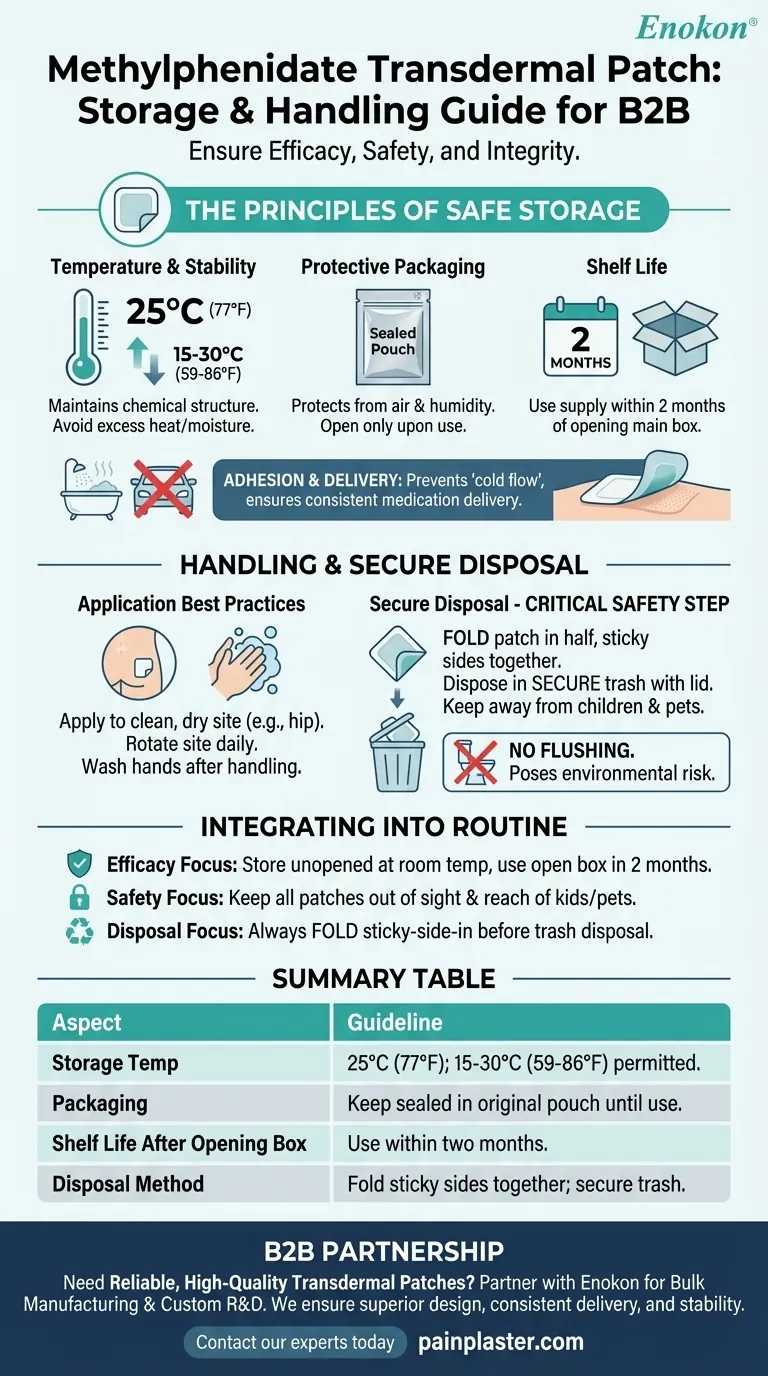
The medication in the patch can degrade if exposed to improper conditions. Patches should be stored at a room temperature of 25°C (77°F), with brief variations permitted between 15-30°C (59-86°F).
Storing the patch in environments with excess heat or moisture, such as a bathroom or a car, can compromise its chemical structure and reduce its effectiveness.
The Role of Protective Packaging
Each patch is sealed in a specifically designed pouch for a reason. This packaging protects it from air and humidity, which can weaken the adhesive and alter the drug formulation.
Once you open the main box containing the pouches, the supply should be used within two months. Never remove an individual patch from its sealed pouch until you are ready to apply it immediately.
Adhesion and Delivery
The patch's adhesive is not just sticky tape; it is part of the drug delivery system. Proper storage ensures the adhesive doesn't dry out or become gummy, a condition known as "cold flow."
This guarantees the patch will stick correctly to the skin for the required duration, allowing for consistent and predictable medication delivery.
Understanding Handling and Disposal
Proper handling from application to disposal is just as important as storage. These steps are designed to maximize effectiveness and minimize risk.
Application Best Practices
Always apply the patch to a clean, dry, and hairless area of the skin, typically the hip. It is crucial to rotate the application site with each new patch to avoid skin irritation.
Wash your hands thoroughly after handling the patch to remove any residual medication and prevent accidental transfer to your eyes or mouth.
The Importance of Secure Disposal
Disposing of a used patch correctly is a critical safety step. Even after nine hours of wear, a used patch still contains a significant amount of active medication.
The universally recommended method is to fold the patch in half, sticky sides together. This seals the remaining medication inside. Then, dispose of it in a trash can with a secure lid, out of reach of children and pets.
Resolving Conflicting Disposal Advice
While some older or product-specific guidance may have suggested flushing patches, this is no longer the recommended best practice. Flushing medication can introduce active drug compounds into the water supply, posing an environmental risk.
Unless explicitly instructed by a pharmacist for a specific product, do not flush transdermal patches. The "fold-and-trash" method is the safest approach.
How to Apply This to Your Routine
To integrate these practices effectively, focus on the distinct goals of medication efficacy and household safety.
- If your primary focus is medication effectiveness: Store unopened pouches at room temperature (around 25°C/77°F) and use any opened box of patches within two months.
- If your primary focus is preventing accidental exposure: Always keep patches—both new and used—completely out of the sight and reach of children and pets.
- If your primary focus is responsible disposal: Always fold a used patch sticky-side-in before placing it in a secure trash receptacle.
Following these precise storage and handling protocols ensures the medication works as intended while protecting those around you.
Summary Table:
| Key Storage & Handling Aspect | Guideline |
|---|---|
| Storage Temperature | 25°C (77°F); brief excursions 15-30°C (59-86°F) permitted. |
| Packaging | Keep sealed in original pouch until use. |
| Shelf Life After Opening Box | Use within two months. |
| Disposal Method | Fold used patch sticky sides together; dispose in secure trash. |
Need reliable, high-quality transdermal patches? As Enokon, a bulk manufacturer of reliable transdermal patches and pain plasters, we understand that precise storage and handling begin with superior product design and packaging. Our technical expertise ensures consistent drug delivery and adhesive performance.
Let us partner with your healthcare or pharma brand. We offer custom R&D and development to create patches that meet your exact specifications and stability requirements.
Contact our experts today to discuss your project and benefit from our manufacturing excellence.
Visual Guide
Related Products
- Menthol Gel Pain Relief Patch
- Far Infrared Heat Pain Relief Patches Transdermal Patches
- Silicone Scar Sheets Patch Transdermal Drug Patch
- Icy Hot Menthol Medicine Pain Relief Patch
- Mugwort Wormwood Pain Relief Patch for Neck Pain
People Also Ask
- How effective are pain relief patches for muscle pain? Target Localized Pain with Transdermal Delivery
- How do pain relief patches compare to other pain relief methods? Discover Targeted, Long-Lasting Relief
- Who should consult a healthcare professional before using pain relief patches? Ensure Your Safety with Medical Advice
- Can pregnant women use pain relief patches? Your Essential Guide to Safe Pain Management
- What are some common applications of pain relief patches? Effective Relief for Muscle & Joint Pain



















