
To use the nicotine patch effectively, you must apply it to clean, dry skin on your upper body, change it at the same time each morning, and follow a prescribed, tapering dosage plan. This methodical approach ensures a steady delivery of nicotine to manage withdrawal symptoms without causing side effects, forming the foundation of a successful quit attempt.
The nicotine patch is not merely a product but a strategic tool for managing physiological dependence. Its success depends on maintaining a stable level of nicotine to calm the nervous system, followed by a gradual, controlled reduction that weans your body off the substance with minimal disruption.
The Principle: Stabilize, Then Taper
A nicotine patch works by delivering a slow, consistent dose of nicotine through your skin. This strategy is designed to decouple the act of smoking from the chemical reward of nicotine, allowing you to focus on breaking the behavioral habits first.
How the Patch Manages Withdrawal
The steady supply of nicotine helps to significantly reduce the most common and disruptive withdrawal symptoms. These include intense cravings, difficulty concentrating, frustration, restlessness, and anxiety.
The Goal is a Smooth Transition
By stabilizing the level of nicotine in your body, the patch prevents the jarring peaks and valleys that cause severe withdrawal. This creates a much smoother transition as your body learns to function without cigarettes.
Mastering the Application Process
Correct and consistent application is non-negotiable for the patch to work as intended. A haphazard approach will lead to inconsistent nicotine levels and undermine your efforts.
Choosing the Right Location
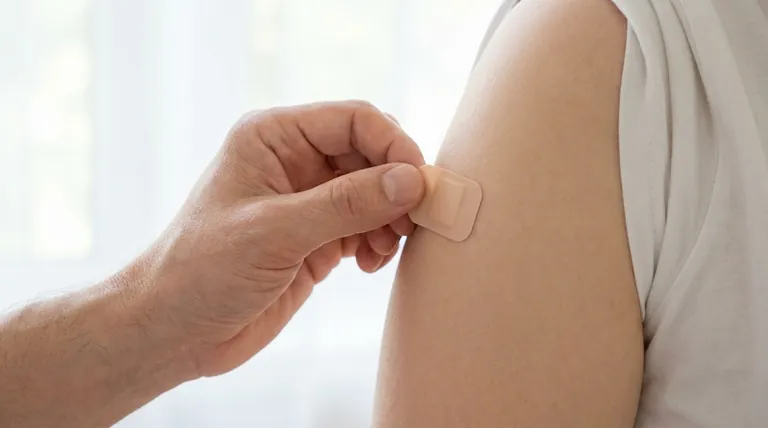
The patch must be applied to a clean, dry, and relatively hairless area of skin. Ideal locations are between your neck and waist, such as the upper arm, chest, shoulder, or back.
What to Avoid
Do not place the patch on skin that is burned, cut, irritated, oily, or scarred. Damaged skin can affect nicotine absorption and increase irritation.
The Daily Routine is Critical
Apply a new patch every morning at approximately the same time. This consistency is key to maintaining stable nicotine levels throughout the day. Always wash your hands after handling the patch.
The Importance of Site Rotation
To prevent skin irritation, you must apply each new patch to a different location. Do not use the same spot of skin again for at least one week.
Finding Your Optimal Dosage Strategy
The "right" dose is the one that reduces your urge to smoke without causing side effects from too much nicotine, such as dizziness or a racing heart.
Starting on the Right Foot
Your initial patch strength should be determined with your doctor. It is based on your smoking history—primarily how many cigarettes you smoked per day.
The Tapering-Down Process
The standard treatment plan involves gradually reducing the patch dosage over a period of 8 to 10 weeks. This slow tapering process is essential for avoiding a sudden return of withdrawal symptoms as you come off the patch completely.
Understanding the Trade-offs and Side Effects
While highly effective, nicotine patches require you to be aware of a few key variables and potential issues.
24-Hour vs. 16-Hour Patches
The most common decision you'll face is between a patch worn for 24 hours or one worn only during waking hours (16 hours).
Managing Sleep Disturbances
A 24-hour patch can be beneficial for heavy smokers who experience intense cravings upon waking. However, a common side effect is vivid dreams or disrupted sleep. If this occurs, switching to a 16-hour patch (removing it before bed) is the recommended solution.
Critical Application Errors to Avoid
Never cut or trim a nicotine patch, as this can damage the nicotine-delivery mechanism and lead to an unpredictable dose. Remember, the patch is for external use only.
Making the Right Choice for Your Goal
Your specific experience will guide how you use the patch. Adjust your strategy based on your body's response to the treatment.
- If your primary focus is managing intense morning cravings: A 24-hour patch may provide the overnight stability you need.
- If you experience vivid dreams or poor sleep: Immediately switch to a 16-hour patch, applying it in the morning and removing it at bedtime.
- If you develop mild skin irritation: Be more diligent about rotating application sites and ensure the skin is completely clean and dry before applying.
- If you are still experiencing strong cravings: Consult your doctor, as your starting dose may be too low for your level of dependence.
A methodical and informed approach transforms the nicotine patch from a simple aid into a powerful tool for taking control of your health.
Summary Table:
| Key Aspect | Action / Recommendation |
|---|---|
| Application | Apply to clean, dry skin on the upper body (e.g., arm, chest). Rotate site daily. |
| Timing | Apply a new patch every morning at the same time for consistent levels. |
| Dosage Strategy | Start with a strength based on smoking history. Follow an 8-10 week tapering plan. |
| Managing Side Effects | Switch to a 16-hour patch if 24-hour patch causes sleep disturbances or vivid dreams. |
| Critical Errors | Never cut the patch. Do not apply to irritated or damaged skin. |
Ready to develop your own reliable transdermal solutions?
As Enokon, a bulk manufacturer of reliable transdermal patches and pain plasters, we provide more than just products. We offer technical expertise for custom R&D and development to healthcare and pharmaceutical distributors and brands. Let us help you create effective, high-quality patches tailored to your market's needs.
Contact our experts today to discuss your project and benefit from our manufacturing and development capabilities.
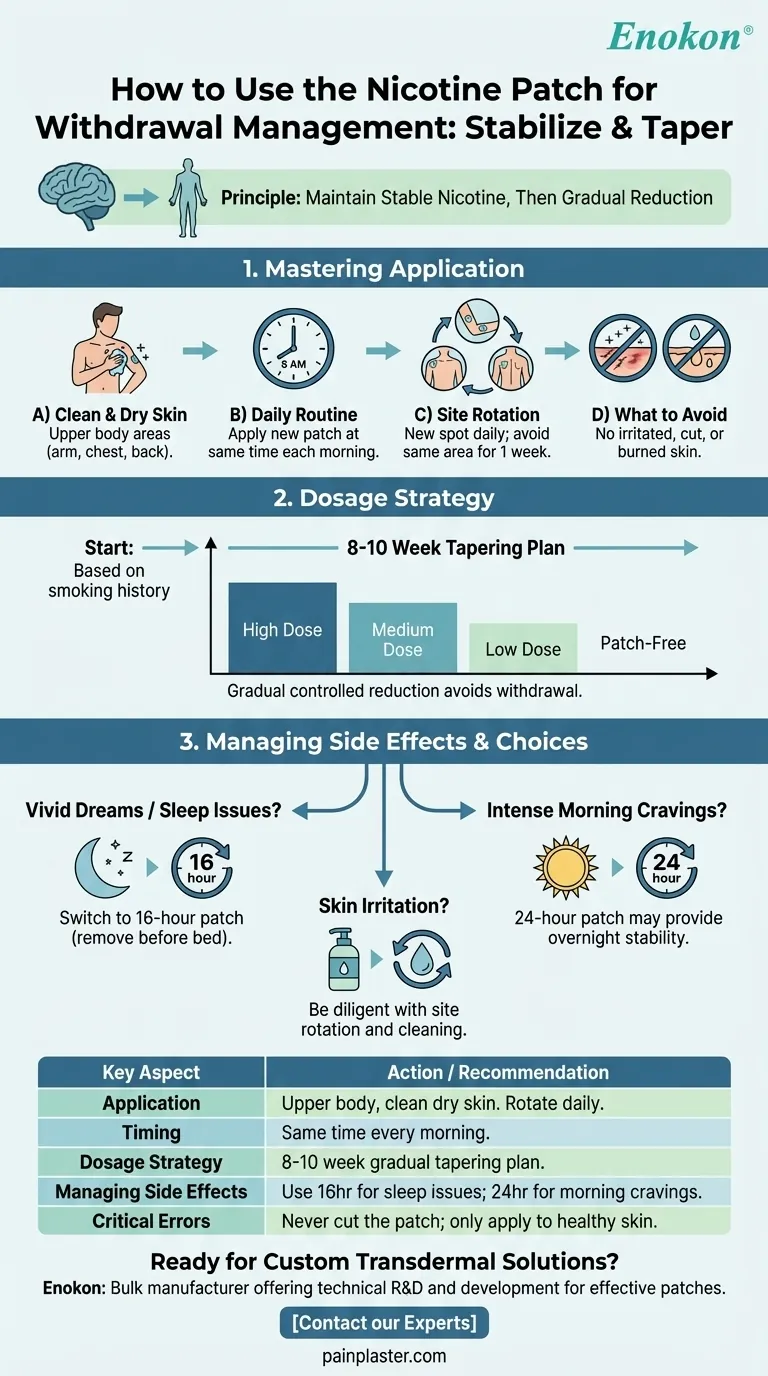
Visual Guide
Related Products
- Menthol Gel Pain Relief Patch
- Capsaicin Chili Medicated Pain Relief Patches
- Icy Hot Menthol Medicine Pain Relief Patch
- Lidocaine Hydrogel Pain Relief Patch for Pain Relief
- Mugwort Wormwood Pain Relief Patch for Neck Pain
People Also Ask
- How do pain relief patches compare to other pain relief methods? Discover Targeted, Long-Lasting Relief
- How effective are pain relief patches for muscle pain? Target Localized Pain with Transdermal Delivery
- Who should consult a healthcare professional before using pain relief patches? Ensure Your Safety with Medical Advice
- What are some common applications of pain relief patches? Effective Relief for Muscle & Joint Pain
- What are pain relief patches and how do they work? Discover Non-Invasive Pain Management

















