
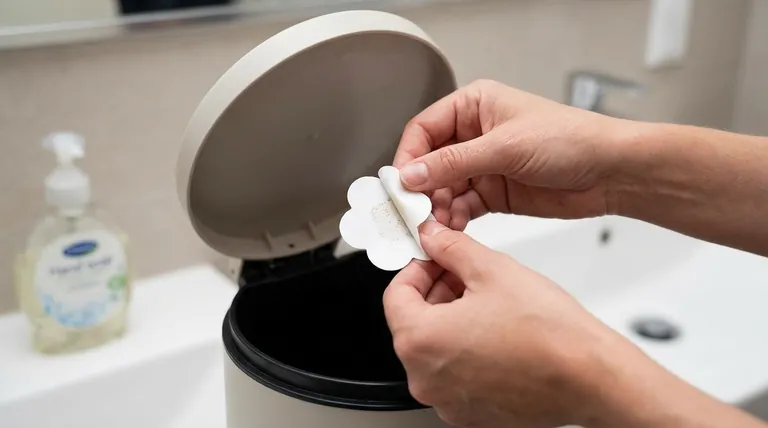
To dispose of a scopolamine patch safely, you must fold the used patch in half with the sticky sides pressed firmly together. Immediately throw it away in a secure trash can that is out of reach of children and pets. After handling the patch, always wash your hands thoroughly with soap and water.
The most critical point to understand is that a used scopolamine patch still contains a significant amount of active medication. Proper disposal is not just about cleanliness; it's a crucial safety measure to prevent accidental poisoning of children or pets who might find and handle it.
The Core Principle: Why Careful Disposal is Critical
Used Patches Are Not Empty
A transdermal patch is designed to deliver medication slowly over its wear time, typically 72 hours. When you remove it, a large portion of the original scopolamine dose remains in the patch's adhesive layer.
The Risk of Accidental Exposure
If a child or pet chews on, swallows, or even just places a used patch on their skin, they can absorb a dangerously high dose of the drug. This makes careful handling and disposal an essential part of using the medication safely.
Step-by-Step Disposal Instructions
Step 1: Remove the Old Patch
Before applying a new patch, always remove the old one first. Be careful not to touch the sticky side with your fingers more than necessary.
Step 2: Fold It Securely
Immediately fold the patch in half, pressing the sticky sides firmly together. This seals the remaining medication inside, making it much harder for accidental contact to occur.
Step 3: Discard in a Secure Trash Can
Place the folded patch in a trash receptacle, preferably one with a lid that children and pets cannot easily access. Do not leave it on a nightstand, counter, or in an open wastebasket.
Step 4: Wash Your Hands
Thoroughly wash your hands with soap and water after handling the patch. This removes any medication residue from your skin and prevents you from accidentally transferring it to your eyes or mouth.
Common Pitfalls to Avoid
Do Not Flush the Patch
Unlike some other powerful transdermal patches (like fentanyl), scopolamine patches should not be flushed down the toilet. The references are clear on this point. Flushing can introduce the medication into the water supply, posing an environmental risk.
Do Not Cut the Patch
Never cut a scopolamine patch. Doing so can damage the medication-delivery system, leading to an unpredictable and potentially dangerous release of the drug. Dispose of whole patches only.
Disposing of Unused Patches
If you have unused or expired patches, do not throw them in the household trash where they could be found. The safest method is to take them to a medicine take-back program at a local pharmacy.
Final Checklist for Safe Handling
Follow these guidelines to ensure you are managing your medication safely from start to finish.
- If you are at home: Always dispose of the folded patch in a lidded trash can that is inaccessible to children and pets.
- If you have unused or expired patches: The best practice is to return them to a pharmacy or an official medicine take-back program.
- If young children are present: Be extra vigilant about placing the used patch into a secure trash can immediately after folding it.
Properly disposing of your scopolamine patch is a simple but vital step in protecting your family and community.
Summary Table:
| Step | Action | Key Reason |
|---|---|---|
| 1. Remove | Take off the old patch carefully. | Minimize skin contact with residual medication. |
| 2. Fold | Fold patch in half, sticky sides together. | Seal the remaining drug inside to prevent exposure. |
| 3. Discard | Throw away in a secure, lidded trash can. | Keep out of reach of children and pets. |
| 4. Wash Hands | Wash thoroughly with soap and water. | Remove any medication residue from skin. |
Need a reliable supplier for safe, high-quality transdermal patches?
As Enokon, a bulk manufacturer of reliable transdermal patches and pain plasters for healthcare and pharmaceutical distributors and brands, we prioritize patient safety in every product. Our technical expertise ensures robust patch design and clear usage/disposal guidelines.
Partner with us to benefit from:
- Custom R&D and development tailored to your medication delivery needs.
- Manufacturing expertise that prioritizes user safety and product reliability.
Contact our experts today to discuss how we can support your transdermal product line.
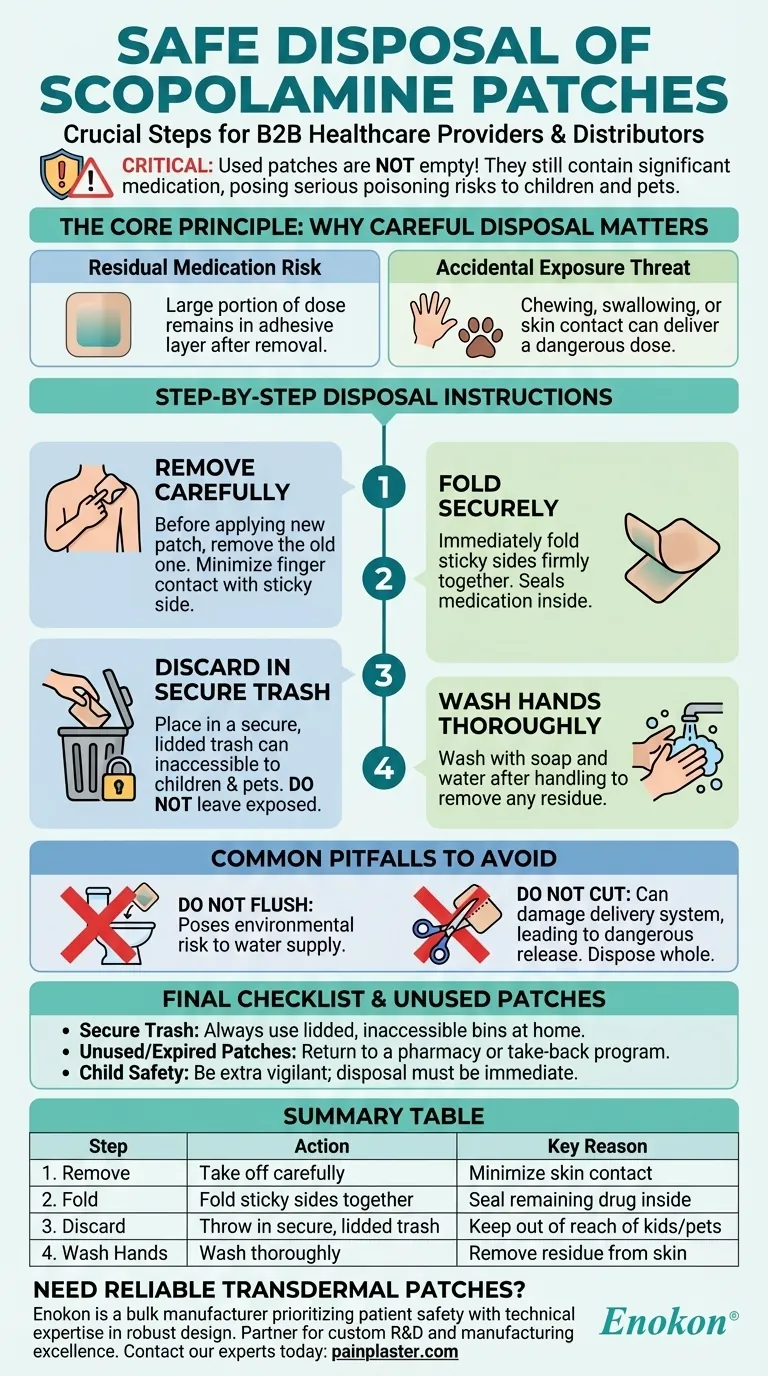
Visual Guide
Related Products
- Asthma Cough and Pain Relief Patch for Adults and Kids
- Lidocaine Hydrogel Pain Relief Patch for Pain Relief
- Menthol Gel Pain Relief Patch
- Herbal Medicated Anti Diarrhea Patch for Digestive Relief
- Icy Hot Menthol Medicine Pain Relief Patch
People Also Ask
- What role do natural ingredients and acupoint stimulation play in a cough relief patch? Synergistic Relief Explained
- What are the key benefits of using the cough relief patch? Soothe Your Cough with Targeted, Non-Oral Relief
- How does the cough relief patch provide targeted relief? Direct, Soothing Comfort for Coughs & Chest Congestion
- What makes the cough relief patch a convenient option for managing coughs? A Mess-Free, On-the-Go Solution
- What are the different types of pain relief patches available? Find the Right Solution for Your Pain


















