
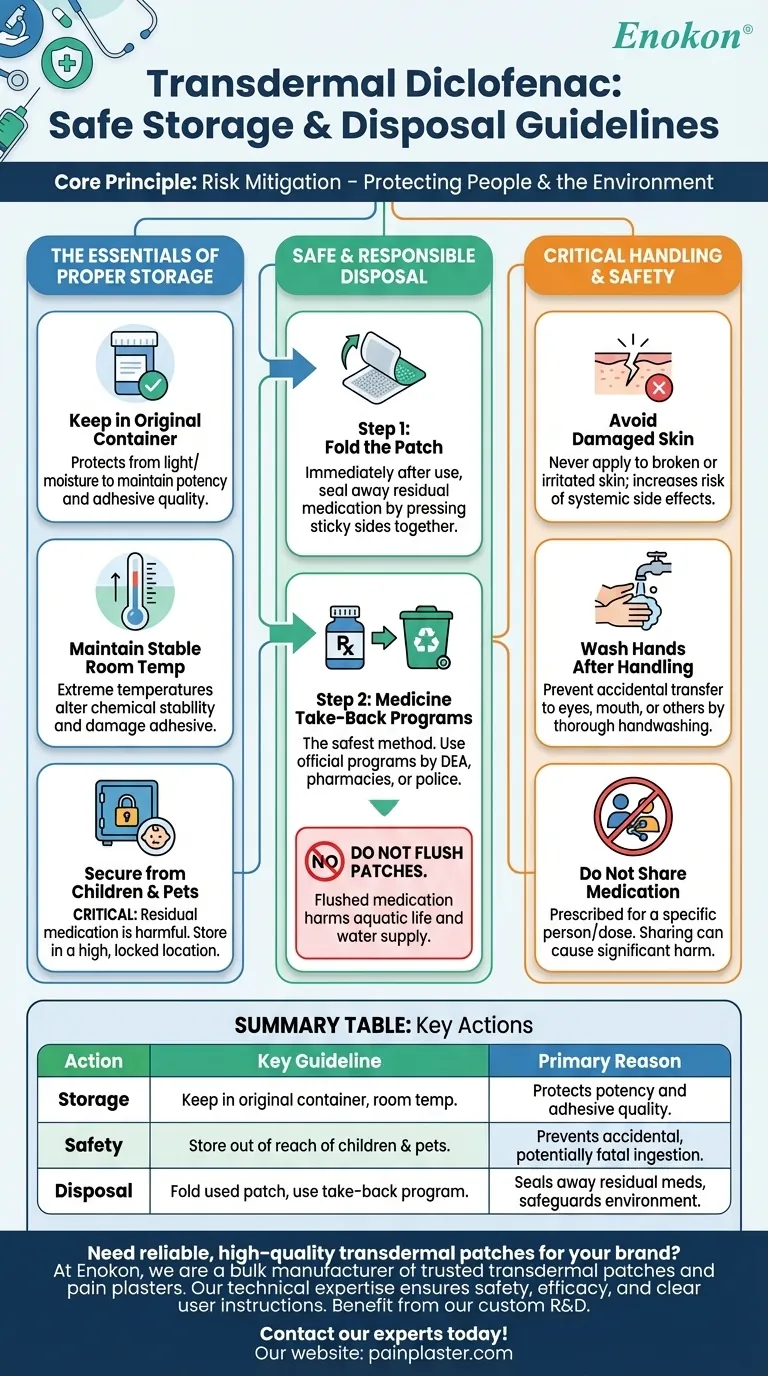
To properly manage transdermal diclofenac, you must store the patches in their original, tightly closed container at room temperature, ensuring they are always kept out of reach of children and pets. For disposal, the safest method is to fold a used patch in half with the sticky sides together and take any unneeded medication to an official medicine take-back program; never flush patches down the toilet.
The core principle behind storing and disposing of diclofenac patches is risk mitigation. Proper handling is not just about maintaining the drug's effectiveness, but is a critical safety measure to prevent accidental exposure to others and to protect the environment.
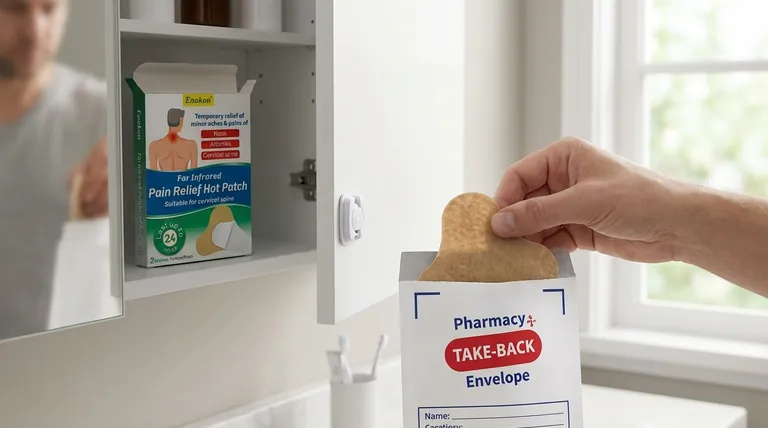
The Essentials of Proper Storage
Storing your medication correctly is the first step in ensuring both its effectiveness and the safety of those around you. Each storage guideline serves a specific protective purpose.
Keep it in the Original Container
The packaging your patches come in is designed to protect them from light and moisture. Leaving them exposed can degrade the active ingredient and compromise the patch's adhesive quality.
Maintain a Stable Room Temperature
Extreme heat or cold can alter the chemical stability of the diclofenac and damage the adhesive layer. This can lead to incorrect dosing or cause the patch to fall off the skin prematurely.
Secure it from Children and Pets
This is the most critical safety step. Even a used patch contains a significant amount of residual medication that can be extremely harmful or fatal if ingested by a child or pet. Always store them in a high, locked cabinet or other secure location.
Safe and Responsible Disposal
Proper disposal is just as important as proper storage. A discarded patch still poses a significant risk if not handled correctly.
The First Step: Fold the Patch
Immediately after removing a patch, fold it in half so the sticky, medication-containing sides press firmly together. This simple action seals away most of the remaining drug, making accidental contact less likely.
The Best Option: Medicine Take-Back Programs
The U.S. Drug Enforcement Administration (DEA) and many local pharmacies or police stations offer medicine take-back programs. These services provide the safest and most environmentally responsible way to dispose of unused or expired patches.
Why You Should Never Flush Patches
Flushing medication introduces active pharmaceutical ingredients into the water supply. These substances can harm aquatic life and are not effectively removed by standard water treatment facilities.
Critical Handling and Safety Precautions
Beyond storage and disposal, day-to-day handling requires careful attention to prevent unintended consequences.
Avoid Damaged or Irritated Skin
Never apply a diclofenac patch to skin that is broken, damaged, infected, or covered with a rash. Doing so can cause the medication to be absorbed into your bloodstream too quickly, increasing the risk of systemic side effects.
Wash Hands After Handling
Always wash your hands thoroughly with soap and water after applying or removing a patch. This prevents you from accidentally transferring the potent drug to your eyes, nose, mouth, or to another person.
Do Not Share Medication
Diclofenac patches are prescribed for a specific person at a specific dose. Never share your patches with someone else, as this could cause them significant harm.
Key Actions for Safe Diclofenac Use
Your approach to handling these patches should align with your primary safety concerns.
- If your primary focus is medication effectiveness: Store the patches exactly as directed in their original container to preserve their full potency until you are ready to use them.
- If your primary focus is household safety: Always keep patches out of reach and immediately fold and secure used ones for proper disposal to prevent accidental exposure.
- If your primary focus is environmental responsibility: Make a firm rule to never flush patches and commit to using an approved medicine take-back program for all unneeded medication.
Responsible medication management ensures you get the full benefit of your treatment while protecting your family and community.
Summary Table:
| Action | Key Guideline | Primary Reason |
|---|---|---|
| Storage | Keep in original container at room temperature. | Protects potency and adhesive quality. |
| Safety | Store out of reach of children and pets. | Prevents accidental ingestion, which can be fatal. |
| Disposal | Fold used patch sticky sides together. | Seals away residual medication. |
| Disposal | Use a medicine take-back program; never flush. | Safeguards the environment and water supply. |
Need reliable, high-quality transdermal patches for your brand or distributorship?
At Enokon, we are a bulk manufacturer of trusted transdermal patches and pain plasters. Our technical expertise ensures your products are developed with the highest standards of safety, efficacy, and clear user instructions. Benefit from our custom R&D to create the perfect solution for your market.
Contact our experts today to discuss your project requirements!
Visual Guide
Related Products
- Far Infrared Heat Pain Relief Patches Transdermal Patches
- Menthol Gel Pain Relief Patch
- Icy Hot Menthol Medicine Pain Relief Patch
- Silicone Scar Sheets Patch Transdermal Drug Patch
- Mugwort Wormwood Pain Relief Patch for Neck Pain
People Also Ask
- Why is the selection of matrix materials critical when developing customized transdermal patches? Optimize Efficacy
- What are the clinical advantages of local transdermal delivery systems? Unlock Safer, More Effective Pain Relief Solutions
- What are the physical impacts of external heat exposure on the performance and safety of transdermal patches? - Guide
- What role does a skin tolerance scoring system play in the safety evaluation of transdermal patches? Key Safety Metrics
- How does high-purity far-infrared ceramic powder contribute to the efficacy of far-infrared physical therapy patches?

















