
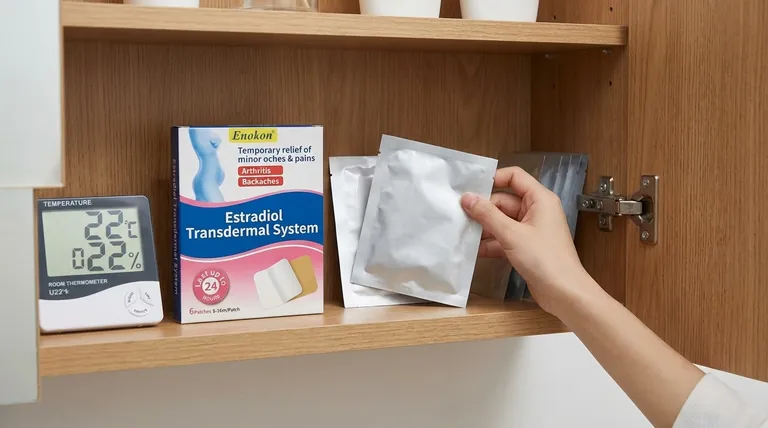
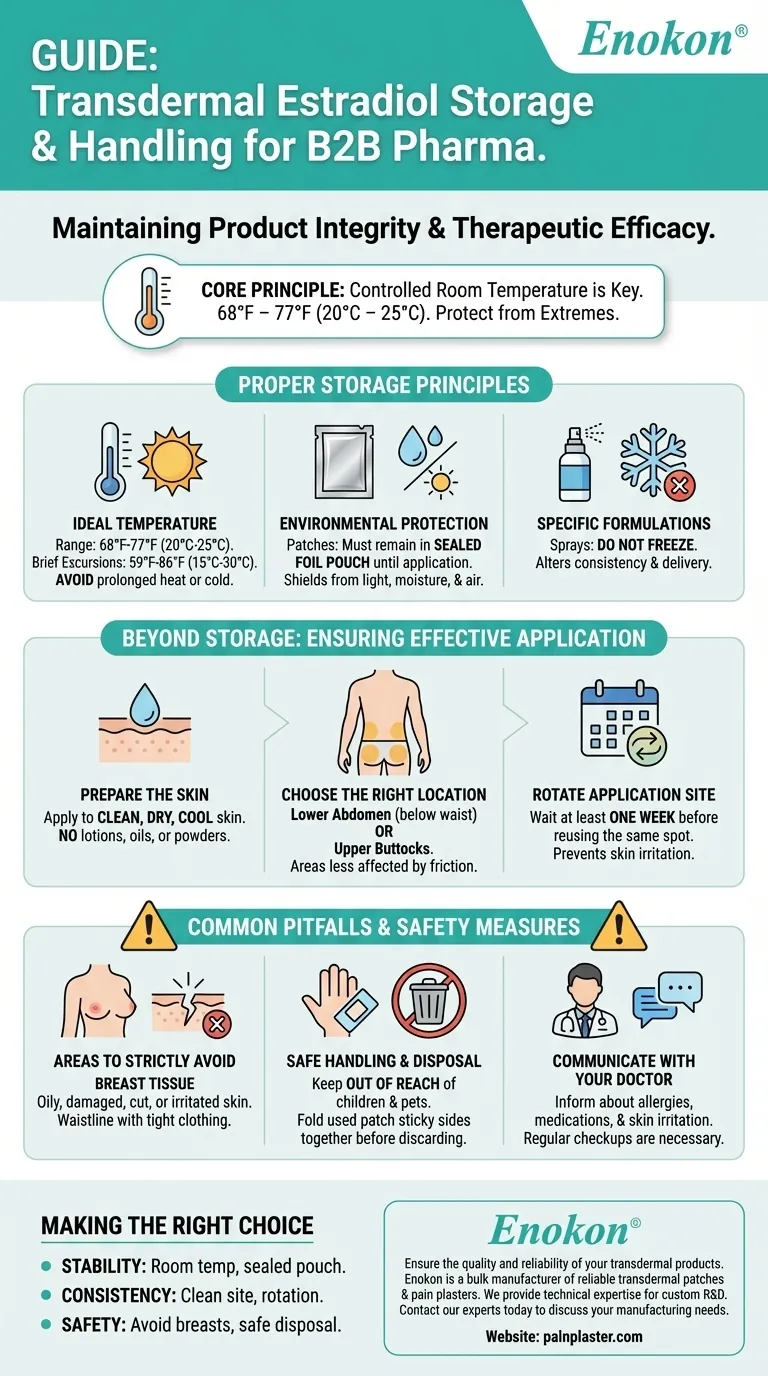
To put it simply, transdermal estradiol must be stored at a controlled room temperature, typically between 68°F and 77°F (20°C to 25°C). For all forms, like patches or sprays, it is crucial to protect them from extreme temperatures and environmental exposure to maintain their chemical stability and effectiveness. Patches should remain in their sealed foil pouch until the moment of application.
The core principle of storing transdermal estradiol is to protect its integrity. Proper storage is not just about temperature; it’s about ensuring the medication delivers a consistent, effective dose as intended by your physician.
The Principles of Proper Storage
Understanding why storage guidelines exist helps ensure your medication remains safe and potent. The active ingredient and the delivery system (the patch, gel, or spray) are sensitive to their environment.
Maintaining the Ideal Temperature
The required storage temperature of 68°F to 77°F (20°C to 25°C) is critical. This range prevents the degradation of the estradiol hormone and protects the integrity of the patch's adhesive or the spray's solution.
While short-term exposure to temperatures between 59°F and 86°F (15°C to 30°C) is generally acceptable, such as during transport, you should avoid prolonged storage in hot cars or cold areas.
Protecting from Environmental Factors
Transdermal patches are individually sealed in a foil pouch for a reason. This pouch protects the patch from light, moisture, and air, all of which can compromise the medication and the adhesive.
You should only open a pouch when you are immediately ready to apply the patch.
Handling Different Formulations
While the temperature guidelines are similar for most forms, there are specific considerations. For instance, transdermal sprays should never be frozen, as this can irreversibly alter the solution's consistency and the pump's delivery mechanism.
Beyond Storage: Ensuring Effective Application
Proper storage is the first step, but correct application is what ensures the medication works. The goal is to create the ideal conditions for the hormone to be absorbed through the skin consistently.
Preparing the Skin
Always apply the patch to clean, dry, and cool skin. Do not use lotions, oils, or powders on the area, as these can interfere with the patch's ability to stick and deliver the medication properly.
Choosing the Right Location
The patch should be applied to the lower stomach (below the waistline) or the upper buttocks. These areas provide a good surface for absorption and are less likely to be affected by friction from clothing.
Crucially, rotate the application site with each new patch. Waiting at least one week before using the same spot again helps prevent skin irritation, which can impact absorption.
Common Pitfalls and Safety Measures
Incorrect handling can reduce the medication's effectiveness and pose safety risks. Being aware of these common issues is essential for successful therapy.
Areas to Strictly Avoid
Never apply an estradiol patch to the breasts or to skin that is oily, damaged, cut, or irritated. You should also avoid the waistline, where tight clothing can rub the patch off.
Safe Handling and Disposal
Keep all forms of transdermal estradiol out of reach of children and pets. A used patch still contains some active hormone.
To dispose of a used patch, fold it in half with the sticky sides together and discard it in a trash can where children and pets cannot access it.
Communicating with Your Doctor
Your transdermal therapy is part of a larger health plan. Always inform your doctor about any allergies, all other medications you take (including supplements), and any skin irritation that develops. Regular checkups are necessary to monitor your body's response.
Making the Right Choice for Your Goal
Following these guidelines ensures you get the full therapeutic benefit of your medication safely.
- If your primary focus is medication stability: Always store your estradiol at room temperature and keep patches in their sealed foil pouch until the moment of use.
- If your primary focus is consistent absorption: Apply the patch to a clean, dry, non-irritated site on your lower abdomen or upper buttocks, and be diligent about rotating sites.
- If your primary focus is overall safety: Never apply a patch to breast tissue, dispose of used patches carefully, and maintain open communication with your healthcare provider.
Ultimately, proper storage and handling are fundamental to ensuring your transdermal therapy is both safe and effective.
Summary Table:
| Storage Factor | Key Guideline | Why It Matters |
|---|---|---|
| Temperature | 68°F to 77°F (20°C to 25°C) | Prevents degradation of the active hormone. |
| Protection | Keep in sealed foil pouch until use | Shields from light, moisture, and air. |
| Location | Cool, dry place away from extremes | Maintains adhesive integrity and drug delivery. |
Ensure the quality and reliability of your transdermal products. As Enokon, a bulk manufacturer of reliable transdermal patches and pain plasters, we provide healthcare and pharma distributors and brands with technical expertise for custom R&D and development. Let us help you deliver consistently effective medication to your customers. Contact our experts today to discuss your manufacturing needs.
Visual Guide
Related Products
- Silicone Scar Sheets Patch Transdermal Drug Patch
- Far Infrared Heat Pain Relief Patches Transdermal Patches
- Menthol Gel Pain Relief Patch
- Icy Hot Menthol Medicine Pain Relief Patch
- Mugwort Wormwood Pain Relief Patch for Neck Pain
People Also Ask
- What role does a silicone-based transdermal delivery system play in Parkinson's? Enhancing Early-Stage Patient Care
- How is the long-term skin tolerance of silicone-based transdermal patches evaluated in clinical settings? R&D and Safety
- Why is a polarizing microscope used to evaluate the long-term stability of transdermal drug patches? Ensure Efficacy.
- What are common adverse effects of transdermal drug delivery? Risks & Prevention Tips
- What are the advantages of transdermal drug patches? Optimize Medication Delivery with Patches











