
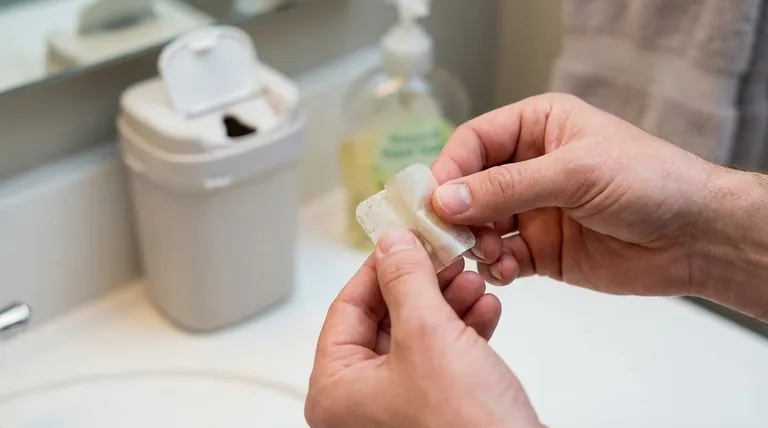
To properly dispose of a used nitroglycerin patch, you must immediately fold it in half with the sticky sides pressed firmly together. This seals in the remaining medication. Then, throw the folded patch away in a trash can that is safely out of reach of children and pets, preferably one with a secure lid.
The central takeaway is that even a "used" patch contains a significant amount of potent medication. Proper disposal is not just about tidiness; it is a critical safety measure to prevent accidental and potentially fatal poisoning of children or pets who might find it in the trash.
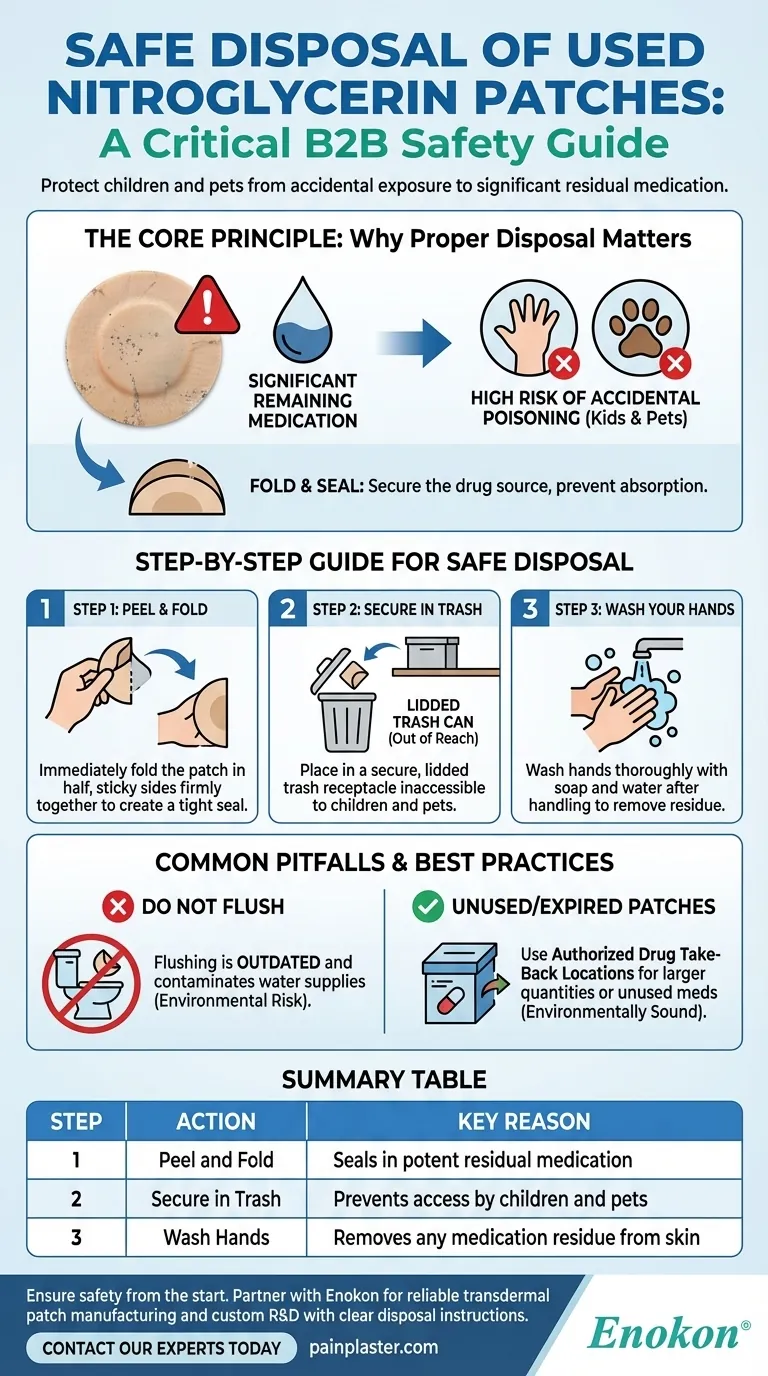
The Core Principle: Why Proper Disposal Matters
Even after being worn for the prescribed time, a transdermal patch can still contain a large portion of its original active drug. This residual medication poses a serious risk if not handled correctly.
The Danger of Significant Remaining Medication
A nitroglycerin patch is designed to deliver a steady, controlled dose over many hours. To achieve this, it must be "over-filled" with medication, meaning a substantial amount remains on the patch even after you remove it.
High Risk of Accidental Exposure
If a child finds a used patch, they might put it in their mouth or stick it on their skin. A dose that is therapeutic for an adult can be extremely dangerous or even lethal for a small child. Pets are also at high risk of poisoning if they chew on or ingest a discarded patch.
Securing the Drug Source
Folding the patch in half so it sticks to itself is the most important step. This effectively seals the medicated layer, making it much more difficult for the remaining drug to be accidentally absorbed by someone who might touch it.
Step-by-Step Guide for Safe Disposal
Following a consistent routine ensures safety for everyone in your household.
Step 1: Peel and Fold
As soon as you remove the used patch from your skin, fold it in half. Press the two sticky sides firmly together so they create a tight seal.
Step 2: Secure in Trash
Immediately place the folded patch in a trash receptacle. The ideal location is a trash can with a secure lid that children and pets cannot open or access.
Step 3: Wash Your Hands
After handling the patch, wash your hands thoroughly with soap and water to remove any medication residue that may have gotten on your fingers.
Common Pitfalls and Conflicting Advice
You may encounter different or outdated instructions regarding medication disposal. It's crucial to understand the current best practices.
The Flushing Controversy
Some older medication guides or package inserts may suggest flushing certain patches down the toilet. However, this advice is now largely outdated due to environmental concerns. Medications flushed into the sewer system can contaminate water supplies. Unless specifically instructed by a pharmacist or a take-back program, do not flush patches.
Unused vs. Used Patches
The disposal method described here is for routinely used patches. For unused or expired patches, the best method is to take them to an authorized drug take-back location. This is the most environmentally sound and safe way to dispose of larger quantities of medication.
The Importance of Safe Storage
Just as important as disposal is the safe storage of your new, unused patches. Keep them in their original packaging at room temperature, away from heat and moisture, and in a location that is locked or otherwise inaccessible to children.
Making the Right Choice for Your Situation
Your primary goal is always to prevent accidental exposure.
- If your primary focus is household safety: The fold-and-secure-trash method is non-negotiable to protect children and pets from the potent remaining medication.
- If your primary focus is environmental impact: Avoid flushing patches; securing them in household trash prevents the medication from entering the water system.
- If you are disposing of expired or unused patches: The safest and most responsible option is to find a local medicine take-back program.
Following these simple steps ensures that your medication helps you without inadvertently harming others.
Summary Table:
| Step | Action | Key Reason |
|---|---|---|
| 1 | Peel and Fold | Seals in potent residual medication |
| 2 | Secure in Trash | Prevents access by children and pets |
| 3 | Wash Hands | Removes any medication residue from skin |
Ensure the safety and efficacy of your transdermal patch products from the start. Partner with Enokon, a bulk manufacturer of reliable transdermal patches and pain plasters for healthcare and pharma distributors and brands. Benefit from our technical expertise for custom R&D and development to create products with clear, safe disposal instructions built-in. Contact our experts today to discuss your manufacturing needs.
Visual Guide
Related Products
- Icy Hot Menthol Medicine Pain Relief Patch
- Menthol Gel Pain Relief Patch
- Far Infrared Heat Pain Relief Patches Transdermal Patches
- Silicone Scar Sheets Patch Transdermal Drug Patch
- Mugwort Wormwood Pain Relief Patch for Neck Pain
People Also Ask
- What is the shelf-life of the pain relief patch? Ensure Potency and Safety for Your Patients
- What factors should be considered when choosing between pills and patches for pain relief? A Guide to Personalized Pain Management
- What are the key components of a pain relief patch? Unlock the Science of Targeted Pain Relief
- Can the pain relief patch be used with oral pain relief products? Avoid Dangerous Drug Interactions
- What is the duration of pain relief provided by the patches? Find the Right Patch for Your Pain



















