For those with sensitive skin, pain relief patches are not universally safe, but they can be used with careful precautions. Your skin's reaction depends on the patch's active ingredients and its adhesive, making a preliminary skin test essential for avoiding widespread irritation.
The safety of a pain relief patch on sensitive skin is not a given. It requires a proactive approach: you must first test the patch on a small, discreet area of skin to gauge its compatibility before committing to full use.
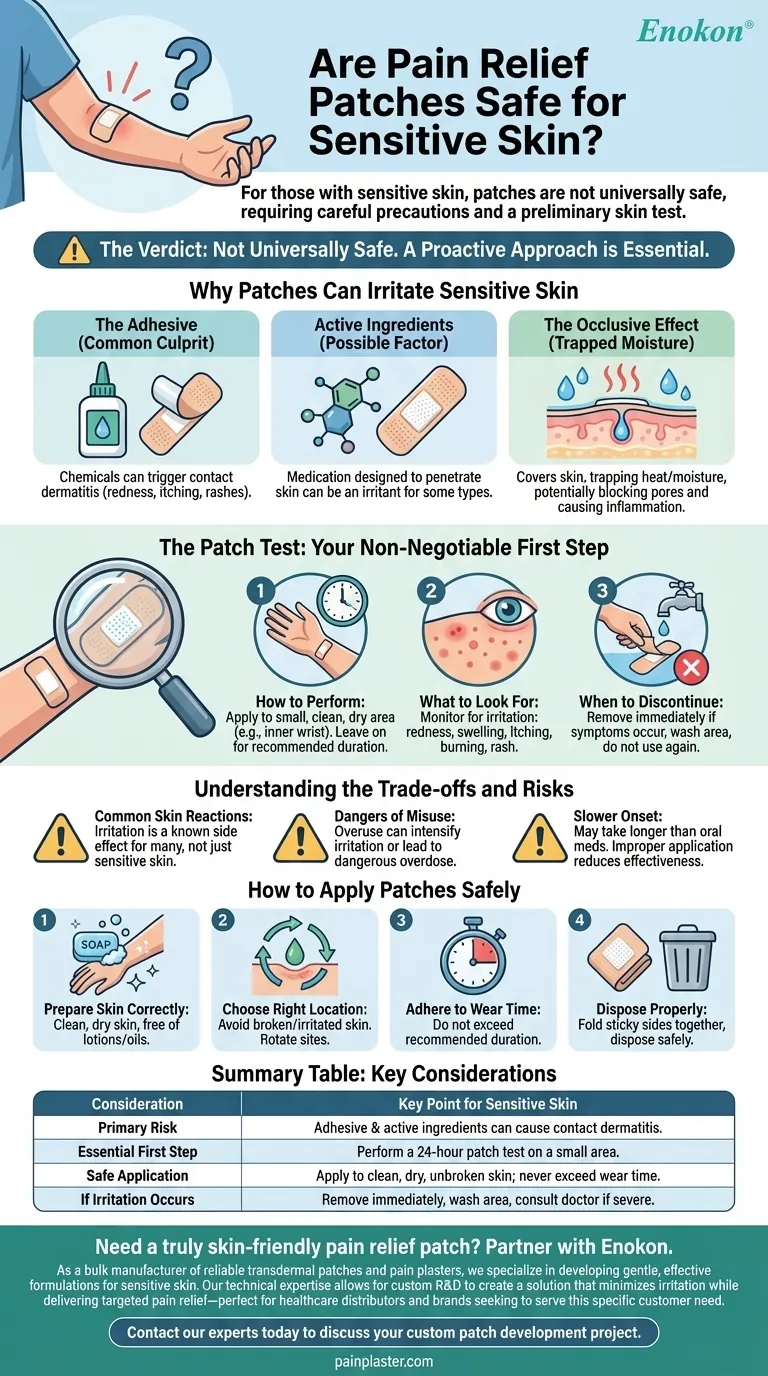
Why Patches Can Irritate Sensitive Skin
Understanding the source of potential irritation helps you mitigate the risk. A pain relief patch has several components that can interact with your skin, especially if it's prone to sensitivity.
The Adhesive is a Common Culprit
The primary function of the adhesive is to keep the patch in place, but it's often the main source of skin reactions. The chemicals used in the adhesive can trigger contact dermatitis, leading to redness, itching, and rashes.
Active Ingredients Can Be a Factor
The medication within the patch, designed to penetrate your skin and relieve pain, can also be an irritant. Certain ingredients may be too harsh for sensitive skin types, causing a direct reaction at the application site.
The Occlusive Effect
By its nature, a patch covers the skin, trapping heat and moisture. This is called an occlusive effect. For some, this environment can block pores and lead to irritation or inflammation, even if the ingredients and adhesive are otherwise non-reactive.
The Patch Test: Your Non-Negotiable First Step
For anyone with sensitive skin, a patch test is the single most important safety measure. It is a simple trial to see how your skin will react before you apply the patch to a larger or more delicate area.
How to Perform a Patch Test
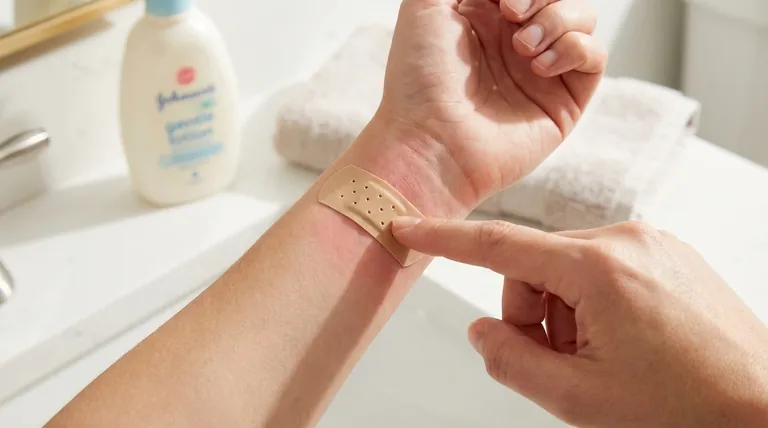
Apply the patch to a small, clean, and dry area of skin, such as the inside of your wrist or arm. Leave it on for the recommended duration, or for at least a few hours if no duration is specified for a test.
What to Look For
During and after the test, monitor the area for any signs of irritation. This includes redness, swelling, itching, burning, or the formation of a rash.
When to Discontinue Use
If you experience any of these symptoms, remove the patch immediately, wash the area with mild soap and water, and do not use the product again. It is wise to consult a healthcare provider to discuss the reaction.
Understanding the Trade-offs and Risks
While convenient, pain relief patches come with inherent risks that users must be aware of, particularly when skin sensitivity is a concern.
Common Skin Reactions
Skin irritation is a known side effect for a significant percentage of users, not just those with pre-existing sensitivities. Assuming a patch will be gentle is a common mistake.
The Dangers of Misuse
Following instructions is critical. Leaving a patch on for too long can intensify skin irritation and, with certain potent medicated patches, lead to a dangerous overdose of medication.
Slower Onset of Action
Be aware that some patches may take longer to provide relief compared to oral medications. Improper application, such as on unclean skin, can further reduce their effectiveness and increase the risk of adverse effects.
How to Apply Patches Safely
If a patch test proves successful, following best practices during application will maximize safety and effectiveness.
Prepare the Skin Correctly
Always apply the patch to clean, dry skin that is free of lotions, oils, or powders. This ensures proper adhesion and reduces the risk of trapping potential irritants.
Choose the Right Location
Never apply a patch to broken, damaged, or already irritated skin. Rotate application sites if you use patches frequently to give your skin time to recover.
Adhere to the Recommended Wear Time
Each product has a specific wear time listed in its instructions. Do not exceed this time, as it increases the risk of both skin reactions and other potential side effects.
Dispose of Used Patches Properly
Used patches still contain active medication. Fold them in half with the sticky sides together and dispose of them safely, out of the reach of children and pets.
Making the Right Choice for Your Skin
Your approach to using pain relief patches should be guided by your specific skin profile and a commitment to safety.
- If you have known skin sensitivities or allergies: Always consult a healthcare professional before trying a new patch and make the patch test your mandatory first step.
- If you are trying a new brand or type of patch: Perform a patch test every time, as different formulations and adhesives can produce different reactions.
- If you experience any irritation at any time: Immediately remove the patch, clean the area, and cease use until you can consult with your doctor.
By being informed and methodical, you can safely determine if pain relief patches are a suitable option for you.
Summary Table:
| Consideration | Key Point for Sensitive Skin |
|---|---|
| Primary Risk | Adhesive & active ingredients can cause contact dermatitis (redness, itching). |
| Essential First Step | Perform a 24-hour patch test on a small area like the inner wrist. |
| Safe Application | Apply to clean, dry, unbroken skin and never exceed the recommended wear time. |
| If Irritation Occurs | Remove immediately, wash area, and discontinue use. Consult a doctor if severe. |
Need a truly skin-friendly pain relief patch? Partner with Enokon.
As a bulk manufacturer of reliable transdermal patches and pain plasters, we specialize in developing gentle, effective formulations for sensitive skin. Our technical expertise allows for custom R&D to create a solution that minimizes irritation while delivering targeted pain relief—perfect for healthcare distributors and brands seeking to serve this specific customer need.
Contact our experts today to discuss your custom patch development project.
Visual Guide
Related Products
- Icy Hot Menthol Medicine Pain Relief Patch
- Menthol Gel Pain Relief Patch
- Lidocaine Hydrogel Pain Relief Patch for Pain Relief
- Far Infrared Heat Pain Relief Patches Transdermal Patches
- Mugwort Wormwood Pain Relief Patch for Neck Pain
People Also Ask
- What are the benefits of using pain relief patches compared to oral medications? Targeted Relief with Fewer Side Effects
- What is the duration of pain relief provided by the patches? Find the Right Patch for Your Pain
- Can the pain relief patch be used with oral pain relief products? Avoid Dangerous Drug Interactions
- When should the pain relief patch not be used? Key Safety Rules to Avoid Risks
- What are the common side effects of pain relief patches? Risks & Safety Tips