
At its core, a heat patch is a self-adhesive pad designed to deliver consistent, low-level heat to a specific area of the body for several hours. It provides targeted warmth to soothe muscle aches, ease joint stiffness, and alleviate pain without the use of medication.
A heat patch works through a simple, air-activated chemical reaction. By increasing blood flow to a targeted area, it helps relax tense muscles and provides a non-invasive method for temporary pain relief.
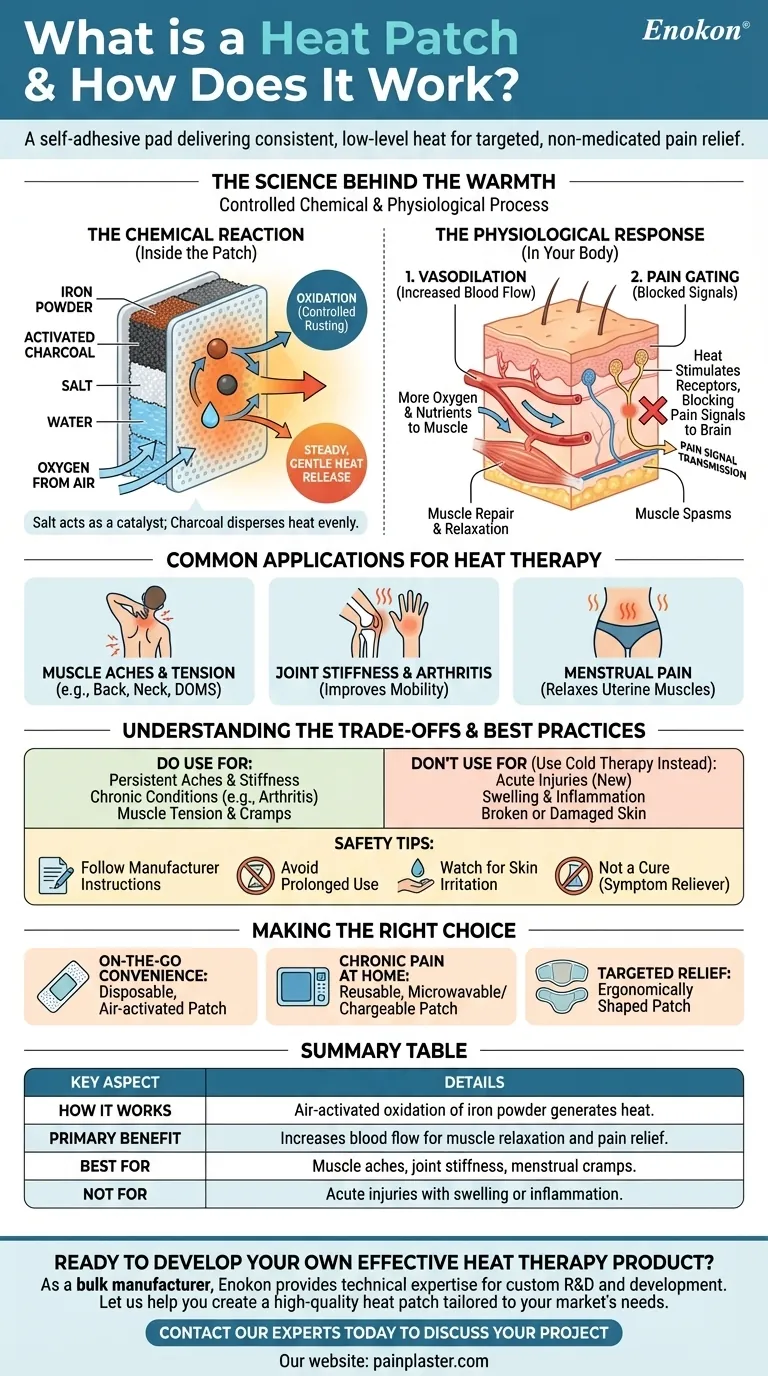
The Science Behind the Warmth
To understand if a heat patch is right for you, it's important to know the simple but effective mechanism behind it. The warmth is not magic; it's a controlled chemical and physiological process.
The Chemical Reaction
Most single-use heat patches contain a mixture of iron powder, activated charcoal, salt, and water. When you unseal the patch, oxygen from the air reacts with the iron powder in a process called oxidation—essentially, a rapid, controlled rusting. This reaction releases energy in the form of steady, gentle heat.
The other ingredients play crucial supporting roles. Salt acts as a catalyst to speed up the reaction, while activated charcoal helps to evenly disperse the heat across the patch for a consistent temperature.
The Physiological Response
When the patch is applied, the heat it generates penetrates the skin and raises the temperature of the underlying muscle tissue. This localized warmth triggers two key physiological responses.
First, it causes vasodilation, which is the widening of blood vessels. This increases blood circulation to the area, delivering more oxygen and nutrients to damaged or tense muscle fibers, which helps them repair and relax.
Second, the heat can stimulate sensory receptors in the skin. This can help to decrease the transmission of pain signals to the brain, effectively "gating" or blocking the sensation of pain and reducing muscle spasms.
Common Applications for Heat Therapy
Heat patches are most effective for addressing persistent aches and stiffness rather than fresh, acute injuries.
Muscle Aches and Tension
They are commonly used for non-inflammatory muscle pain, such as lower backaches from prolonged sitting, neck tension from stress, or delayed onset muscle soreness (DOMS) after a workout.
Joint Stiffness and Arthritis
For chronic conditions like arthritis, the warmth from a heat patch can help reduce joint stiffness and improve mobility, especially in the morning or before physical activity.
Menstrual Pain
Heat is a well-established method for relieving menstrual cramps. A patch applied to the lower abdomen can help relax the contracting uterine muscles, significantly easing pain.
Understanding the Trade-offs
While effective for their intended purpose, heat patches are not a universal solution for all types of pain. Understanding their limitations is key to using them safely and effectively.
Not a Cure, But a Symptom Reliever
A heat patch manages the symptoms of muscle pain and stiffness. It does not address the underlying cause of the problem. It is a tool for comfort and temporary relief, not a long-term cure.
Risk of Skin Irritation or Burns
Applying a patch for too long or directly onto sensitive skin can cause irritation or low-temperature burns. Always follow the manufacturer's instructions, and never apply a patch to broken or damaged skin.
Ineffective for Acute Injuries
Heat should not be used on a new injury, such as a sprain or muscle tear, that involves swelling and inflammation. Applying heat to an acute injury can increase blood flow and worsen the swelling. For these situations, cold therapy (ice packs) is the appropriate initial response.
Making the Right Choice for Your Goal
Selecting the correct approach depends entirely on your specific need and lifestyle.
- If your primary focus is convenience for on-the-go relief: A disposable, air-activated patch is the ideal choice for its simplicity and portability.
- If your primary focus is managing chronic pain at home: A reusable patch, which can often be microwaved or charged, offers a more sustainable and cost-effective solution.
- If your primary focus is a specific area like the neck or lower back: Seek out an ergonomically shaped patch designed to contour to that body part for better contact and more effective heat delivery.
Understanding how this simple tool works allows you to use it effectively for safe and targeted pain management.
Summary Table:
| Key Aspect | Details |
|---|---|
| How It Works | Air-activated oxidation of iron powder generates consistent, low-level heat. |
| Primary Benefit | Increases blood flow to relax muscles and provide temporary pain relief. |
| Best For | Muscle aches, joint stiffness (e.g., arthritis), and menstrual cramps. |
| Not For | Acute injuries with swelling or inflammation (use cold therapy instead). |
Ready to develop your own effective heat therapy product?
As a bulk manufacturer of reliable transdermal patches and pain plasters, Enokon provides healthcare and pharma distributors and brands with the technical expertise for custom R&D and development. Let us help you create a high-quality heat patch tailored to your market's needs.
Contact our experts today to discuss your project and benefit from our manufacturing excellence.
Visual Guide
Related Products
- Far Infrared Heat Pain Relief Patches Transdermal Patches
- Heating Pain Relief Patches for Menstrual Cramps
- Heat Relief Capsicum Patch for Lower Back Pain Relief
- Far Infrared Knee Pain Patch Heat Patches for Pain Relief
- Far Infrared Deep Heat Relief Patches Medicated Pain Relief Patches
People Also Ask
- Why is the selection of matrix materials critical when developing customized transdermal patches? Optimize Efficacy
- What are the physical impacts of external heat exposure on the performance and safety of transdermal patches? - Guide
- What are the clinical advantages of local transdermal delivery systems? Unlock Safer, More Effective Pain Relief Solutions
- What role does a skin tolerance scoring system play in the safety evaluation of transdermal patches? Key Safety Metrics
- How does high-purity far-infrared ceramic powder contribute to the efficacy of far-infrared physical therapy patches?



















