
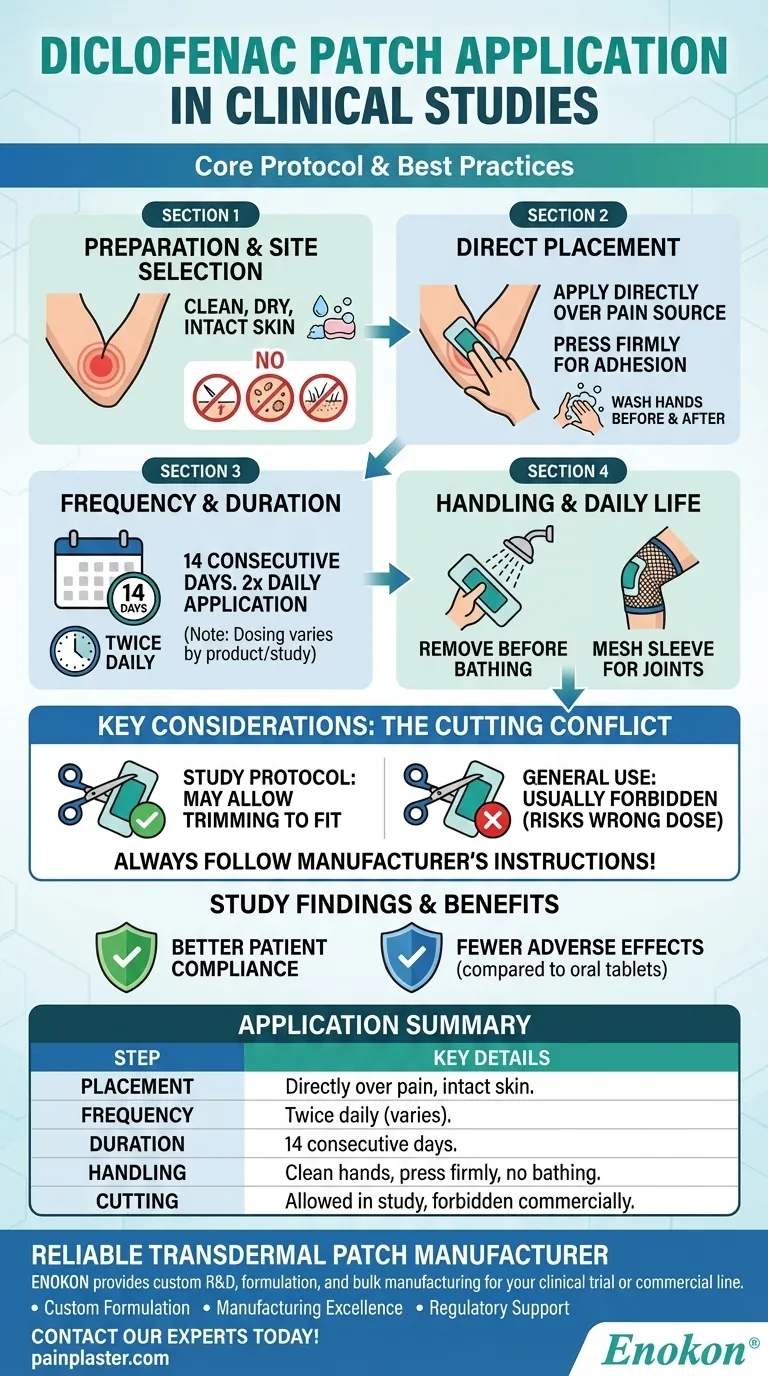
In the referenced clinical study, the diclofenac patch was applied directly to the skin over the painful injury site twice a day for 14 consecutive days. The protocol specified using the patch only on normal, intact skin. If the painful area was smaller than the 10 x 14 cm patch, participants were permitted to trim it to fit the specific site of injury.
While the fundamental principle is direct application to clean, intact skin over the injury, the specific frequency, duration, and even the ability to cut the patch can differ significantly between a controlled study protocol and standard patient instructions.
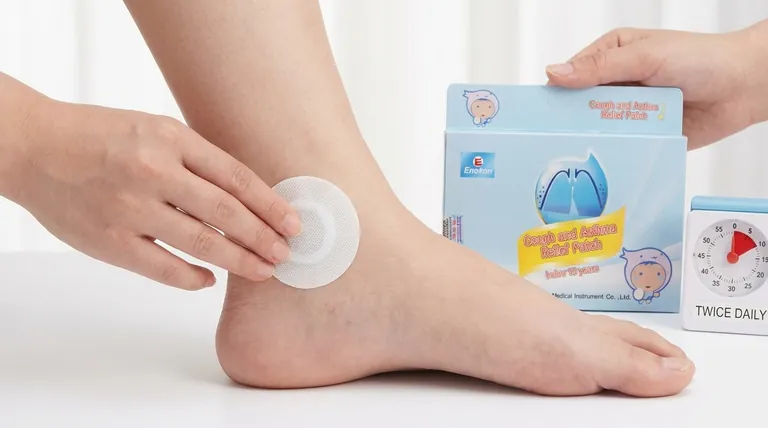
The Core Application Protocol
The effectiveness of any transdermal patch hinges on a precise and consistent application method. The study protocol outlined several key steps to ensure proper drug delivery from the patch to the tissue.
Direct Placement and Site Selection
The patch was always applied directly over the source of pain, such as a sprain or contusion.
This ensures the highest concentration of the anti-inflammatory drug is delivered precisely where it is needed most.
Critically, the application site had to be clean, dry, and free of any cuts, rashes, or irritation. The references also recommend avoiding hairy areas to ensure better adhesion.
Dosing Frequency and Duration
The primary study cited a schedule of twice-daily application for a treatment course of 14 days.
However, it is important to note that dosing can vary. Another referenced study utilized a once-daily 100 mg diclofenac patch, highlighting that frequency is determined by the specific product's formulation and strength.
Handling and Adhesion
Proper handling is essential for the patch to function correctly. Hands should be washed before and after application to prevent contamination or spreading the medication to other areas.
The patch should be applied immediately after being removed from its sealed pouch. It must be pressed firmly onto the skin to ensure the adhesive makes complete contact. If the edges begin to peel, they can be secured with tape.
Key Considerations and Best Practices
Beyond the basic steps, certain practices and external factors can significantly impact the patch's performance and safety. Understanding these nuances is critical for both patients and clinicians.
The "To Cut or Not to Cut" Conflict
The study protocol explicitly allowed participants to trim the patch. This was likely done to standardize application to various injury sizes within the trial.
However, general use instructions for many commercial transdermal patches strictly forbid cutting them. Doing so can damage the drug-delivery membrane, leading to an incorrect dose and potentially reduced effectiveness.
This discrepancy highlights the difference between a controlled research setting and standard patient care. Always follow the manufacturer's instructions for a specific product.
Managing Daily Activities
The patch is not designed to be worn while bathing or showering. It should be removed beforehand and a new patch applied afterward if the schedule requires it.
For patches placed on joints like an elbow or knee, a mesh sleeve can be used to help keep it securely in place during movement.
Patient Compliance and Benefits
One of the studies aimed to compare the patch to oral diclofenac tablets.
The results suggested the transdermal patch led to better patient compliance and fewer adverse effects, demonstrating a key advantage of localized, topical treatment over systemic medication.
Making the Right Choice for Your Goal
The evidence shows that proper application is not just a suggestion but a critical component of treatment success.
- If your primary focus is personal use: Always follow the specific instructions provided by the manufacturer and your pharmacist, as details like frequency and cutting are product-specific.
- If your primary focus is clinical research: Recognize that study protocols may need to deviate from standard instructions, but these deviations must be clearly defined and justified to ensure data integrity.
- If your primary focus is evaluating treatment options: Consider the high compliance and lower side-effect profile of transdermal patches as a significant benefit over oral medications for localized pain.
Ultimately, mastering the application protocol is the key to unlocking the full therapeutic potential of transdermal drug delivery.
Summary Table:
| Application Step | Key Details |
|---|---|
| Placement | Directly over the painful injury site on clean, dry, intact skin. |
| Frequency | Twice daily (specific dosing may vary by product formulation). |
| Duration | 14 consecutive days in the primary study. |
| Handling | Do not use on broken skin. Press firmly for adhesion. Avoid bathing with patch. |
| Cutting Patch | Allowed in the study protocol, but generally forbidden for commercial products. |
Need a reliable transdermal patch manufacturer for your brand or clinical study?
As Enokon, a bulk manufacturer of reliable transdermal patches and pain plasters, we provide more than just production. Our technical expertise supports custom R&D and development to create the optimal patch for your specific needs—whether for a clinical trial or a commercial product line.
Benefit from our partnership:
- Custom Formulation: Tailor drug delivery profiles, adhesion, and size.
- Manufacturing Excellence: Ensure consistent, high-quality bulk production.
- Regulatory Support: Navigate compliance requirements with our experienced team.
Contact our experts today to discuss your transdermal patch project and discover how we can help you achieve superior patient outcomes.
Visual Guide
Related Products
- Menthol Gel Pain Relief Patch
- Lidocaine Hydrogel Pain Relief Patch for Pain Relief
- Herbal Medicated Anti Diarrhea Patch for Digestive Relief
- Cooling Fever Patches Color Change Cold Fever Patch
- Icy Hot Menthol Medicine Pain Relief Patch
People Also Ask
- How effective are pain relief patches for muscle pain? Target Localized Pain with Transdermal Delivery
- How do pain relief patches compare to other pain relief methods? Discover Targeted, Long-Lasting Relief
- Who should consult a healthcare professional before using pain relief patches? Ensure Your Safety with Medical Advice
- How do drug loading and permeation enhancers ensure patch efficacy? Achieve Superior Clinical-Grade Pain Relief.
- What are some common applications of pain relief patches? Effective Relief for Muscle & Joint Pain



















