
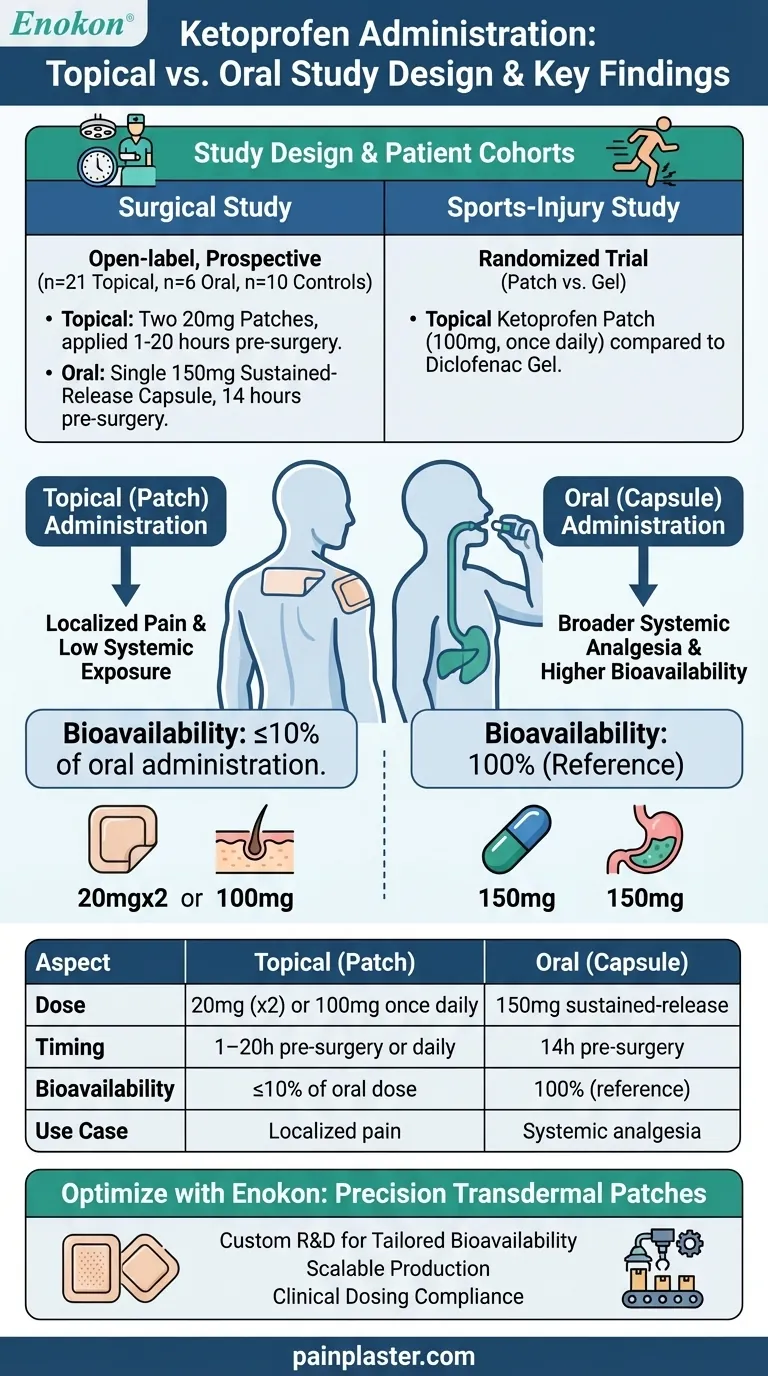
The study compared topical and oral ketoprofen administration through an open-label design involving patients scheduled for surgery. Twenty-one patients used two ketoprofen patches (20mg each) applied at varying durations (1, 6, 14, or 20 hours pre-surgery), while six patients took a single 150mg sustained-release oral capsule 14 hours before surgery. Ten untreated patients acted as controls. Another study focused on sports-related soft-tissue injuries, randomizing patients to either a 100mg ketoprofen patch once daily or diclofenac gel multiple times daily. Key findings noted that topical ketoprofen's systemic bioavailability was ≤10% of oral administration for the same dose, highlighting significant delivery differences between routes.
Key Points Explained:
-
Study Design:
- Open-label, prospective: Both studies were non-blinded, with clear treatment assignments.
- Randomization: The sports-injury trial randomized patients to ketoprofen patches or diclofenac gel, ensuring unbiased group allocation.
- Control group: The surgical study included untreated controls for baseline comparison.
-
Administration Protocols:
-
Topical (patch):
- Surgical study: Two 20mg patches applied 1–20 hours pre-surgery.
- Sports-injury study: Single 100mg patch daily.
- Oral: Single 150mg sustained-release capsule 14 hours pre-surgery.
-
Topical (patch):
-
Bioavailability Findings:
- Topical ketoprofen delivered ≤10% systemic bioavailability compared to oral doses, emphasizing route-dependent absorption efficiency.
-
Patient Cohorts:
- Surgical patients: Evaluated preemptive analgesia timing.
- Sports-injury patients: Compared patch efficacy against another topical NSAID (diclofenac gel).
-
Clinical Implications:
- Topical patches may suit localized pain with lower systemic exposure, while oral forms provide higher bioavailability for broader effects.
Have you considered how these bioavailability differences might influence dosing strategies for chronic versus acute pain? Such nuances quietly shape modern analgesic protocols.
Summary Table:
| Aspect | Topical (Patch) | Oral (Capsule) |
|---|---|---|
| Dose | 20mg (x2) or 100mg once daily | 150mg sustained-release |
| Timing | 1–20h pre-surgery or daily application | 14h pre-surgery |
| Bioavailability | ≤10% of oral dose | 100% (reference) |
| Use Case | Localized pain (surgery/sports injuries) | Systemic analgesia |
| Study Groups | Surgical/sports-injury patients + controls | Surgical patients |
Optimize your analgesic formulations with precision
At Enokon, we specialize in bulk manufacturing of high-efficacy transdermal patches, including ketoprofen delivery systems. Our technical expertise ensures:
- Custom R&D for tailored bioavailability profiles
- Scalable production for healthcare/pharma brands
- Compliance with clinical dosing requirements
Contact our team to develop patches aligned with your therapeutic goals.
Visual Guide
Related Products
- Menthol Gel Pain Relief Patch
- Icy Hot Menthol Medicine Pain Relief Patch
- Far Infrared Heat Pain Relief Patches Transdermal Patches
- Silicone Scar Sheets Patch Transdermal Drug Patch
- Mugwort Wormwood Pain Relief Patch for Neck Pain
People Also Ask
- How effective are pain relief patches for muscle pain? Target Localized Pain with Transdermal Delivery
- How do pain relief patches compare to other pain relief methods? Discover Targeted, Long-Lasting Relief
- Who should consult a healthcare professional before using pain relief patches? Ensure Your Safety with Medical Advice
- How do drug loading and permeation enhancers ensure patch efficacy? Achieve Superior Clinical-Grade Pain Relief.
- What are some common applications of pain relief patches? Effective Relief for Muscle & Joint Pain


















