Yes, in addition to the patch, clonidine is most commonly available as an oral tablet. These tablets come in both immediate-release and extended-release formulations, each designed for different therapeutic goals and dosing schedules. An injectable form also exists for specific clinical applications.
The choice between clonidine tablets and the patch fundamentally comes down to the treatment goal: tablets offer dosing flexibility and rapid action, while the patch provides steady, continuous medication delivery for long-term control.

A Tale of Two Formats: Tablet vs. Patch
Understanding the core differences in how each form delivers the medication is key to understanding why your doctor might recommend one over the other. Each has a distinct purpose.
The Oral Tablet: Immediate-Release (IR)
The immediate-release tablet is designed to work relatively quickly after you take it.
Its effects are shorter-lived, which is why it's typically taken two or three times per day to maintain stable levels of the medication in your body. This form is often used when a rapid effect or highly adjustable dosing is needed.
The Oral Tablet: Extended-Release (ER)
Extended-release tablets (such as Kapvay) are engineered to release the medication slowly over a longer period.
This allows for less frequent dosing, usually once or twice a day, providing a smoother effect without the distinct peaks and troughs of the IR version. This formulation is very common in the treatment of ADHD.
The Transdermal Patch: The Slow and Steady Approach
The clonidine patch (such as Catapres-TTS) is designed for a completely different delivery model.
It's applied to the skin and worn for a full week, delivering a continuous, low dose of medication directly into the bloodstream. This provides very stable drug levels, which is ideal for managing chronic conditions like hypertension.
Why Choose One Form Over Another?
The decision to use a specific form of clonidine is based on the condition being treated, the need for stable blood levels, and patient convenience.
When the Goal is Stable, Consistent Control
The transdermal patch is often the preferred choice for managing chronic high blood pressure.
Its week-long, continuous delivery system helps avoid the fluctuations in blood pressure that can occur between oral doses, promoting better overall control and adherence.
When the Goal is Rapid Action or Flexible Dosing
Immediate-release tablets are the standard choice when a quick onset is required or when a healthcare provider is trying to find the most effective dose. Their short-acting nature allows for precise adjustments throughout the day.
When the Goal is a Simplified Daily Routine
Both the extended-release tablet and the patch significantly improve convenience. The ER tablet reduces dosing to once or twice a day, while the patch only requires attention once a week, which can dramatically improve a person's ability to stick with their treatment plan.
Understanding the Trade-offs
No medication form is perfect; each comes with its own set of considerations that are important to discuss with your healthcare provider.
Oral Tablets: The Dosing Demands
The primary drawback of immediate-release tablets is the need to remember multiple doses per day. Missing a dose can lead to a rapid rebound in symptoms, such as a sharp increase in blood pressure. Side effects like drowsiness can also be more pronounced right after taking a dose.
The Patch: Potential for Skin Irritation
The most common reason people seek an alternative to the clonidine patch is skin reaction. Many users experience redness, itching, or a rash at the application site. This can often be managed by rotating the location of the patch, but for some, it necessitates a switch to an oral form.
Making the Right Choice with Your Doctor
Your specific health needs and daily life will determine the best clonidine formulation for you. This decision should always be made in consultation with your healthcare provider.
- If your primary focus is steady, long-term blood pressure control: The patch is often the preferred starting point due to its consistent, week-long delivery.
- If you are managing ADHD or need flexible dosing: Oral tablets, particularly the extended-release versions, are the standard of care for this use case.
- If you are experiencing skin irritation from the patch: Discussing a switch to an appropriate oral formulation with your provider is a logical and common next step.
Understanding these options is the first step toward tailoring your treatment to your specific needs and lifestyle.
Summary Table:
| Formulation | Key Characteristics | Common Use Cases |
|---|---|---|
| Transdermal Patch | Continuous, week-long delivery; stable blood levels | Chronic hypertension management |
| Immediate-Release (IR) Tablet | Rapid onset; short-lived effects; multiple daily doses | Rapid action, flexible dosing titration |
| Extended-Release (ER) Tablet | Slower release; once or twice-daily dosing | ADHD, simplified daily routine |
| Injectable | Used in specific clinical/hospital settings | Acute situations requiring precise control |
Need a reliable manufacturing partner for your transdermal patch products?
As Enokon, a bulk manufacturer of reliable transdermal patches and pain plasters, we provide healthcare and pharma distributors and brands with the technical expertise for custom R&D and development. Whether you are looking to develop a clonidine patch or other innovative transdermal solutions, we can help you bring a high-quality, consistent product to market.
Contact our experts today to discuss your project requirements and how we can support your success.
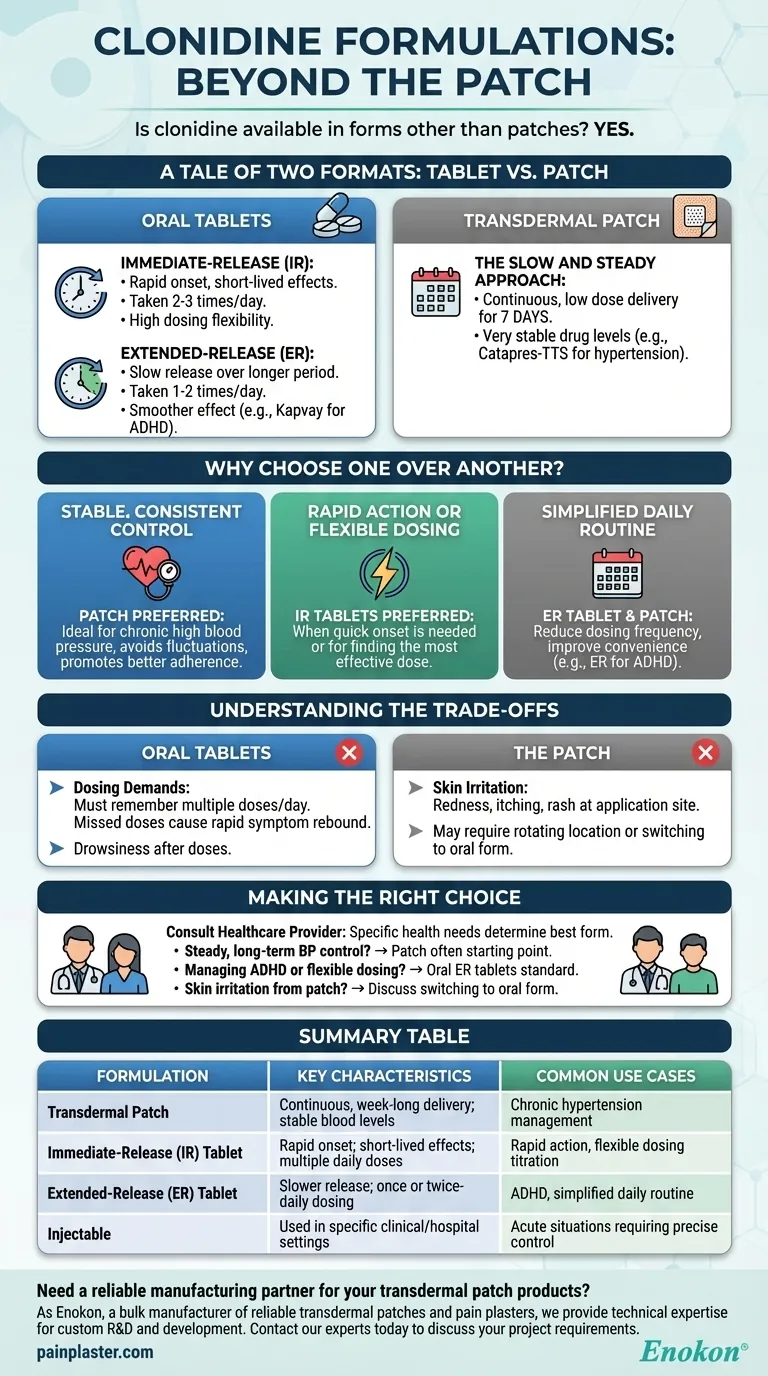
Visual Guide
Related Products
- Mugwort Wormwood Pain Relief Patch for Neck Pain
- Lidocaine Hydrogel Pain Relief Patch for Pain Relief
- Icy Hot Menthol Medicine Pain Relief Patch
- Far Infrared Heat Pain Relief Patches Transdermal Patches
- Prostate Pain Kidney Health Care Patch for Men
People Also Ask
- What safety considerations should be kept in mind when using pain relief patches? Ensure Safe & Effective Pain Management
- What is the purpose of pain relief patches? Get Targeted Relief with Fewer Side Effects
- How do pain relief patches provide targeted relief? Discover the Science Behind Effective Pain Management
- How should pain relief patches be applied and used? A Guide to Safe & Effective Targeted Relief
- Are pain relief pills and patches available without a prescription? Choose the Right OTC Pain Relief