
For the most part, yes, the birth control patch is considered as safe as the combination birth control pill. Both methods have very similar overall risk profiles because they use the same types of hormones, but they differ in one key area: the patch exposes you to higher levels of estrogen, which may slightly increase the risk of blood clots compared to some pills.
The decision between the patch and the pill is less about one being fundamentally "safer" and more about understanding a specific trade-off: balancing the patch's higher convenience against its slightly elevated estrogen exposure.
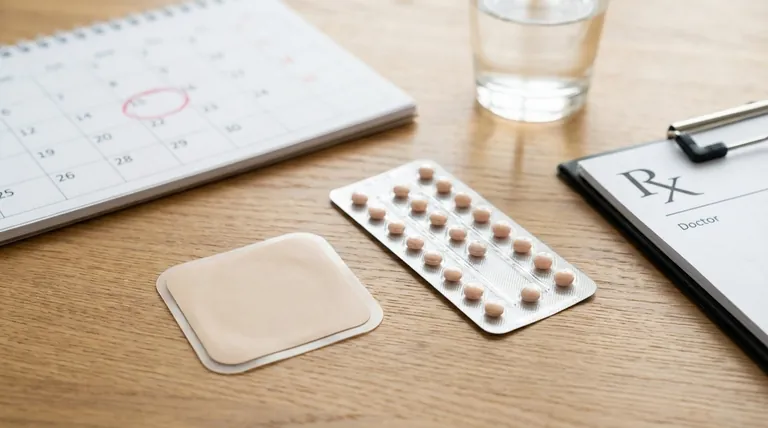
How They Work: A Shared Foundation
The Hormonal Mechanism
Both the contraceptive patch and the combination pill are hormonal methods that contain two key hormones: estrogen and progestogen.
These hormones work together primarily by preventing your ovaries from releasing an egg each month (ovulation). They also thicken cervical mucus, making it harder for sperm to reach an egg.
The Critical Difference: Delivery Method
The pill is taken orally every day, meaning the hormones are absorbed through your digestive system.
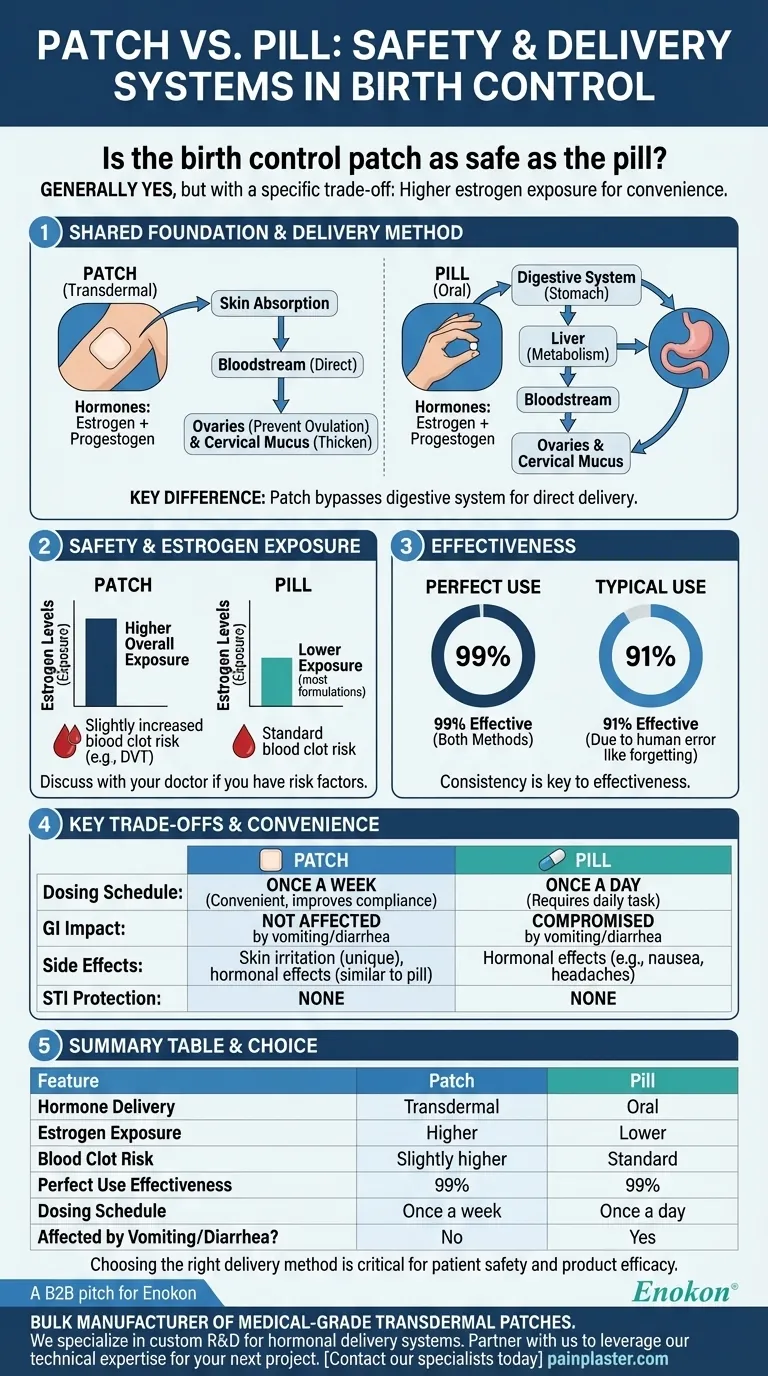
The patch is applied transdermally (to the skin) once a week. It continuously releases hormones directly into your bloodstream, bypassing the digestive tract entirely. This difference in delivery is the source of their distinct advantages and disadvantages.
Comparing Safety and Effectiveness
The Estrogen Factor and Blood Clot Risk
This is the most significant safety distinction. Because the patch's hormones are absorbed directly through the skin, it results in a higher overall exposure to estrogen compared to most combination pills.
This elevated estrogen level may slightly increase the risk of developing blood clots, such as deep vein thrombosis (DVT) or a pulmonary embolism. While the absolute risk remains low for most healthy individuals, it's a critical factor to discuss with your doctor, especially if you have other risk factors for blood clots.
Effectiveness: Identical in Principle
When used perfectly, both the patch and the pill are 99% effective at preventing pregnancy. This means fewer than 1 in 100 users will become pregnant in a year.
However, with "typical use," which accounts for human error like forgetting a pill or applying a patch late, the effectiveness for both methods drops to about 91%. This highlights that the "best" method is often the one you can use most consistently.
Understanding the Trade-offs
Convenience and Compliance
The primary advantage of the patch is convenience. You only have to remember to change it once a week instead of remembering to take a pill every single day.
For many people, this weekly schedule significantly improves compliance and reduces the chance of user error, potentially making it a more effective method in practice.
Bypassing the Digestive System
Because the patch delivers hormones through the skin, its effectiveness is not affected by gastrointestinal issues.
If you experience vomiting or severe diarrhea, the pill's absorption can be compromised, rendering it ineffective. The patch's effectiveness remains constant in these situations.
Potential Side Effects
The hormonal side effects can be similar for both methods, including things like nausea, headaches, or breast tenderness.
The patch has a unique potential side effect of skin irritation or a rash at the application site.
Lack of STI Protection
It is crucial to remember that neither the patch nor the pill offers any protection against sexually transmitted infections (STIs).
Making the Right Choice for Your Health
Ultimately, the decision should be based on your personal health profile, risk factors, and lifestyle.
- If your primary focus is minimizing estrogen exposure: Discuss specific low-dose birth control pills with your doctor, as they may offer a lower risk profile for blood clots than the patch.
- If your primary focus is convenience and consistency: The weekly patch is an excellent option that eliminates the need for a daily task and may reduce the risk of missed doses.
- If you have gastrointestinal conditions: The patch provides a clear advantage, as its effectiveness is not compromised by vomiting or diarrhea.
The safest choice is the one you can use correctly and consistently, made in close consultation with your healthcare provider.
Summary Table:
| Feature | Birth Control Patch | Combination Pill |
|---|---|---|
| Hormone Delivery | Transdermal (through skin) | Oral (through digestive system) |
| Estrogen Exposure | Higher | Lower (with most formulations) |
| Blood Clot Risk | Slightly higher | Standard |
| Perfect Use Effectiveness | 99% | 99% |
| Dosing Schedule | Once a week | Once a day |
| Affected by Vomiting/Diarrhea? | No | Yes |
Choosing the right delivery method is critical for both patient safety and product efficacy.
At Enokon, we are a bulk manufacturer of reliable, medical-grade transdermal patches. We specialize in custom R&D for pharmaceutical and healthcare brands, helping you develop safe and effective hormonal delivery systems.
Partner with us to leverage our technical expertise for your next project.
Contact our specialists today to discuss custom patch development and manufacturing.
Visual Guide
Related Products
- Prostate Pain Kidney Health Care Patch for Men
- Heating Pain Relief Patches for Menstrual Cramps
- Silicone Scar Sheets Patch Transdermal Drug Patch
- Menthol Gel Pain Relief Patch
- Icy Hot Menthol Medicine Pain Relief Patch
People Also Ask
- What are the key components of Chinese herbal pain patches? Discover the Science Behind Natural Pain Relief
- What are the main benefits of using Chinese pain patches? Holistic Relief for Musculoskeletal Pain
- Are there any side effects associated with Chinese pain patches? Risks & Safety Tips
- What complementary practices enhance the effectiveness of Chinese pain patches? Boost Relief with Holistic Care
- What are Chinese pain patches used for? Natural Relief for Joint & Muscle Pain








