
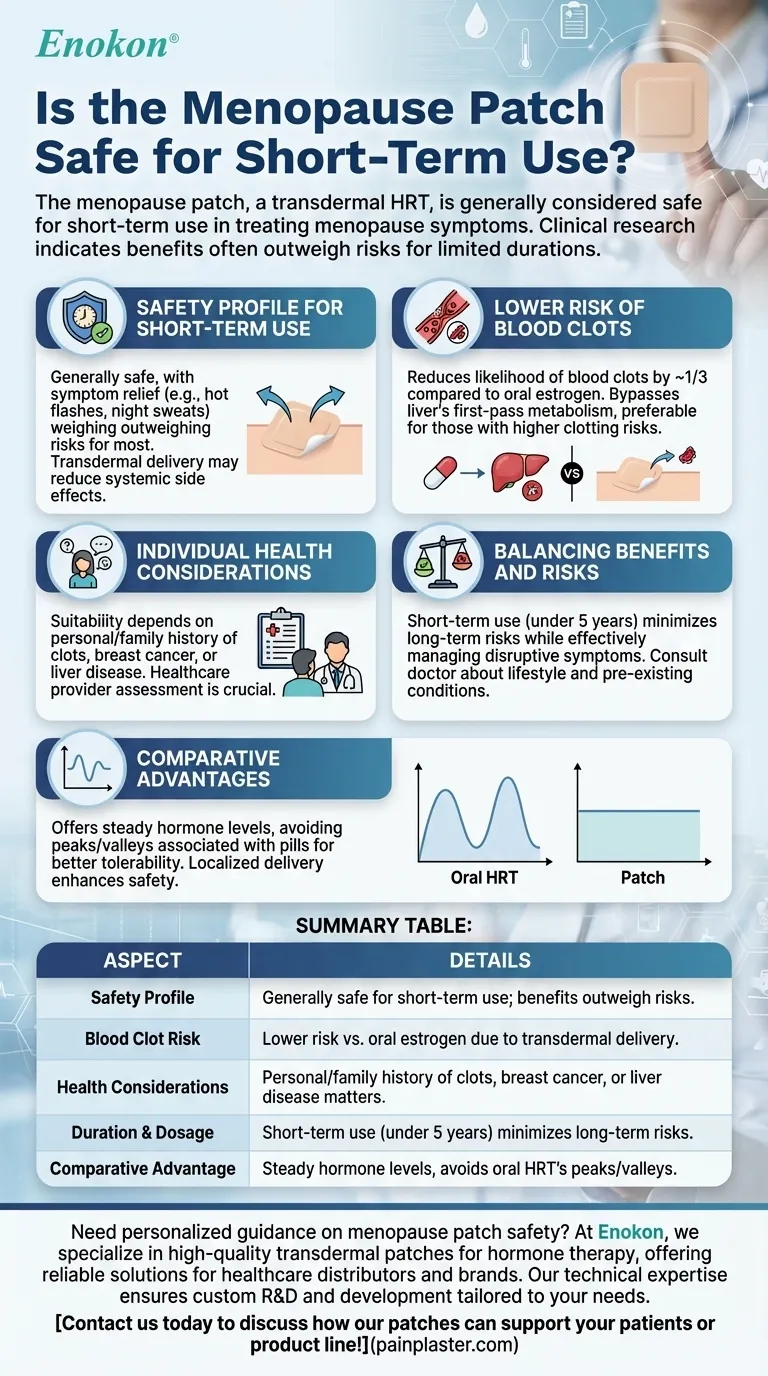
The menopause patch, a form of hormone replacement therapy (HRT), is generally considered safe for short-term use in treating menopause symptoms. Clinical research indicates that its benefits, such as relief from hot flashes and night sweats, typically outweigh potential risks when used for a limited duration. Studies also highlight that the patch may pose a lower risk of blood clots compared to oral estrogen, making it a safer option for some women. However, individual health factors should always be evaluated before starting treatment.

Key Points Explained:
-
Safety Profile for Short-Term Use
- Clinical studies confirm that short-term use of the menstrual patches (menopause patch) is generally safe, with benefits like symptom relief outweighing risks for most women.
- The patch delivers estrogen transdermally, which may reduce systemic side effects compared to oral HRT.
-
Lower Risk of Blood Clots
- Research shows the estrogen patch reduces the likelihood of blood clots by one-third compared to oral estrogen, as it bypasses the liver’s first-pass metabolism.
- This makes it a preferable option for women with higher clotting risks or those concerned about cardiovascular health.
-
Individual Health Considerations
- While broadly safe, the patch’s suitability depends on factors like personal/family history of blood clots, breast cancer, or liver disease.
- A healthcare provider should assess these risks to tailor treatment duration and dosage.
-
Balancing Benefits and Risks
- Short-term use (typically under 5 years) minimizes long-term risks (e.g., breast cancer) while effectively managing disruptive menopause symptoms.
- Have you discussed how your lifestyle or pre-existing conditions might influence this balance with your doctor?
-
Comparative Advantages
- The patch offers steady hormone levels, avoiding peaks/valleys associated with pills, which may improve tolerability.
- Its localized delivery system exemplifies how medical innovations can enhance safety in hormone therapy.
For those navigating menopause, such technologies—often overlooked—play a pivotal role in maintaining quality of life. Always consult a clinician to align treatment with your health profile.
Summary Table:
| Aspect | Details |
|---|---|
| Safety Profile | Generally safe for short-term use with benefits outweighing risks. |
| Blood Clot Risk | Lower risk compared to oral estrogen due to transdermal delivery. |
| Health Considerations | Personal/family history of clots, breast cancer, or liver disease matters. |
| Duration & Dosage | Short-term use (under 5 years) minimizes long-term risks. |
| Comparative Advantage | Steady hormone levels, avoiding peaks/valleys associated with oral HRT. |
Need personalized guidance on menopause patch safety?
At Enokon, we specialize in high-quality transdermal patches for hormone therapy, offering reliable solutions for healthcare distributors and brands. Our technical expertise ensures custom R&D and development tailored to your needs.
Contact us today to discuss how our patches can support your patients or product line!
Visual Guide
Related Products
- Menthol Gel Pain Relief Patch
- Icy Hot Menthol Medicine Pain Relief Patch
- Heating Pain Relief Patches for Menstrual Cramps
- Natural Herbal Patch for Motion Sickness and Car Sickness Relief
- Prostate Pain Kidney Health Care Patch for Men
People Also Ask
- How effective are pain relief patches for muscle pain? Target Localized Pain with Transdermal Delivery
- How do pain relief patches compare to other pain relief methods? Discover Targeted, Long-Lasting Relief
- Who should consult a healthcare professional before using pain relief patches? Ensure Your Safety with Medical Advice
- How do drug loading and permeation enhancers ensure patch efficacy? Achieve Superior Clinical-Grade Pain Relief.
- What are some common applications of pain relief patches? Effective Relief for Muscle & Joint Pain



















