
To ensure both safety and effectiveness while using a capsaicin patch, you must strictly avoid exposing the treatment area to direct heat from any source. This includes heating pads, hot tubs, saunas, and even prolonged sun exposure. You should also refrain from vigorous exercise and avoid immersing the patch in water, such as in a shower or bath.
The central principle behind all capsaicin patch precautions is the management of drug absorption. Heat, sweat, and pressure dramatically accelerate how quickly capsaicin enters your skin, which can transform a therapeutic warming sensation into intense burning, irritation, and other adverse effects.
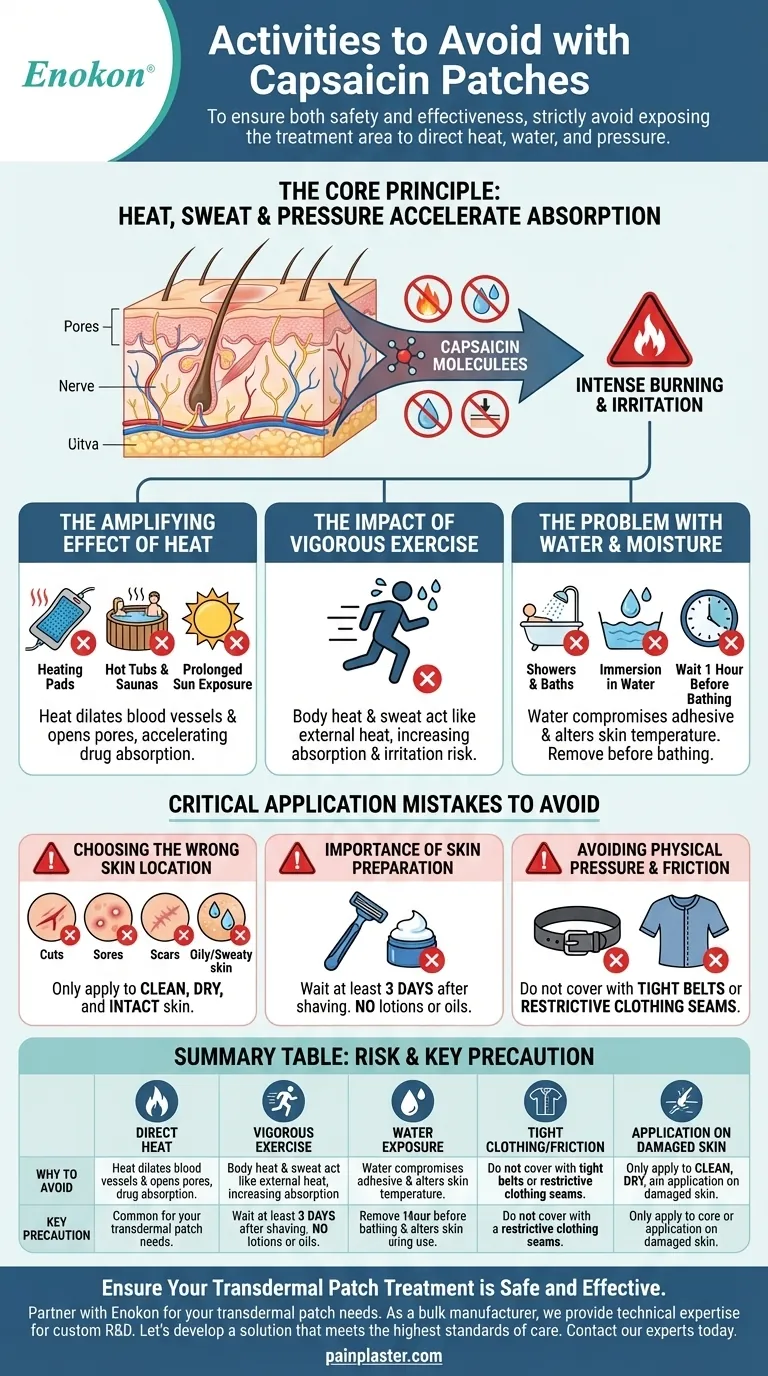
The Core Principle: Why Heat and Moisture Are Risky
Understanding the mechanism behind these restrictions is key to using your treatment safely. Capsaicin works by desensitizing nerve endings, but its effects are highly dependent on how quickly it's absorbed.
The Amplifying Effect of Heat
Both external and internal heat sources are problematic. External heat from a heating pad, hot tub, or hair dryer dilates blood vessels and opens pores in the skin.
This creates a superhighway for the capsaicin to flood into your system much faster than intended. This rapid absorption is the primary cause of overwhelming burning sensations and skin reactions.
The Impact of Vigorous Exercise
Vigorous exercise generates significant body heat and sweat. This combination has the same effect as an external heating pad, accelerating drug absorption and increasing the risk of severe skin irritation.
This is why activity should be limited not only while wearing the patch but also for a few days after high-concentration prescription treatments, as the skin remains sensitive.
The Problem with Water and Moisture
Water can compromise the patch's adhesive, causing it to peel off prematurely. More importantly, you should never wear a patch during a shower or bath.
It's recommended to remove a non-prescription patch at least one hour before bathing and not to reapply it immediately after. This allows the skin's pores and temperature to return to a normal state.
Critical Application Mistakes to Avoid
Proper application is just as important as the activities you avoid. Placing the patch on the wrong type of skin can lead to poor results or significant discomfort.
Choosing the Right Skin Location
The patch must be applied to clean, dry, and intact skin. Avoid any area that has open cuts, sores, scars, burns, or is already irritated.
Furthermore, do not apply patches to skin that is oily, prone to heavy perspiration, or in deep creases. These conditions prevent the patch from sticking properly and can lead to inconsistent treatment.
The Importance of Skin Preparation
Never apply a patch to recently shaved skin. You should wait at least three days after shaving the area to avoid intense irritation.
Also, avoid using any lotions, oils, or other skin products on the application area before putting on the patch. These substances will interfere with the adhesive.
Avoiding Physical Pressure and Friction
Do not place the patch where it will be covered by a tight belt or restrictive clothing seam. Constant rubbing and pressure can trap heat, increase irritation, and physically force the medication into the skin too aggressively.
Making the Right Choice for Your Treatment Plan
Follow these guidelines to ensure a safe and effective treatment experience based on where you are in the process.
- If you are preparing for application: Ensure the skin is clean, dry, intact, and has not been shaved for at least three days.
- While you are wearing the patch: Strictly avoid all direct heat sources, vigorous activity, and tight clothing over the area.
- After you have removed the patch: Continue to avoid hot tubs, strenuous exercise, and direct heat for a few days, as the treated skin will remain sensitive.
By understanding and respecting these principles, you can effectively manage your symptoms while minimizing the risk of adverse effects.
Summary Table:
| Activity/Risk | Why to Avoid | Key Precaution |
|---|---|---|
| Direct Heat (heating pads, hot tubs, saunas) | Accelerates drug absorption, causing intense burning. | Avoid all external heat sources during and after treatment. |
| Vigorous Exercise | Body heat and sweat increase absorption and irritation risk. | Limit strenuous activity while wearing the patch and for a few days after. |
| Water Exposure (showers, baths) | Compromises patch adhesive and alters skin temperature. | Remove patch before bathing; wait to reapply. |
| Tight Clothing/Friction | Traps heat and forces medication into skin aggressively. | Avoid restrictive belts or seams over the patch area. |
| Application on Damaged Skin | Leads to poor results and significant discomfort. | Only apply to clean, dry, intact skin, free from cuts or irritation. |
Ensure Your Transdermal Patch Treatment is Safe and Effective
Navigating the precautions for topical pain relief treatments can be complex. Whether you are a healthcare distributor or a brand developing a new product, having a reliable manufacturing partner is key to patient safety and treatment success.
Partner with Enokon for your transdermal patch needs. As a bulk manufacturer of reliable transdermal patches and pain plasters, we provide more than just production. Our technical expertise supports custom R&D and development, ensuring your products are designed with safety and efficacy from the ground up.
Let's develop a solution that meets the highest standards of care. Contact our experts today to discuss your project requirements and how we can bring value to your supply chain.
Visual Guide
Related Products
- Capsaicin Chili Medicated Pain Relief Patches
- Heat Relief Capsicum Patch for Lower Back Pain Relief
- Menthol Gel Pain Relief Patch
- Icy Hot Menthol Medicine Pain Relief Patch
- Asthma Cough and Pain Relief Patch for Adults and Kids
People Also Ask
- What conditions should be reported to a care team before using capsaicin patches? Ensure Safe Pain Relief
- What conditions can capsaicin creams and patches help relieve? Find Targeted Pain Relief for Nerves & Joints
- What are the uses of nonprescription capsaicin patches? Natural Pain Relief for Muscles & Joints
- What should be avoided while using capsaicin patches? Essential Safety Tips for Effective Pain Relief
- What precautions should be taken when using capsaicin patches? A Guide to Safe and Effective Pain Relief



















