
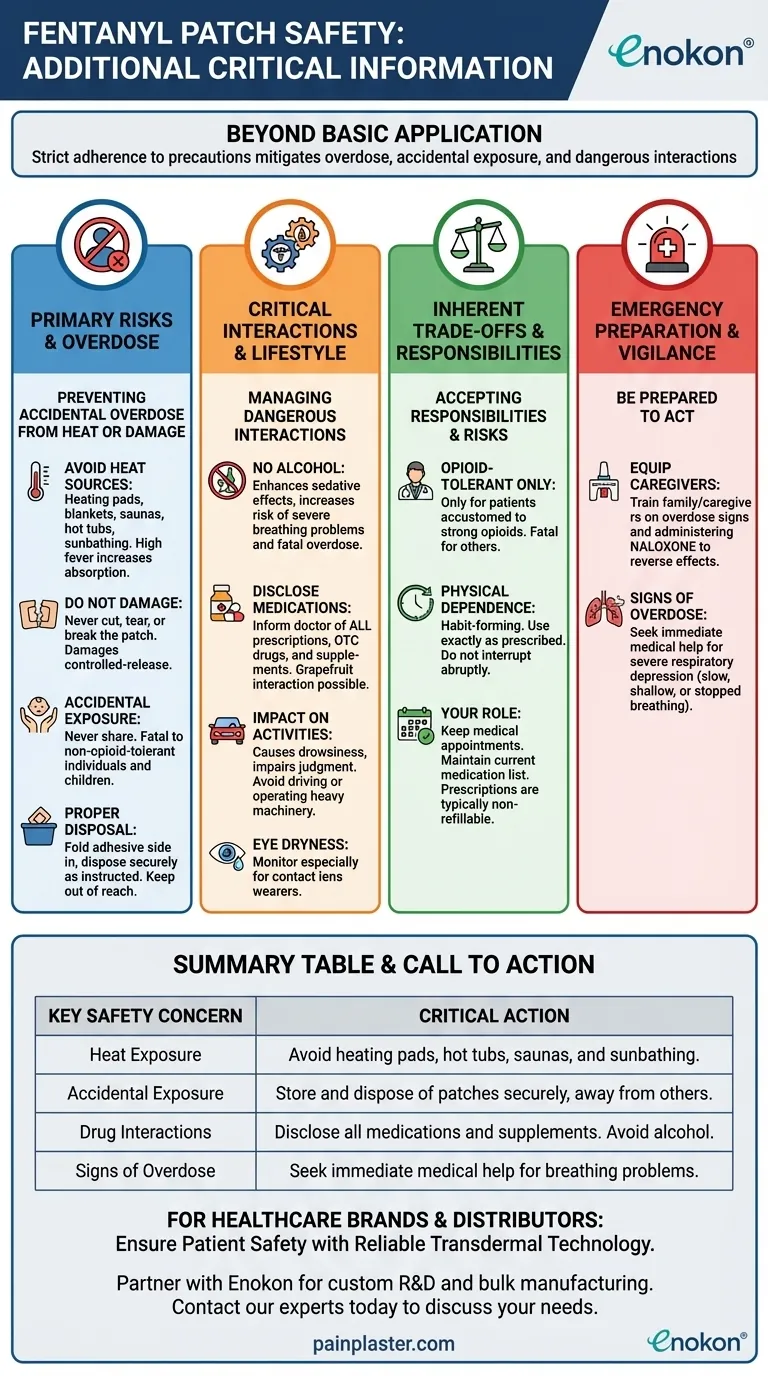
Beyond basic application, successfully and safely using a fentanyl patch demands strict adherence to critical precautions that mitigate risks of overdose, accidental exposure, and dangerous interactions. Key information includes avoiding all external heat sources near the patch, ensuring used patches are disposed of where children or others cannot access them, monitoring for signs of breathing problems, and understanding that this medication is for opioid-tolerant individuals only.
The safe use of a fentanyl patch is not just about following directions; it's about actively managing three critical risks: preventing accidental overdose from heat or damage, avoiding dangerous interactions with other substances like alcohol, and ensuring patches are never accessible to anyone for whom they are not prescribed.
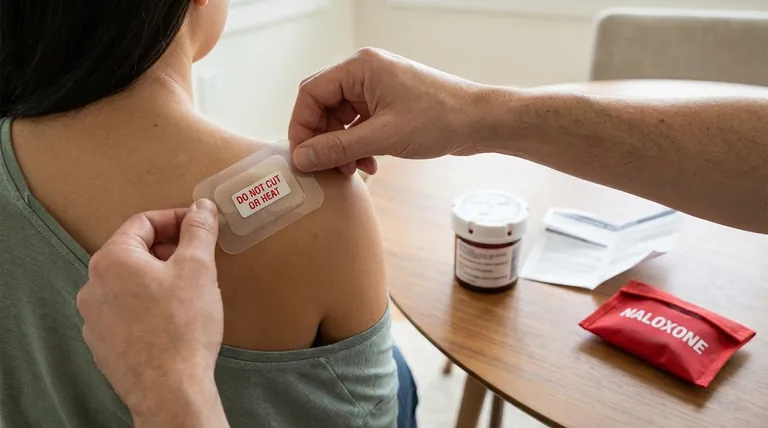
The Primary Risks: Understanding Overdose and Exposure
Managing a fentanyl patch means being constantly aware of the factors that can turn a therapeutic dose into a lethal one. The primary dangers are unintentional overdose and accidental exposure to others.
The Danger of Heat Exposure
Applying heat to the patch area dramatically increases the rate at which fentanyl is absorbed into your bloodstream. This can quickly lead to a dangerous overdose.
You must avoid all direct heat sources, including heating pads, electric blankets, saunas, hot tubs, and prolonged sunbathing. Even a high fever can increase absorption, which should be discussed with your doctor.
Accidental Exposure to Others
A fentanyl patch, whether new or used, contains enough medication to cause serious harm or death to another person, especially a child.
Never allow anyone else to touch your patch. It must never be shared. This rule is absolute, as what is a safe dose for you could be fatal for someone who is not opioid-tolerant.
Proper Handling and Disposal
The integrity of the patch is critical. Do not cut, tear, or damage the patch in any way, as this breaks the controlled-release mechanism and can lead to a rapid, toxic dose.
When you remove a patch, it still contains potent medication. Immediately fold it in half so the adhesive side sticks to itself, and dispose of it according to your pharmacist's or doctor's instructions. Keep all patches, new and used, stored securely out of the sight and reach of children and pets.
Recognizing Life-Threatening Breathing Problems
The most serious sign of an overdose is severe respiratory depression, meaning slow, shallow, or stopped breathing. This can be life-threatening and requires immediate medical attention.
Critical Interactions and Lifestyle Adjustments
Your daily habits and other medications can have a profound impact on how fentanyl affects you. Absolute transparency with your medical team is essential.
The Prohibition of Alcohol
Consuming alcohol while using a fentanyl patch is extremely dangerous. It significantly enhances the sedative effects of the opioid, drastically increasing your risk of severe breathing problems and fatal overdose.
Disclosing All Medications
Fentanyl can interact dangerously with many other drugs. You must inform your doctor of all prescription medications, over-the-counter drugs, and supplements you are taking.
Even certain foods, like grapefruit, can interact with fentanyl and should be discussed with your healthcare provider.
The Impact on Daily Activities
Fentanyl can cause significant drowsiness and impair your judgment. Avoid driving or operating heavy machinery until you know how the medication affects you.
Some users, especially contact lens wearers, may experience eye dryness, which should be monitored.
Understanding the Inherent Trade-offs
Using a powerful opioid like fentanyl involves accepting certain responsibilities and risks as part of your treatment plan.
For Opioid-Tolerant Patients Only
Fentanyl patches should only be used by patients who are considered "opioid-tolerant." This means your body is already accustomed to taking strong opioid medication regularly. Prescribing it to someone who is not tolerant can easily cause a fatal overdose.
The Risk of Physical Dependence
Fentanyl is habit-forming, especially with prolonged use. It is crucial to use the medication exactly as prescribed and never interrupt therapy abruptly without medical advice, as this can cause withdrawal symptoms.
Your Role in Your Treatment Plan
Your prescription is not typically refillable and requires ongoing management. You must keep all medical appointments and maintain a current list of all your medications to share with any healthcare provider you see.
Preparing for an Emergency
Because of the risks involved, it is vital that those around you are prepared to act in an emergency.
Equipping Caregivers with Naloxone
Family members, caregivers, and anyone who spends significant time with you should know the signs of an overdose.
They should be trained by a doctor or pharmacist on how to administer naloxone, a medication that can temporarily reverse the effects of an opioid overdose and save a life.
How to Apply This to Your Safety Plan
Your approach to using a fentanyl patch must be comprehensive and vigilant.
- If your primary focus is preventing an overdose: Prioritize avoiding all external heat sources on the patch and never cutting or damaging it.
- If your primary focus is protecting your family: Implement a rigorous storage and disposal routine, ensuring all patches are inaccessible to children, pets, and visitors.
- If your primary focus is managing your overall health: Maintain complete transparency with your doctor about all medications, supplements, and alcohol use.
Vigilance and strict adherence to these guidelines are the cornerstones of using this powerful medication safely and effectively.
Summary Table:
| Key Safety Concern | Critical Action |
|---|---|
| Heat Exposure | Avoid heating pads, hot tubs, saunas, and sunbathing to prevent overdose. |
| Accidental Exposure | Store and dispose of patches securely, away from children and pets. |
| Drug Interactions | Disclose all medications and supplements to your doctor. Avoid alcohol. |
| Signs of Overdose | Seek immediate medical help for slow, shallow, or stopped breathing. |
For Healthcare Brands and Distributors: Ensure Patient Safety with Reliable Transdermal Technology
Partner with Enokon, a bulk manufacturer of reliable transdermal patches and pain plasters. Benefit from our technical expertise for custom R&D and development, ensuring the highest standards of safety and efficacy for your patients. Contact our experts today to discuss your manufacturing needs.
Visual Guide
Related Products
- Menthol Gel Pain Relief Patch
- Icy Hot Menthol Medicine Pain Relief Patch
- Capsaicin Chili Medicated Pain Relief Patches
- Lidocaine Hydrogel Pain Relief Patch for Pain Relief
- Mugwort Wormwood Pain Relief Patch for Neck Pain
People Also Ask
- How do pain relief patches compare to other pain relief methods? Discover Targeted, Long-Lasting Relief
- How effective are pain relief patches for muscle pain? Target Localized Pain with Transdermal Delivery
- Who should consult a healthcare professional before using pain relief patches? Ensure Your Safety with Medical Advice
- What are the potential side effects of pain relief patches? A Guide to Safe Use & Key Risks
- What are some common applications of pain relief patches? Effective Relief for Muscle & Joint Pain



















