
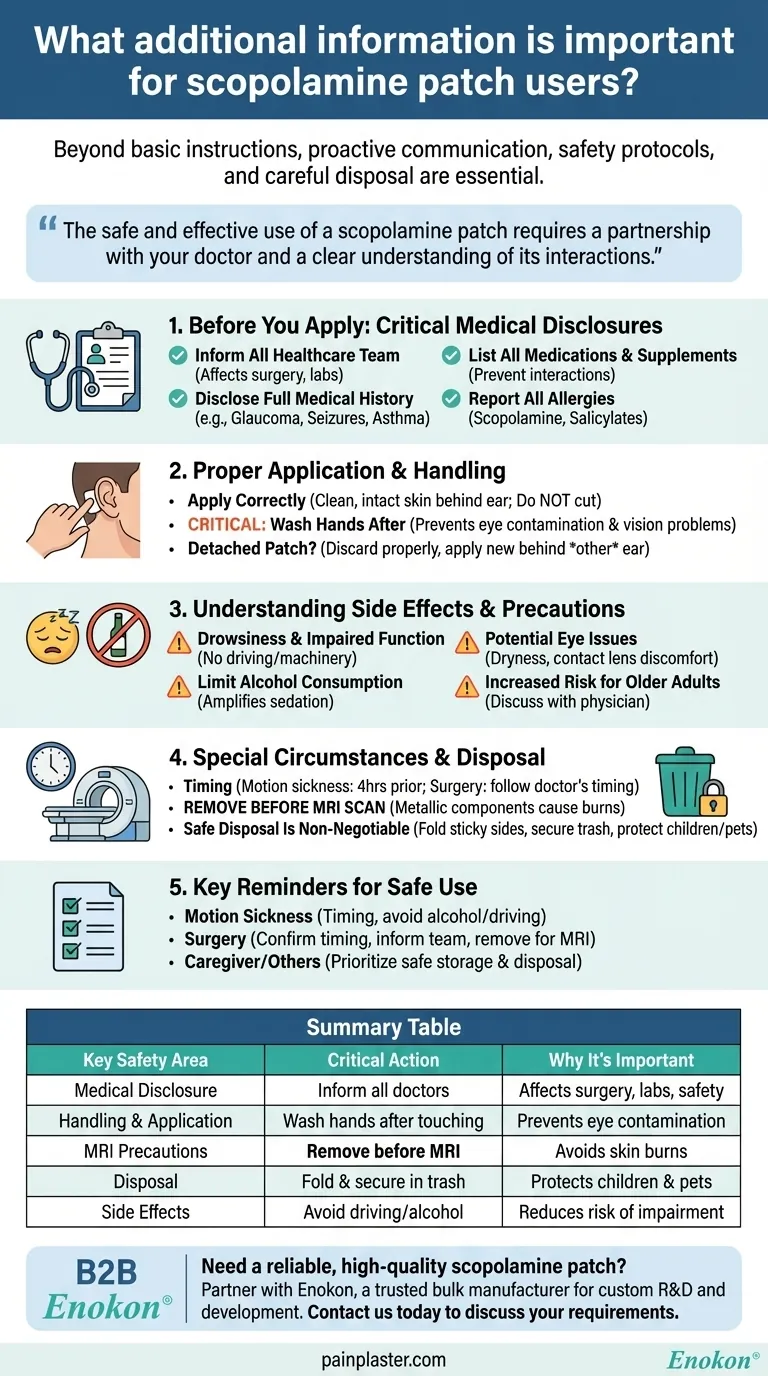
Beyond the basic instructions, the most critical information for scopolamine patch users involves proactive communication with all healthcare providers, absolute adherence to safety protocols like removing the patch before an MRI, meticulous hand washing to prevent eye contamination, and careful disposal to protect others. These steps are essential for preventing serious complications and ensuring the medication works as intended.
The safe and effective use of a scopolamine patch extends far beyond simply putting it on. It requires a partnership with your doctor and a clear understanding of how the medication interacts with your body, other medical procedures, and your environment.

Before You Apply: Critical Medical Disclosures
Proper use begins before the patch ever touches your skin. Full transparency with your healthcare provider is the foundation of safe treatment.
Informing Your Healthcare Team
You must inform all doctors, surgeons, and even lab personnel that you are using a scopolamine patch. This is not optional; it can affect surgical outcomes and the results of certain lab tests.
Disclosing Your Full Medical History
Before using the patch, discuss your complete medical history with your doctor. Pay special attention to conditions like glaucoma, seizures, urinary difficulties, asthma, or nasal polyps, as scopolamine can exacerbate them.
Listing All Medications and Supplements
Provide your doctor with a comprehensive list of every medication you take, including prescriptions, over-the-counter drugs, and supplements. This helps prevent potentially harmful drug interactions.
Reporting All Allergies
Be sure to report any known allergies, especially to scopolamine itself, but also to related substances like menthol, methyl salicylate, aspirin, or other salicylates.
Proper Application and Handling
The way you handle the patch directly impacts its effectiveness and your safety.
Applying the Patch Correctly
Place the patch on a clean, dry, and intact area of skin, typically behind the ear. Never apply it to irritated or damaged skin, and do not cut the patch, as this can alter the dose you receive.
The Critical Importance of Hand Washing
Always wash your hands thoroughly with soap and water after applying or removing a patch. Accidentally touching your eye with residual medication on your finger can cause significant vision problems. After removal, also wash the skin where the patch was located.
Managing a Detached Patch
Limit prolonged contact with water, such as swimming or long showers, as it can cause the patch to fall off. If it does detach, discard it properly and apply a new patch behind the other ear.
Understanding the Side Effects and Precautions
Being aware of the potential risks allows you to use the patch safely and avoid dangerous situations.
Drowsiness and Impaired Function
Scopolamine frequently causes drowsiness. You should not drive, operate heavy machinery, or perform any hazardous tasks until you know how the medication affects you.
Limiting Alcohol Consumption
Avoid or strictly limit alcohol use while wearing the patch. Alcohol can significantly amplify the sedative effects of scopolamine, leading to profound drowsiness and impairment.
Potential for Eye-Related Issues
The medication can cause eye dryness, which may be particularly uncomfortable for contact lens wearers. If you experience this, consult your doctor.
Increased Risk for Older Adults
Older adults may be more sensitive to the side effects of scopolamine. If you are an older adult, it is crucial to discuss these increased risks with your physician before use.
Special Circumstances and Disposal
Certain situations require specific actions to ensure your safety and the safety of those around you.
Timing for Surgery and Travel
The timing of application is key. For motion sickness, apply it at least four hours before exposure. For preventing post-operative nausea, it is often applied the evening before surgery. Always follow your doctor's specific instructions.
Removing the Patch for an MRI
This is a critical safety instruction. You must remove the patch before undergoing an MRI scan. The patch contains metallic components that can heat up and cause skin burns during the procedure.
Safe Disposal Is Non-Negotiable
After use, fold the patch in half with the sticky sides together. Dispose of it in a trash can where it is safely out of reach of children and pets. Accidental exposure can be extremely dangerous for them. Similarly, do not share your patch with anyone else.
Key Reminders for Safe and Effective Use
To ensure you get the intended benefit without undue risk, tailor your approach to your specific situation.
- If your primary focus is preventing motion sickness: Apply the patch at least 4 hours before travel and avoid alcohol and driving until you know how it affects you.
- If you are preparing for surgery: Confirm the application and removal timing with your surgeon and ensure the entire medical team, including MRI technicians, is aware you are using the patch.
- If you are a caregiver or live with others: Prioritize safe storage of new patches and immediate, careful disposal of used ones to prevent accidental poisoning of children or pets.
By treating this medication with informed care, you can effectively manage your symptoms while prioritizing your safety.
Summary Table:
| Key Safety Area | Critical Action | Why It's Important |
|---|---|---|
| Medical Disclosure | Inform all doctors & surgeons | Affects surgery, lab tests, and safety |
| Handling & Application | Wash hands after touching patch | Prevents eye contamination and vision issues |
| MRI Precautions | Remove patch before MRI scan | Avoids skin burns from metallic components |
| Disposal | Fold used patch and secure in trash | Protects children and pets from accidental poisoning |
| Side Effects | Avoid driving and alcohol | Reduces risk of drowsiness and impairment |
Need a reliable, high-quality scopolamine patch? Partner with Enokon, a trusted bulk manufacturer of transdermal patches and pain plasters for healthcare distributors and pharmaceutical brands. Our technical expertise ensures custom R&D and development tailored to your needs. Contact us today to discuss your requirements and benefit from our proven solutions.
Visual Guide
Related Products
- Asthma Cough and Pain Relief Patch for Adults and Kids
- Lidocaine Hydrogel Pain Relief Patch for Pain Relief
- Menthol Gel Pain Relief Patch
- Herbal Medicated Anti Diarrhea Patch for Digestive Relief
- Icy Hot Menthol Medicine Pain Relief Patch
People Also Ask
- What role do natural ingredients and acupoint stimulation play in a cough relief patch? Synergistic Relief Explained
- What are the key benefits of using the cough relief patch? Soothe Your Cough with Targeted, Non-Oral Relief
- How does the cough relief patch provide targeted relief? Direct, Soothing Comfort for Coughs & Chest Congestion
- What makes the cough relief patch a convenient option for managing coughs? A Mess-Free, On-the-Go Solution
- What are the different types of pain relief patches available? Find the Right Solution for Your Pain


















