
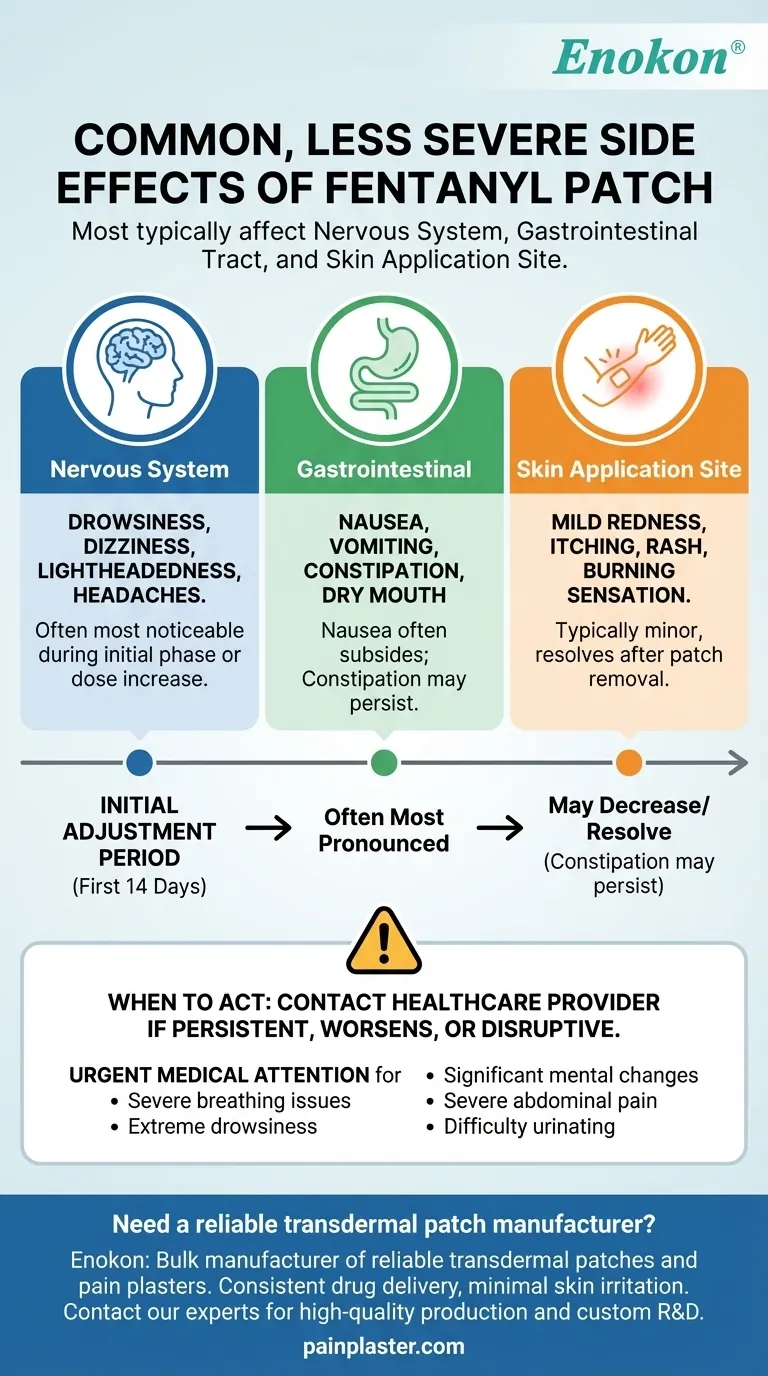
The most common, less severe side effects of the fentanyl patch typically involve the nervous system, gastrointestinal tract, and the skin where the patch is applied. These frequently include drowsiness, dizziness, nausea, constipation, headache, and mild skin irritation like redness or itching at the application site.
While these reactions are common, the key is to understand that they are often most pronounced during the initial phase of treatment. Many of these side effects may decrease in intensity as your body adjusts to the medication over the first several days or weeks.

A Closer Look at Common Reactions
Understanding the specific types of side effects can help you monitor your experience and communicate effectively with your healthcare provider. They generally fall into three categories.
Nervous System Effects
Opioids like fentanyl work by acting on the central nervous system, which can lead to several common reactions.
You may experience drowsiness, dizziness, or lightheadedness. These effects are often most noticeable when you first start using the patch or when your dose is increased.
Headaches are also a frequently reported side effect during treatment.
Gastrointestinal Discomfort
Fentanyl can slow down the digestive system, leading to predictable side effects.
Nausea and vomiting are common, particularly in the first few days of use. For many people, this subsides over time.
Constipation is a very common side effect of all opioid medications. It is important to anticipate this and discuss management strategies with your doctor.
A dry mouth is another frequently reported side effect.
Skin Irritation at the Application Site
Since the medication is delivered through the skin, localized reactions are to be expected.
You may notice mild redness, itching, a rash, or a burning sensation directly under or around the patch. This is typically minor and resolves after the patch is removed.
Understanding the Timeline and Context
The timing and persistence of side effects are critical factors in managing your treatment.
The Initial Adjustment Period
Many users report the highest incidence of side effects, such as nausea and drowsiness, within the first 14 days of starting the patch. This is a normal adjustment period as your body gets used to the medication.
When to Expect Improvement
For many individuals, side effects like dizziness and nausea will decrease or resolve entirely after the initial adjustment period. However, some effects, like constipation, may persist throughout treatment.
When Common Side Effects Warrant Attention
While the side effects listed above are generally not considered severe, their persistence or intensity can become a problem. It is crucial to distinguish between a manageable side effect and a sign of a more serious issue.
Persistence and Severity
The most important rule is to contact your healthcare provider if any common side effect persists, worsens, or becomes disruptive to your daily life. Do not stop the medication suddenly without medical guidance.
Differentiating from Serious Reactions
It is vital to distinguish common side effects from signs of a serious adverse event. Seek immediate medical attention if you experience symptoms like:
- Severe difficulty breathing or slowed, shallow breathing
- Extreme drowsiness or inability to wake up
- Significant mental or mood changes, such as agitation or confusion
- Severe stomach or abdominal pain
- Difficulty urinating
These are not common, mild side effects and require urgent medical evaluation.
Making the Right Choice for Your Goal
Understanding what to expect is the first step toward safely managing your pain with the fentanyl patch. Use this knowledge to work with your healthcare team.
- If your primary focus is starting treatment: Be prepared for an initial adjustment period where you may experience drowsiness, nausea, or dizziness, and have a plan to manage constipation from the start.
- If your primary focus is managing ongoing side effects: Keep a log of your symptoms and discuss any that are persistent or worsening with your doctor; they may have strategies to help.
- If your primary focus is safety: Learn to recognize the difference between common, manageable side effects and the warning signs of a serious reaction that requires immediate medical help.
Empowering yourself with this information is a critical part of a safe and effective treatment plan.
Summary Table:
| Side Effect Category | Common Examples | Typical Timeline & Notes |
|---|---|---|
| Nervous System | Drowsiness, Dizziness, Headache | Often most noticeable when starting treatment or increasing dose. May improve after initial adjustment period. |
| Gastrointestinal | Nausea, Vomiting, Constipation, Dry Mouth | Constipation may persist; nausea often subsides after the first few days. |
| Skin Application Site | Redness, Itching, Rash | Usually mild and resolves after patch removal. |
Need a reliable transdermal patch manufacturer?
As Enokon, a bulk manufacturer of reliable transdermal patches and pain plasters, we understand the critical importance of consistent drug delivery and minimal skin irritation for patient safety and comfort. Our technical expertise ensures high-quality production and custom R&D for healthcare and pharma distributors and brands.
Let us help you develop a superior product. Contact our experts today to discuss your specific requirements and benefit from our proven manufacturing capabilities.
Visual Guide
Related Products
- Menthol Gel Pain Relief Patch
- Icy Hot Menthol Medicine Pain Relief Patch
- Capsaicin Chili Medicated Pain Relief Patches
- Lidocaine Hydrogel Pain Relief Patch for Pain Relief
- Mugwort Wormwood Pain Relief Patch for Neck Pain
People Also Ask
- How do pain relief patches compare to other pain relief methods? Discover Targeted, Long-Lasting Relief
- How effective are pain relief patches for muscle pain? Target Localized Pain with Transdermal Delivery
- Who should consult a healthcare professional before using pain relief patches? Ensure Your Safety with Medical Advice
- What are the potential side effects of pain relief patches? A Guide to Safe Use & Key Risks
- What are some common applications of pain relief patches? Effective Relief for Muscle & Joint Pain



















