
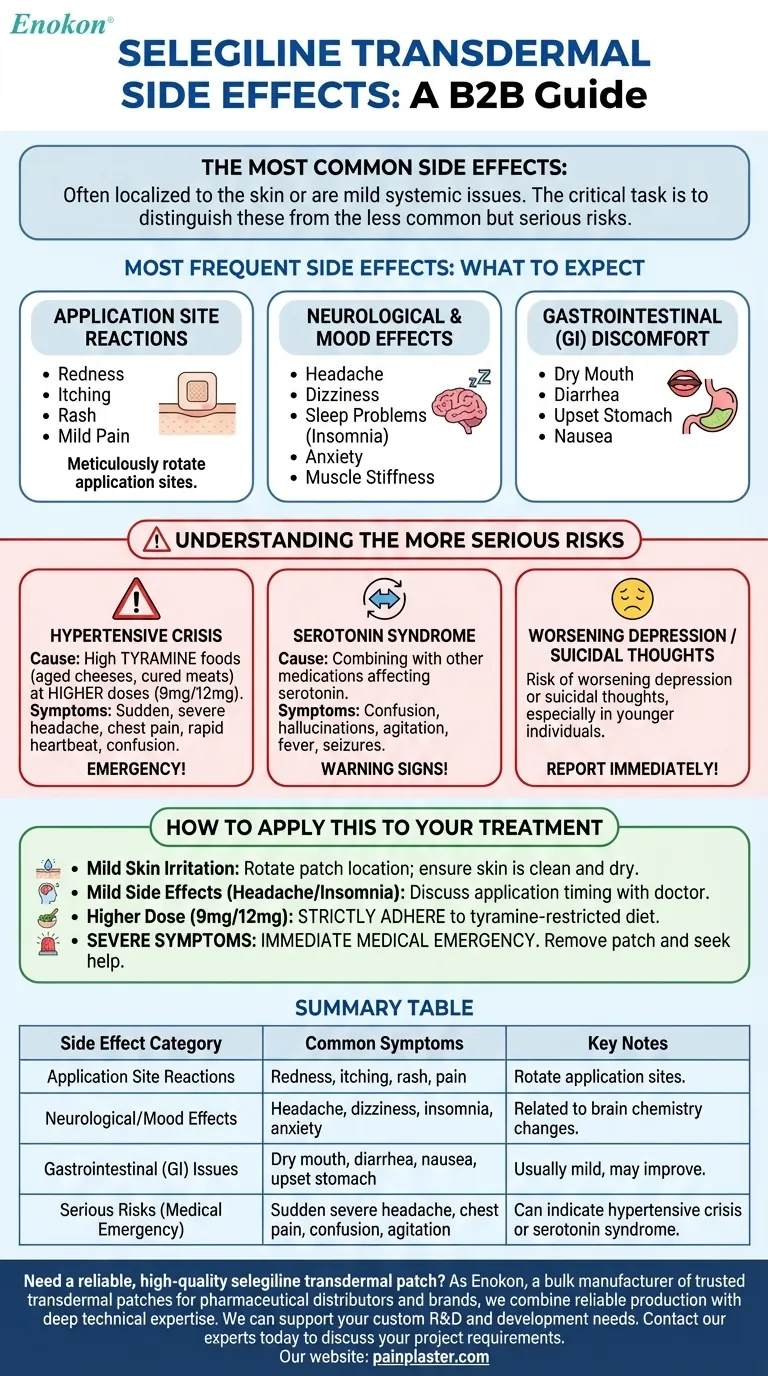
The most common side effects associated with the selegiline transdermal patch are reactions at the application site, such as redness, itching, or a rash. Other frequently reported effects include headache, sleep problems (insomnia), dry mouth, and various forms of stomach or gastrointestinal upset like diarrhea or nausea.
While most side effects are localized to the skin or are mild systemic issues, the critical task is to distinguish these from the less common but serious risks. Understanding why this medication is a patch is key to managing its unique safety profile.
The Most Frequent Side Effects: What to Expect
When using the selegiline transdermal system, the body can react in several common ways. These effects are often mild and may lessen over time as your body adjusts.
Application Site Reactions
This is the single most common category of side effects. Because the medication is delivered through the skin, local irritation is frequent.
Symptoms include redness, itching, rash, or mild pain directly where the patch was worn. Rotating the application site with each new patch is the primary strategy to minimize this.
Neurological and Mood-Related Effects
Selegiline directly affects brain chemistry, which can lead to neurological side effects.
The most common are headache, dizziness, and sleep problems (insomnia). Some individuals may also experience anxiety or muscle stiffness.
Gastrointestinal (GI) Discomfort
The medication can also affect the digestive system.
Users frequently report dry mouth, diarrhea, upset stomach, or nausea. These symptoms are typically not severe but should be monitored.
Understanding the More Serious Risks
While less common, selegiline carries risks that require immediate attention. These are often related to its mechanism as a Monoamine Oxidase Inhibitor (MAOI).
Hypertensive Crisis (Dangerously High Blood Pressure)
This is the most well-known risk for MAOIs. It occurs when a person consumes foods high in tyramine (e.g., aged cheeses, cured meats, certain beers).
At lower doses (6 mg/24 hours), the patch is designed to bypass the gut and largely avoid this issue. However, at higher doses (9 mg and 12 mg), dietary restrictions are necessary.
Symptoms of a hypertensive crisis are a medical emergency and include a sudden, severe headache, chest pain, rapid heartbeat, and confusion.
Serotonin Syndrome
This is a potentially life-threatening condition caused by an excess of serotonin, usually from combining selegiline with other medications that affect serotonin (like SSRI antidepressants or certain pain relievers).
Warning signs include confusion, hallucinations, agitation, fever, and seizures.
Worsening Depression or Suicidal Thoughts
As with any antidepressant, there is a risk of worsening depression or the emergence of suicidal thoughts, particularly in younger individuals.
Any significant negative change in mood or behavior should be reported to a doctor immediately.
How to Apply This to Your Treatment
Proper management and open communication with your healthcare provider are crucial for using selegiline transdermal safely and effectively.
- If your primary concern is mild skin irritation: Meticulously rotate the patch location with each application and ensure the skin is clean and dry. Do not apply to irritated or broken skin.
- If you are managing mild side effects like headache or insomnia: Discuss the timing of patch application with your doctor, as applying it earlier in the day may help with sleep disturbances.
- If you are prescribed a higher dose (9 mg or 12 mg): You must strictly adhere to the tyramine-restricted diet your doctor provides to prevent a hypertensive crisis.
- If you experience any severe symptoms (sudden headache, chest pain, confusion, or thoughts of self-harm): This constitutes a medical emergency. Remove the patch and seek immediate medical help.
Ultimately, proactive monitoring and a clear understanding of the warning signs are the most effective tools for ensuring your safety while on this medication.
Summary Table:
| Side Effect Category | Common Symptoms | Key Notes |
|---|---|---|
| Application Site Reactions | Redness, itching, rash, pain | Most common issue; rotate application sites. |
| Neurological/Mood Effects | Headache, dizziness, insomnia, anxiety | Related to brain chemistry changes. |
| Gastrointestinal (GI) Issues | Dry mouth, diarrhea, nausea, upset stomach | Usually mild and may improve over time. |
| Serious Risks (Medical Emergency) | Sudden severe headache, chest pain, confusion, agitation | Can indicate hypertensive crisis or serotonin syndrome. |
Need a reliable, high-quality selegiline transdermal patch? As Enokon, a bulk manufacturer of trusted transdermal patches for pharmaceutical distributors and brands, we combine reliable production with deep technical expertise. We can support your custom R&D and development needs to ensure patient safety and product efficacy. Contact our experts today to discuss your project requirements.
Visual Guide
Related Products
- Silicone Scar Sheets Patch Transdermal Drug Patch
- Far Infrared Heat Pain Relief Patches Transdermal Patches
- Menthol Gel Pain Relief Patch
- Icy Hot Menthol Medicine Pain Relief Patch
- Mugwort Wormwood Pain Relief Patch for Neck Pain
People Also Ask
- What role does a silicone-based transdermal delivery system play in Parkinson's? Enhancing Early-Stage Patient Care
- How is the long-term skin tolerance of silicone-based transdermal patches evaluated in clinical settings? R&D and Safety
- Why is a polarizing microscope used to evaluate the long-term stability of transdermal drug patches? Ensure Efficacy.
- What are common adverse effects of transdermal drug delivery? Risks & Prevention Tips
- What are the advantages of transdermal drug patches? Optimize Medication Delivery with Patches











