
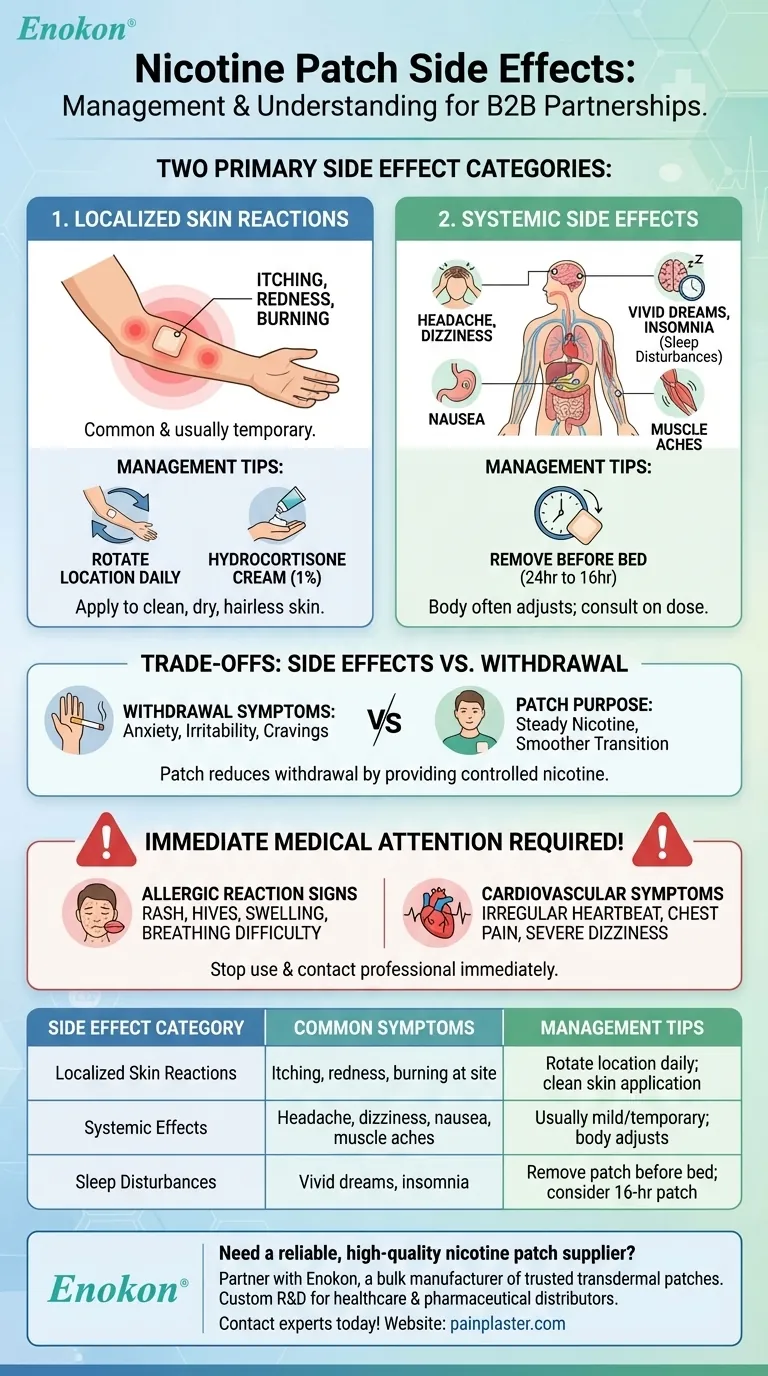
The most common side effects of nicotine patches are typically mild and fall into two main categories: localized skin reactions and systemic effects. You may experience temporary skin irritation like itching, redness, or burning where the patch is applied, as well as potential headaches, dizziness, or sleep disturbances like vivid dreams.
While nicotine patch side effects are common, they are usually manageable. The key is to distinguish between mild, temporary reactions like skin irritation and more serious symptoms that require immediate medical attention, such as an irregular heartbeat.

The Two Primary Types of Side Effects
Understanding the side effects you might encounter can help you manage them effectively and stay on track with your goal to quit smoking. They generally result from either direct skin contact or the nicotine itself entering your system.
Category 1: Localized Skin Reactions
This is the most common side effect reported by users. Your skin may react to the adhesive or the nicotine that is in direct contact with it.
These reactions typically include mild itching, burning, or redness at the application site. This irritation is usually temporary and should resolve on its own within a few days.
How to Manage Skin Irritation
To minimize skin reactions, it is crucial to rotate the patch location each day. Avoid applying a new patch to the same spot for at least a week.
If irritation persists, a 1% hydrocortisone cream can often provide relief. Always apply the patch to clean, dry, and hairless skin to ensure proper adhesion and reduce irritation.
Category 2: Systemic Side Effects
These side effects occur as your body absorbs the nicotine. They are often similar to the effects of smoking too much, or they can be related to nicotine withdrawal itself.
Common systemic effects include headache, dizziness, nausea, and muscle aches. These are generally mild and may decrease as your body adjusts to the patch.
Sleep Disturbances: A Common Hurdle
Many users report vivid dreams or insomnia. This is often caused by the continuous nicotine delivery from a 24-hour patch.
If sleep becomes a problem, consider removing the patch before you go to bed. You can also speak with your doctor about switching to a 16-hour patch, which is designed for daytime use only.
Understanding the Trade-offs: Side Effects vs. Withdrawal
It can be difficult to tell if what you're feeling is a side effect of the patch or a symptom of nicotine withdrawal.
Symptoms of Nicotine Withdrawal
When you stop smoking, your body craves nicotine. This can cause anxiety, irritability, difficulty concentrating, and insomnia.
The nicotine patch is designed to reduce these very symptoms by providing a steady, controlled dose of nicotine, making your transition away from cigarettes smoother.
When to Suspect the Patch Dose
If you feel nauseous, dizzy, or experience a racing heartbeat, your nicotine dose might be too high. Conversely, if you still have strong cravings and withdrawal symptoms, your dose might be too low.
When to Seek Immediate Medical Attention
While most side effects are mild, some are serious and require you to stop using the patch and contact a healthcare professional immediately.
Signs of an Allergic Reaction
A severe skin reaction, such as a rash, hives, or swelling of the face, lips, or tongue, can indicate an allergy. Difficulty breathing is a medical emergency.
Cardiovascular Symptoms
Pay close attention to any cardiovascular changes. An irregular or racing heartbeat, chest pain, or severe dizziness are serious side effects that require immediate medical consultation.
Making the Right Choice for Your Health
Properly managing side effects is critical for successfully using the nicotine patch as a tool to quit smoking.
- If you are experiencing mild skin irritation: Rotate the application site daily and avoid placing the patch on broken or already irritated skin.
- If your sleep is being disrupted: Try removing the patch an hour before bed or ask your doctor about switching to a 16-hour patch.
- If you experience dizziness, nausea, or a racing heartbeat: Stop using the patch and consult your doctor, as your nicotine dosage may be too high.
Always use these tools under the guidance of a healthcare provider to ensure you are on the right dose and can manage your experience safely.
Summary Table:
| Side Effect Category | Common Symptoms | Management Tips |
|---|---|---|
| Localized Skin Reactions | Itching, redness, burning at application site | Rotate patch location daily; apply to clean, dry skin |
| Systemic Effects | Headache, dizziness, nausea, muscle aches | Usually mild and temporary; body often adjusts |
| Sleep Disturbances | Vivid dreams, insomnia | Consider removing patch before bed; ask doctor about 16-hour patch |
Need a reliable, high-quality nicotine patch supplier for your brand?
Partner with Enokon, a bulk manufacturer of trusted transdermal patches. We offer custom R&D and development expertise to create effective nicotine replacement therapy products tailored for healthcare and pharmaceutical distributors. Let's help you provide a superior quit-smoking aid.
Contact our experts today to discuss your needs!
Visual Guide
Related Products
- Menthol Gel Pain Relief Patch
- Capsaicin Chili Medicated Pain Relief Patches
- Icy Hot Menthol Medicine Pain Relief Patch
- Lidocaine Hydrogel Pain Relief Patch for Pain Relief
- Mugwort Wormwood Pain Relief Patch for Neck Pain
People Also Ask
- How do pain relief patches compare to other pain relief methods? Discover Targeted, Long-Lasting Relief
- How effective are pain relief patches for muscle pain? Target Localized Pain with Transdermal Delivery
- Who should consult a healthcare professional before using pain relief patches? Ensure Your Safety with Medical Advice
- What are some common applications of pain relief patches? Effective Relief for Muscle & Joint Pain
- What are pain relief patches and how do they work? Discover Non-Invasive Pain Management

















