
When using a nicotine patch, it is common to experience a range of side effects that are generally mild and do not require immediate medical attention. The most frequent issues include irritation where the patch is applied, sleep disturbances like vivid dreams or insomnia, and systemic effects such as headache, dizziness, and mild nausea. These reactions are typically your body's way of adjusting to the steady dose of nicotine.
The majority of nicotine patch side effects are temporary and manageable. Understanding the difference between a common, mild reaction and a serious one is the key to using the patch effectively and safely as a tool to quit smoking.

The Two Categories of Common Side Effects
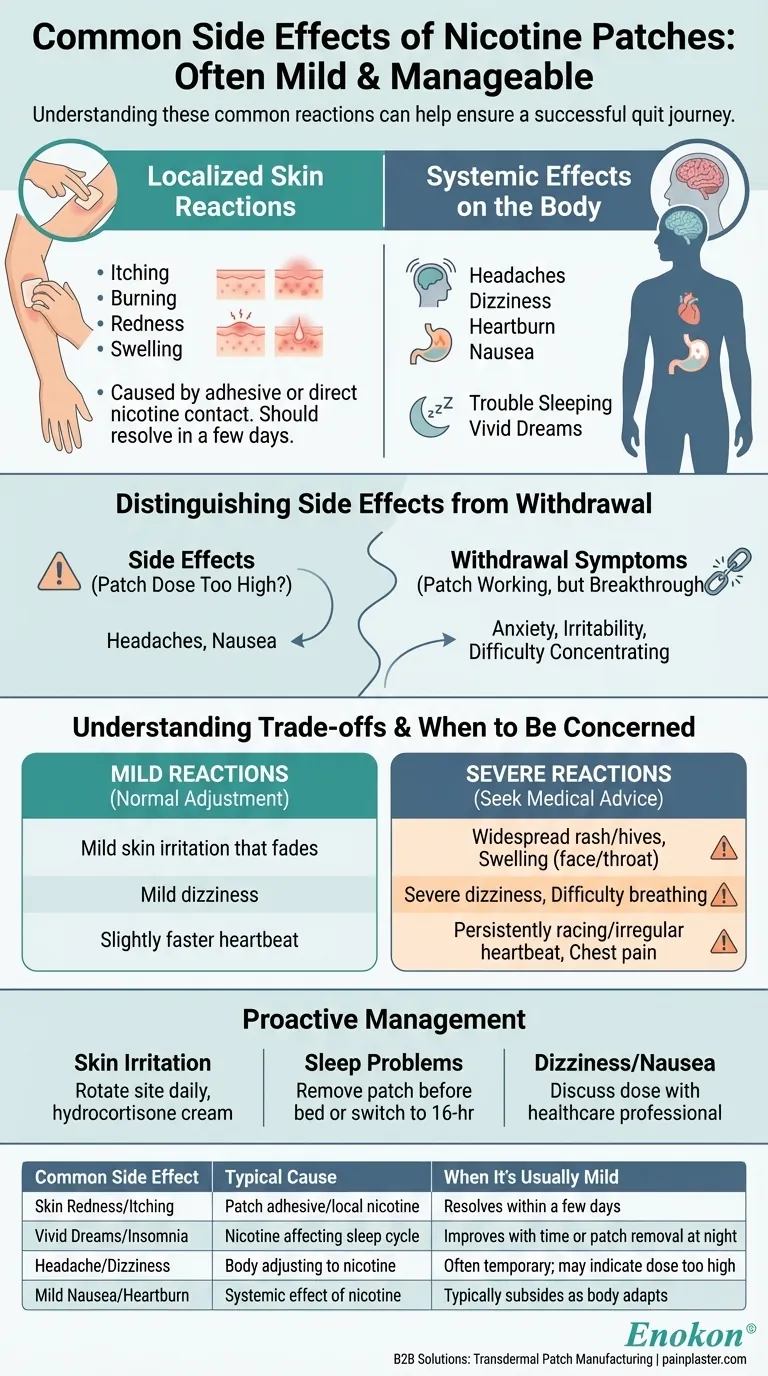
Side effects from nicotine patches generally fall into two distinct groups: reactions occurring directly on the skin and systemic effects that impact the rest of your body.
H3: Localized Skin Reactions
The most common side effect is a reaction at the application site. This is caused by the adhesive or the nicotine itself coming into direct contact with your skin.
You may experience mild itching, burning, redness, or swelling where the patch is placed. These symptoms should resolve within a few days.
H3: Systemic Effects on the Body
Because nicotine is absorbed into your bloodstream, it can cause effects throughout your body as it adjusts to this new delivery method.
Common systemic issues include headaches, dizziness, heartburn, and nausea. You might also experience muscle aches or hiccups.
Another very common systemic effect is a change in your sleep patterns. This can manifest as trouble sleeping (insomnia) or having unusually vivid dreams.
Distinguishing Side Effects from Withdrawal
It is critical to recognize that some symptoms may not be a side effect of the patch at all, but rather a sign of nicotine withdrawal.
H3: The Patch's Role
The patch is designed to lessen withdrawal by providing a controlled dose of nicotine. However, side effects like headaches or nausea can sometimes occur if the patch dose is too high for your needs.
H3: Symptoms of Nicotine Withdrawal
Feelings of anxiety, irritability, or difficulty concentrating are classic symptoms of nicotine withdrawal. Insomnia can also be a withdrawal symptom, making it difficult to distinguish from a patch side effect.
If you experience these symptoms, it means the patch is working to reduce them, but some may still break through as your body craves the patterns of smoking.
Understanding the Trade-offs and When to Be Concerned
While most side effects are mild, you must know how to identify a more serious reaction that requires professional medical advice.
H3: Mild vs. Severe Reactions
Mild skin irritation that fades is normal. However, a widespread rash, hives, or swelling (especially of the face, tongue, or throat) could signal an allergic reaction.
Similarly, mild dizziness is common, but severe dizziness or difficulty breathing is a sign to remove the patch and seek immediate medical help.
H3: The Heart Rate Nuance
You may notice a slightly faster heartbeat as you adjust to the patch. However, a persistently racing or irregular heartbeat, especially if accompanied by chest pain, is a serious side effect that requires you to stop using the patch and contact your doctor immediately.
How to Apply This to Your Quit Journey
You can proactively manage the most common side effects to ensure they don't derail your efforts to quit.
- If your primary focus is managing skin irritation: Rotate the patch application site every day, and do not reuse the same spot for at least a week. Applying 1% hydrocortisone cream can soothe bothersome irritation.
- If you are experiencing sleep problems or vivid dreams: Remove the 24-hour patch before you go to bed, or speak with your care team about switching to a 16-hour patch that is designed for daytime use only.
- If you feel dizzy, nauseous, or have a persistent headache: You may be on a dose that is too high. Discuss your symptoms with a healthcare professional to ensure you are using the correct strength for your former smoking habits.
Being prepared for these manageable side effects empowers you to stay focused on the ultimate goal of quitting successfully.
Summary Table:
| Common Side Effect | Typical Cause | When It's Usually Mild |
|---|---|---|
| Skin Redness/Itching | Patch adhesive or local nicotine | Resolves within a few days |
| Vivid Dreams/Insomnia | Nicotine affecting sleep cycle | Improves with time or patch removal at night |
| Headache/Dizziness | Body adjusting to nicotine dose | Often temporary; may indicate dose is too high |
| Mild Nausea/Heartburn | Systemic effect of nicotine | Typically subsides as your body adapts |
Ready to develop reliable, comfortable nicotine patches for your brand? As Enokon, a bulk manufacturer of transdermal patches, we combine technical expertise with custom R&D to create effective solutions for healthcare and pharma distributors. Let us help you develop a product that minimizes side effects and maximizes user success. Contact our team today to discuss your project needs.
Visual Guide
Related Products
- Lidocaine Hydrogel Pain Relief Patch for Pain Relief
- Capsaicin Chili Medicated Pain Relief Patches
- Menthol Gel Pain Relief Patch
- Icy Hot Menthol Medicine Pain Relief Patch
- Mugwort Wormwood Pain Relief Patch for Neck Pain
People Also Ask
- How does the aqueous base in a lidocaine patch contribute to drug delivery? Unlocking Sustained Pain Relief Technology
- What are the advantages of topical anesthetics over invasive Lidocaine infiltration? Discover Safer, Scalable Relief
- Which pain patch is most effective for arthritis? Find the Best Relief for Your Joint Pain
- Will a GP routinely continue prescribing lidocaine patches after the initial period? Understanding Short-Term Pain Relief
- Why are lidocaine patches preferred over oral medications? Targeted Relief & Scale Your Brand with OEM R&D Solutions
















