
Proper administration of transdermal selegiline centers on three key areas: applying the correct dose once daily, strictly adhering to dose-dependent dietary restrictions, and being vigilant about potentially serious drug interactions. Forgetting any one of these can compromise safety and effectiveness.
The most critical concept to understand is that the safety rules for transdermal selegiline change dramatically with the dose. While the low dose requires no dietary changes, higher doses demand strict avoidance of tyramine-rich foods to prevent a life-threatening hypertensive crisis.
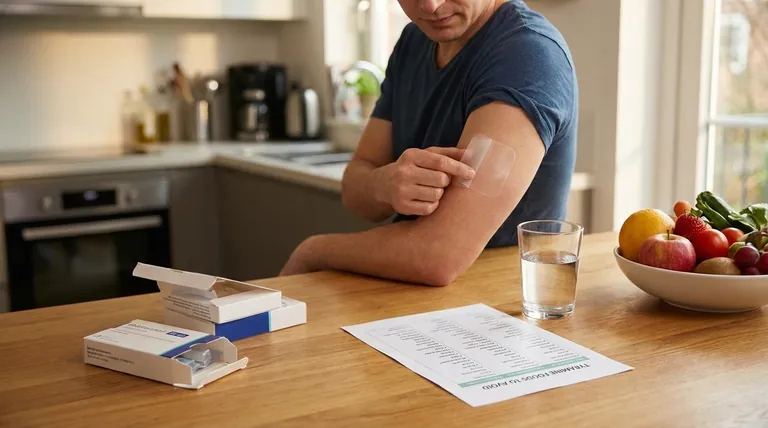
Core Dosing and Application
Correctly dosing and applying the patch is the foundation of the therapy. This process requires consistency and careful monitoring.
Starting and Adjusting Your Dose
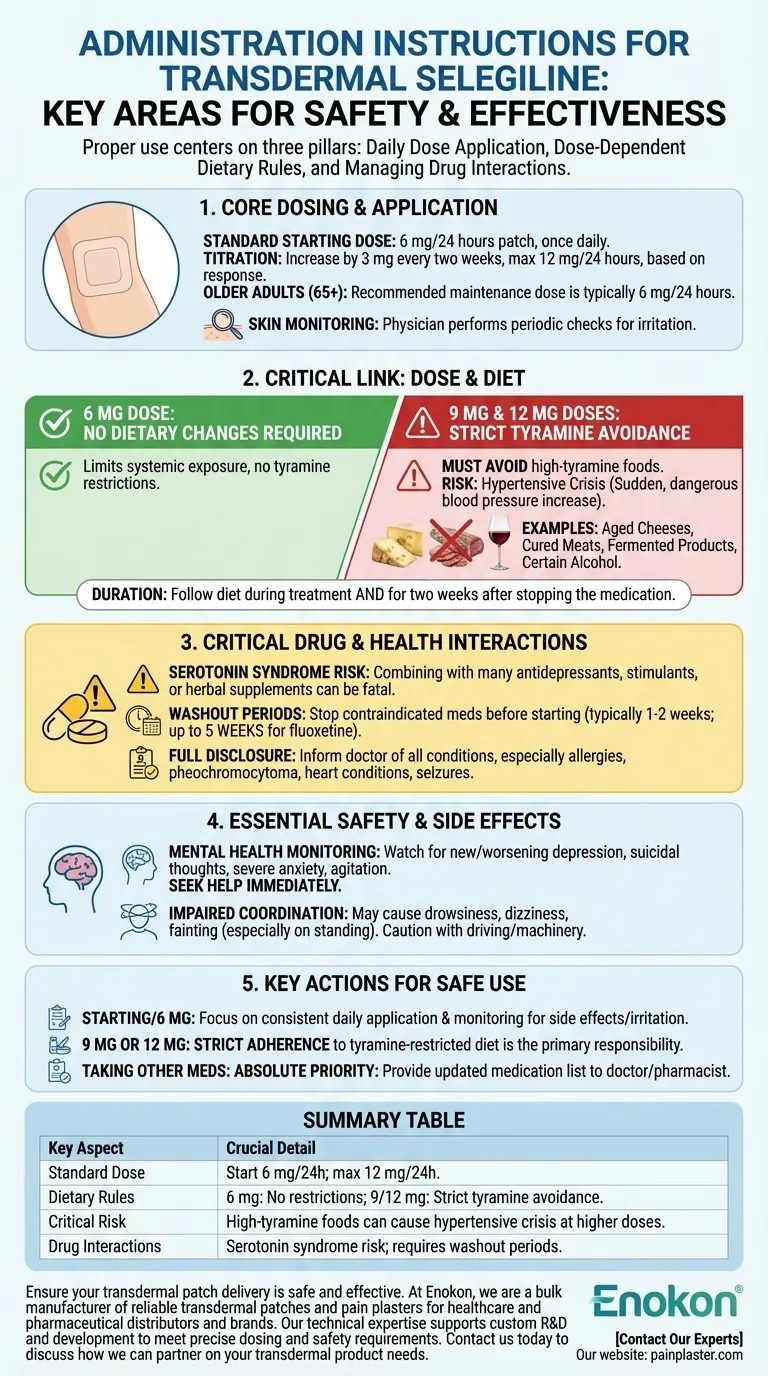
The standard starting dose is a 6 mg/24 hours patch applied once daily. Your physician may increase the dose in increments of 3 mg every two weeks, up to a maximum dose of 12 mg/24 hours, based on your response to the treatment.
Specific Guidance for Older Adults
For patients aged 65 and older, the recommended maintenance dose is typically 6 mg/24 hours.
Skin Monitoring
Because the medication is delivered through the skin, your physician will need to perform periodic skin examinations to check the application sites for any signs of irritation or other issues.
The Critical Link Between Dose and Diet
The interaction between selegiline and an amino acid called tyramine is the most significant safety concern. However, whether you need to restrict your diet depends entirely on your prescribed dose.
The 6 mg Dose: No Dietary Changes Required
At the lowest dose of 6 mg/24 hours, the transdermal delivery system sufficiently limits systemic exposure, meaning no dietary tyramine restrictions are necessary.
The 9 mg and 12 mg Doses: Strict Tyramine Avoidance
If you are prescribed the 9 mg or 12 mg patch, you must avoid foods and beverages high in tyramine. Consuming them can trigger a sudden, dangerous increase in blood pressure known as a hypertensive crisis.
Common examples of high-tyramine items include aged cheeses, cured or aged meats, fermented products like sauerkraut, and certain beers and red wines. Your doctor will provide a comprehensive list.
How Long to Follow the Diet
This dietary restriction is not temporary. You must follow it for the entire time you are on the 9 mg or 12 mg dose and continue for two weeks after you stop using the medication.
Understanding Critical Drug and Health Interactions
Selegiline can interact dangerously with many other medications and requires full disclosure of your health history to your prescribing physician.
The Risk of Serotonin Syndrome
Combining selegiline with many other antidepressants, stimulants, or certain herbal supplements can lead to a potentially fatal condition called serotonin syndrome. It is imperative that your doctor knows every medication you take.
Required "Washout" Periods
Before starting selegiline, you must stop taking contraindicated medications for a specific period to allow them to clear from your system. This "washout" period is typically 1-2 weeks for most drugs but can be as long as five weeks after discontinuing fluoxetine (Prozac).
Full Medical Disclosure
Always inform your physician about your complete medical history, especially allergies, pheochromocytoma (a type of adrenal gland tumor), heart conditions, or a history of seizures.
Essential Safety Warnings and Side Effects
Beyond dietary and drug interactions, you must be aware of potential side effects and know when to seek immediate medical help.
Monitoring for Mental Health Changes
Transdermal selegiline can cause unexpected changes in mental health. Patients, family members, and caregivers must watch for new or worsening depression, thoughts of suicide, severe anxiety, panic attacks, agitation, or extreme restlessness.
When to Contact Your Doctor Immediately
Report any of the mental health symptoms listed above to your doctor without delay, especially if they appear at the beginning of treatment or after a dose change.
Dizziness and Impaired Coordination
The medication may cause drowsiness, dizziness, or fainting, particularly when standing up quickly. Use caution when driving or operating machinery until you know how it affects you.
Key Actions for Safe and Effective Use
Your approach to managing this medication should be guided by your specific situation.
- If you are just starting or are on the 6 mg dose: Your focus should be on consistent daily application and monitoring for initial side effects or skin irritation.
- If your dose is increased to 9 mg or 12 mg: Your primary responsibility becomes strict adherence to the tyramine-restricted diet to prevent a hypertensive crisis.
- If you take any other medications (especially for mood): Your absolute priority is to ensure your doctor and pharmacist have an updated list of all your medications and supplements to screen for dangerous interactions.
Ultimately, safe and effective use of transdermal selegiline depends on a clear understanding of how your responsibilities change with your dose.
Summary Table:
| Key Aspect | Crucial Detail |
|---|---|
| Standard Dose | Start with 6 mg/24 hours patch; max 12 mg/24 hours. |
| Dietary Rules | No restrictions at 6 mg; strict tyramine avoidance at 9 mg/12 mg. |
| Critical Risk | High-tyramine foods can cause a hypertensive crisis at higher doses. |
| Drug Interactions | Risk of serotonin syndrome; requires washout periods for other antidepressants. |
Ensure your transdermal patch delivery is safe and effective. At Enokon, we are a bulk manufacturer of reliable transdermal patches and pain plasters for healthcare and pharmaceutical distributors and brands. Our technical expertise supports custom R&D and development to meet precise dosing and safety requirements. Contact us today to discuss how we can partner on your transdermal product needs.
Visual Guide
Related Products
- Silicone Scar Sheets Patch Transdermal Drug Patch
- Menthol Gel Pain Relief Patch
- Far Infrared Heat Pain Relief Patches Transdermal Patches
- Icy Hot Menthol Medicine Pain Relief Patch
- Mugwort Wormwood Pain Relief Patch for Neck Pain
People Also Ask
- What role does a silicone-based transdermal delivery system play in Parkinson's? Enhancing Early-Stage Patient Care
- How is the long-term skin tolerance of silicone-based transdermal patches evaluated in clinical settings? R&D and Safety
- Why is a polarizing microscope used to evaluate the long-term stability of transdermal drug patches? Ensure Efficacy.
- What are common adverse effects of transdermal drug delivery? Risks & Prevention Tips
- What are the advantages of transdermal drug patches? Optimize Medication Delivery with Patches




