
While generally safe, the most common adverse effects of heat patches are skin irritation, burns, and allergic reactions. The risk of these effects increases significantly with improper use, pre-existing skin sensitivities, or underlying medical conditions.
The primary danger of heat patches isn't from the product itself, but from its misuse. Most adverse effects can be avoided by strictly following application times, understanding your personal health risks, and testing for sensitivity before full use.
Understanding the Primary Risks
Heat patches deliver targeted warmth to soothe muscles, but the same mechanism that provides relief can also cause harm if not managed correctly. The risks generally fall into three categories, ranging from mild to severe.
Skin Irritation and Burns
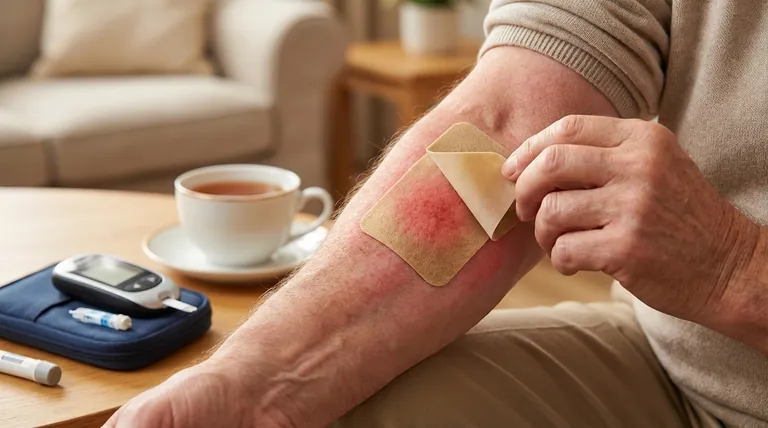
The most frequent complaint is mild to moderate skin irritation. This can present as redness or itching.
However, incorrect application or leaving a patch on for too long can lead to more serious thermal burns. Patches containing materials like activated charcoal can get hot enough to cause blisters or even permanent skin changes if instructions are ignored.
Allergic Reactions
Some individuals may have an allergic reaction to the patch's adhesive or active ingredients.
Patches containing capsaicin (the compound in chili peppers) are known to cause these issues. Similarly, people with known allergies to ingredients like lanolin or parabens should check the product label carefully to avoid a reaction.
Severe Skin Damage
In rare but serious cases, adverse effects can progress to severe skin damage.
This can include significant blistering or even necrosis (tissue death), which is typically the result of a severe burn or an extreme allergic reaction that was not addressed promptly.
Common Pitfalls and How to Avoid Them
Understanding who is most at risk and what mistakes to avoid is the key to using heat patches safely and effectively. Certain individuals must exercise greater caution.
Ignoring Recommended Time Limits
Every heat patch comes with a maximum recommended usage duration. Exceeding this time is the most common cause of burns and severe skin irritation. Always remove the patch as directed by the manufacturer.
Applying to Damaged or Sensitive Skin
Never apply a heat patch to broken, damaged, or already irritated skin. This significantly increases the risk of pain, further damage, and potential infection.
Skipping the Sensitivity Test
If you have sensitive skin or are using a new type of patch, always test it on a small, discreet area of skin first. This simple step can prevent a widespread and painful reaction.
Overlooking Pre-existing Conditions
Individuals with certain medical conditions are more susceptible to adverse effects. If you have diabetes, poor circulation, or a chronic skin condition, you must consult a healthcare professional before using any heat patch, as your ability to feel excessive heat may be compromised.
A Simple Framework for Safe Use
Your approach to using a heat patch should be guided by your personal health profile.
- If you have sensitive skin or known allergies: Always check the ingredients list and perform a patch test on a small area of skin for several hours before full application.
- If you have a medical condition (like diabetes or poor circulation): Do not use a heat patch without first getting explicit approval and guidance from your doctor.
- If you are a first-time user with no known conditions: Read and follow the manufacturer's instructions precisely, paying close attention to the maximum application time.
Ultimately, using heat patches safely is a matter of respecting the product's instructions and understanding your own body's limits.
Summary Table:
| Potential Adverse Effect | Key Risk Factors | Prevention Tips |
|---|---|---|
| Skin Irritation & Burns | Exceeding time limits, sensitive skin | Follow manufacturer's application time precisely. |
| Allergic Reactions | Allergy to adhesives, capsaicin, lanolin | Check ingredients; perform a patch test first. |
| Severe Skin Damage | Underlying conditions (diabetes, poor circulation) | Consult a doctor before use if you have these conditions. |
Need reliable, safe transdermal patches? Partner with Enokon, a bulk manufacturer of high-quality pain plasters and heat patches for healthcare brands and distributors. We combine rigorous safety standards with custom R&D to develop patches that minimize risks for end-users. Let's create a safer solution for your customers.
Contact our experts today to discuss your requirements.
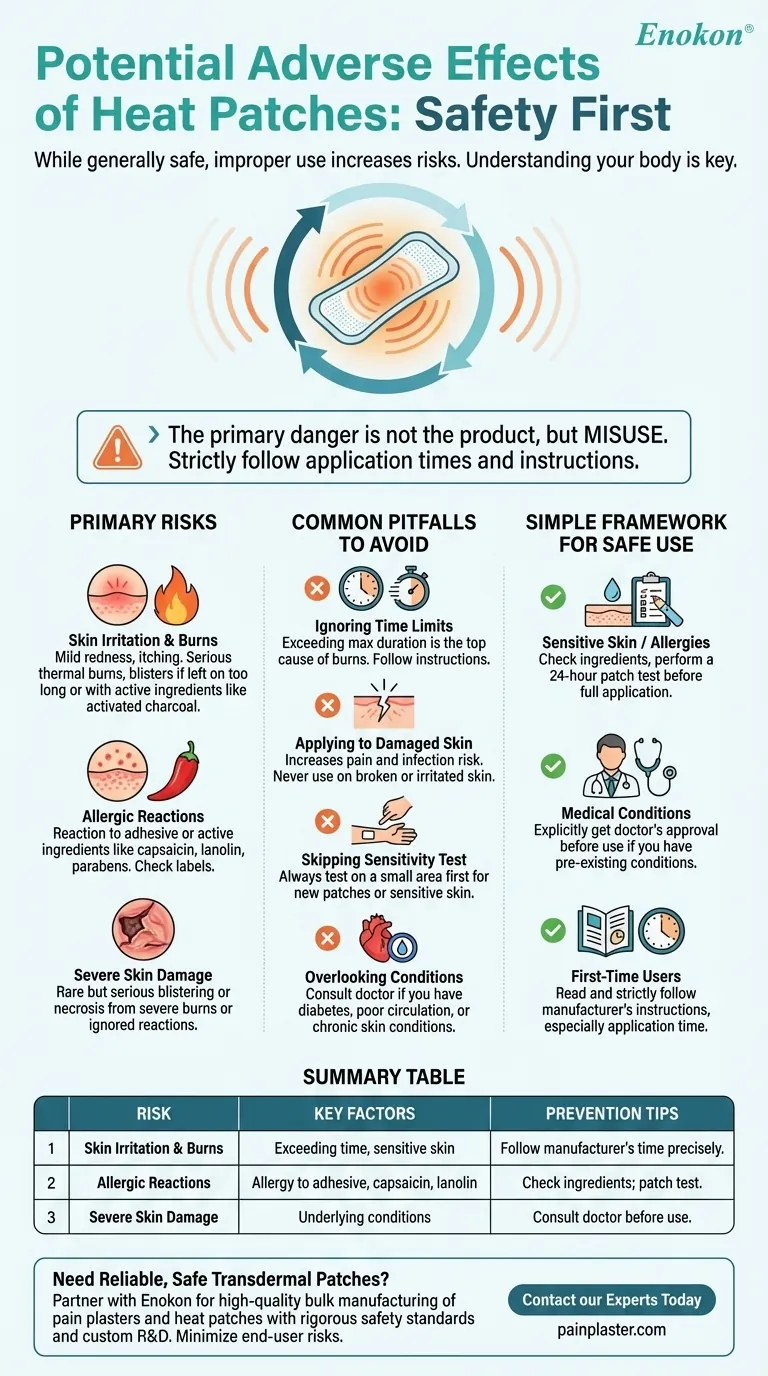
Visual Guide
Related Products
- Far Infrared Heat Pain Relief Patches Transdermal Patches
- Heat Relief Capsicum Patch for Lower Back Pain Relief
- Heating Pain Relief Patches for Menstrual Cramps
- Far Infrared Knee Pain Patch Heat Patches for Pain Relief
- Far Infrared Deep Heat Relief Patches Medicated Pain Relief Patches
People Also Ask
- Why is the selection of matrix materials critical when developing customized transdermal patches? Optimize Efficacy
- What are the physical impacts of external heat exposure on the performance and safety of transdermal patches? - Guide
- What role does a skin tolerance scoring system play in the safety evaluation of transdermal patches? Key Safety Metrics
- What are the clinical advantages of local transdermal delivery systems? Unlock Safer, More Effective Pain Relief Solutions
- How does high-purity far-infrared ceramic powder contribute to the efficacy of far-infrared physical therapy patches?



















