
To be effective, a pain patch must contain an active ingredient specifically suited for the type of pain you're experiencing. The most beneficial and common ingredients fall into distinct categories: anti-inflammatories like Diclofenac, local anesthetics like Lidocaine, and counter-irritants like Capsaicin and Menthol, each working through a unique biological pathway to provide targeted relief.
The core principle of a pain patch is localized treatment. Understanding that some ingredients numb nerves, others reduce inflammation, and some simply distract the brain from pain is the key to selecting the right product for your specific ailment.

How Patches Deliver Localized Relief
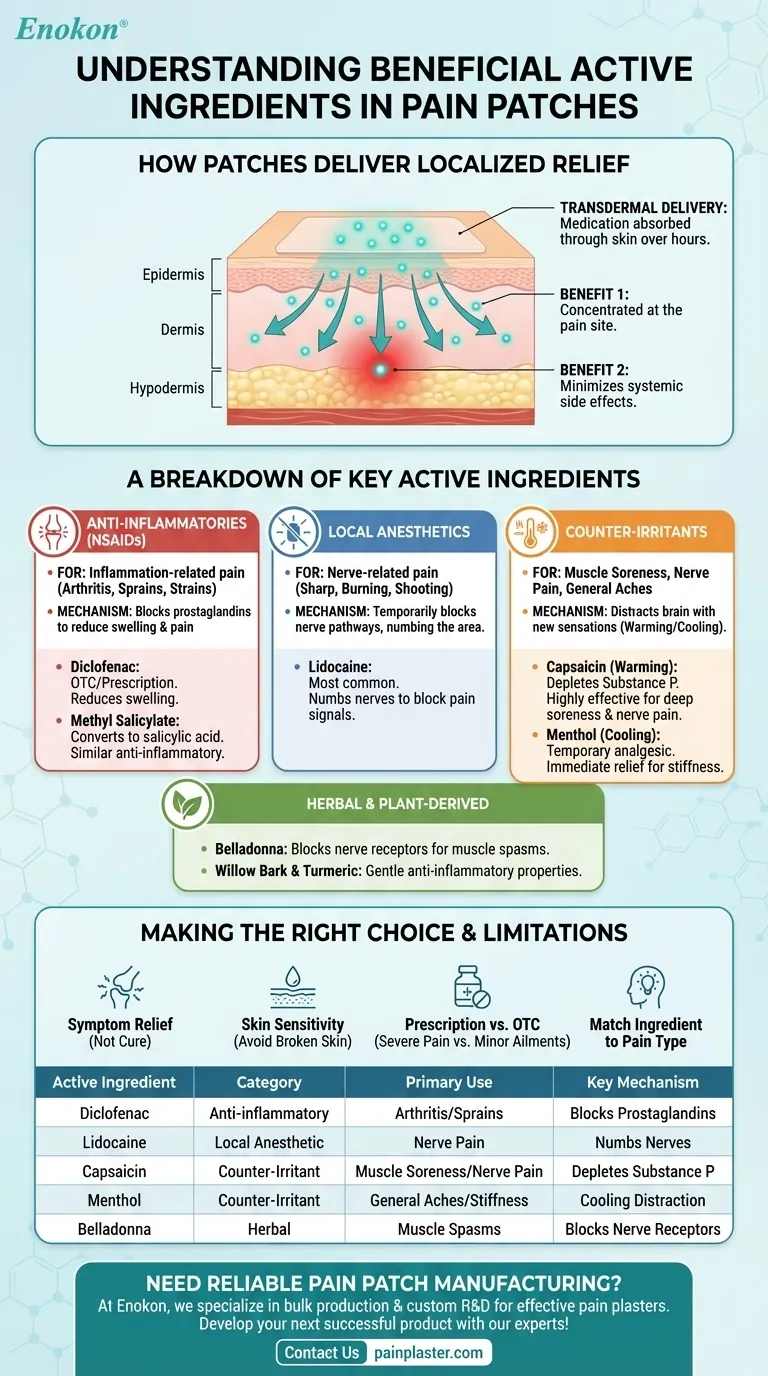
Pain patches work through a process called transdermal delivery. The medication is embedded within the patch's adhesive layer and is slowly absorbed through the skin over several hours.
This method provides two significant advantages over oral medications. First, it delivers the ingredient directly to the site of pain, concentrating its effect where it's needed most. Second, it minimizes systemic side effects because less of the drug circulates throughout your entire body.
A Breakdown of Key Active Ingredients
The effectiveness of any patch comes down to its active ingredient. They are not interchangeable; each is designed to target a different aspect of the pain signaling process.
Anti-Inflammatories (NSAIDs)
These ingredients are ideal for pain caused by inflammation, such as arthritis, sprains, or strains. They work by blocking the body's production of prostaglandins, which are compounds that cause swelling and pain.
Common examples include Diclofenac (available over-the-counter and by prescription) and Methyl Salicylate, which converts to salicylic acid in the skin and has a similar anti-inflammatory effect.
Local Anesthetics
Anesthetics provide relief by numbing the area. They temporarily block nerve pathways from sending pain signals to the brain, leading to a loss of sensation at the application site.
The most common anesthetic in patches is Lidocaine. It is particularly effective for nerve-related pain that feels sharp, burning, or shooting.
Counter-Irritants
These ingredients create a distracting sensation, like warming or cooling, which overrides the underlying pain signals. This process is known as the "gate control theory of pain," where the new sensation "closes the gate" on the original pain message.
- Capsaicin: Derived from chili peppers, this powerful ingredient creates a warming sensation. More importantly, it depletes a neurotransmitter called Substance P, which is responsible for transmitting pain signals. This makes it highly effective for nerve pain and muscle soreness.
- Menthol: This ingredient produces a cooling effect that acts as a mild, temporary analgesic. It provides immediate, though often shorter-lived, relief for general muscle aches and stiffness.
Herbal and Plant-Derived Ingredients
Some patches rely on compounds derived from plants that have been used in traditional medicine for centuries.
- Belladonna: This plant contains atropine and scopolamine, compounds that can block certain nerve receptors. It is often used to help reduce muscle spasms and related back or joint pain.
- Willow Bark & Turmeric: These are sometimes included for their natural anti-inflammatory properties, offering a gentler alternative to NSAIDs for mild joint pain and stiffness.
Understanding the Trade-offs and Limitations
While highly effective for localized issues, pain patches are not a universal solution. Understanding their limitations is crucial for safe and effective use.
For Symptom Relief, Not a Cure
Patches are designed to manage the symptoms of pain, not to cure the underlying condition causing it. They are a tool for relief while your body heals or as part of a broader management plan for a chronic condition.
Skin Sensitivity is a Factor
Because the ingredients are applied directly to the skin for extended periods, irritation can occur. It is critical to never apply a patch to broken, wounded, or already inflamed skin.
Prescription vs. Over-the-Counter
The vast majority of patches discussed here are available over-the-counter for minor ailments. However, highly potent ingredients like the opioid Fentanyl are available only by prescription for severe, chronic pain and must be used under strict medical supervision.
Making the Right Choice for Your Pain
To select the best patch, match the active ingredient to the specific type of pain you are experiencing.
- If your primary focus is inflammatory pain (e.g., arthritis, tendonitis, sprains): An NSAID patch containing Diclofenac or Methyl Salicylate is your most direct solution.
- If your primary focus is sharp, shooting nerve pain: A Lidocaine patch will be most effective at numbing the specific area and blocking pain signals.
- If your primary focus is deep muscle soreness or stiffness: A Capsaicin patch can provide deep, warming relief and increase blood flow to the area.
- If your primary focus is general aches or minor muscle spasms: A patch with Menthol can provide immediate cooling relief, while one with Belladonna may help with spasms.
By understanding how these ingredients work, you can make an informed choice to effectively target and manage your pain.
Summary Table:
| Active Ingredient | Category | Primary Use | Key Mechanism |
|---|---|---|---|
| Diclofenac | Anti-inflammatory (NSAID) | Arthritis, Sprains | Blocks prostaglandins to reduce swelling and pain |
| Lidocaine | Local Anesthetic | Nerve Pain | Numbs nerves to block pain signals |
| Capsaicin | Counter-Irritant | Muscle Soreness, Nerve Pain | Depletes Substance P; creates warming sensation |
| Menthol | Counter-Irritant | General Aches, Stiffness | Creates cooling sensation to distract from pain |
| Belladonna | Herbal | Muscle Spasms | Blocks nerve receptors to reduce spasms |
Need a reliable, high-quality pain patch for your brand or distributors?
At Enokon, we are a bulk manufacturer of reliable transdermal patches and pain plasters. We understand that the right active ingredient is crucial for effective pain management. Our technical expertise in custom R&D and development ensures we can create the perfect patch formula tailored to your specific market needs and target customers' pain points.
Let's develop your next successful pain relief product together. Contact our experts today for a consultation!
Visual Guide
Related Products
- Menthol Gel Pain Relief Patch
- Lidocaine Hydrogel Pain Relief Patch for Pain Relief
- Icy Hot Menthol Medicine Pain Relief Patch
- Capsaicin Chili Medicated Pain Relief Patches
- Far Infrared Pain Patch Relief Pain Reliever for Back
People Also Ask
- How do pain relief patches compare to other pain relief methods? Discover Targeted, Long-Lasting Relief
- How effective are pain relief patches for muscle pain? Target Localized Pain with Transdermal Delivery
- Who should consult a healthcare professional before using pain relief patches? Ensure Your Safety with Medical Advice
- What are the potential side effects of pain relief patches? A Guide to Safe Use & Key Risks
- What are some common applications of pain relief patches? Effective Relief for Muscle & Joint Pain



















