
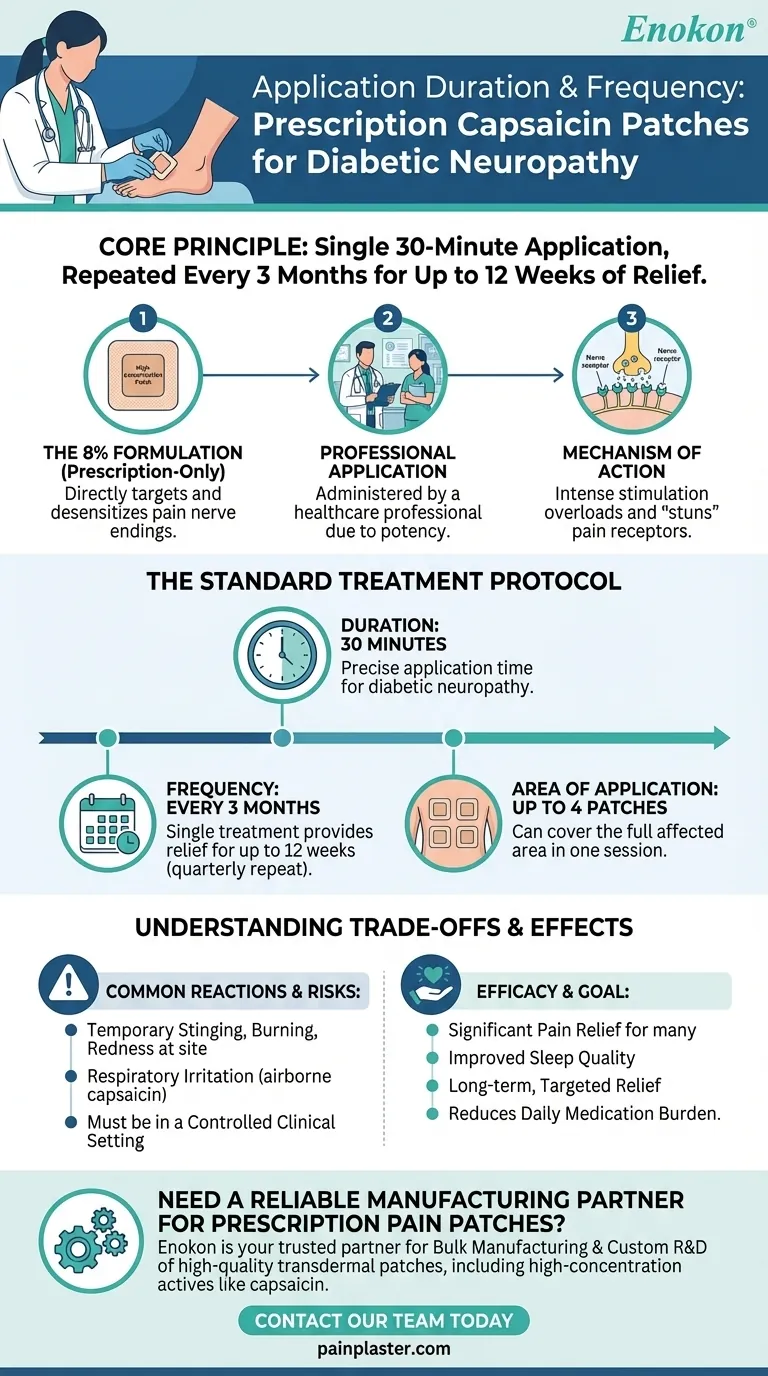
For treating painful diabetic neuropathy, the standard protocol for the prescription-strength capsaicin patch is a single 30-minute application. This treatment is typically administered by a healthcare professional in a clinical setting and is repeated once every three months as needed for pain relief.
The core principle of this therapy is not daily management, but a high-concentration, professionally-administered treatment designed to provide long-term pain relief for up to 12 weeks from a single, brief application.
How the High-Concentration Patch Works
Understanding this treatment requires recognizing that the prescription 8% capsaicin patch is fundamentally different from the low-dose, over-the-counter products used for minor muscle aches.
The 8% Capsaicin Formulation
This is a prescription-only medication. The high concentration is designed to directly target and desensitize the specific nerve endings in the skin that transmit pain signals.
The Professional Application Process
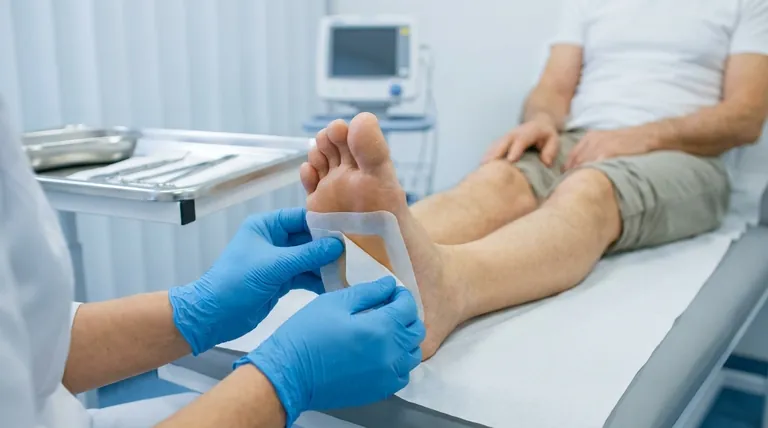
Due to its potency, the patch must be applied by a doctor or nurse. They will identify and mark the most painful areas of the skin before carefully applying the patch.
The Mechanism of Action
The capsaicin initially causes a heating or burning sensation. This intense stimulation effectively overloads and "stuns" the pain receptors, reducing their ability to send pain signals to the brain for an extended period.
The Standard Treatment Protocol
The protocol for painful diabetic peripheral neuropathy is highly specific and has been established through clinical study.
Application Duration: 30 Minutes
For this specific condition, the patch is left on the skin for precisely 30 minutes. This is a shorter duration than for other conditions like postherpetic neuralgia, which requires a 60-minute application.
Treatment Frequency: Every 3 Months
A single 30-minute treatment is designed to provide pain relief that can last for up to 12 weeks, or approximately three months. The procedure is repeated on a quarterly basis if the pain returns and the therapy is deemed effective.
Area of Application
A healthcare provider can apply up to four patches during a single session to cover the full area affected by neuropathic pain.
Understanding the Trade-offs and Side Effects
While effective for many, this treatment involves clear trade-offs and expected side effects that are critical to understand.
Common Skin Reactions
The most common side effects are temporary reactions at the application site. Patients should expect to feel sensations of stinging, burning, and redness, which are a direct result of the capsaicin's mechanism.
Efficacy Can Vary
Studies have shown that a single application can provide significant pain relief and improve sleep quality compared to a placebo. However, the degree of efficacy can be moderate and varies between individuals.
Risks and Professional Management
Because the high concentration of capsaicin can become airborne during application and removal, it can cause respiratory irritation or coughing. This is a key reason the procedure is performed in a controlled clinical setting by a trained professional.
Making the Right Choice for Your Goal
This therapy is a specialized option for persistent localized neuropathic pain. Your decision to pursue it should be based on a clear understanding of its goals and requirements.
- If your primary focus is long-term relief from localized nerve pain: This quarterly treatment may be a suitable option to reduce the burden of daily pain medication.
- If your primary focus is avoiding significant, temporary discomfort: Be aware that the application process itself causes notable burning and stinging, which is an unavoidable part of how the treatment works.
Ultimately, the 8% capsaicin patch is a targeted tool used to quiet overactive pain nerves for months at a time.
Summary Table:
| Aspect | Protocol for Diabetic Neuropathy |
|---|---|
| Application Duration | 30 minutes |
| Treatment Frequency | Every 3 months (quarterly) |
| Administration | By a healthcare professional |
| Goal | Provide up to 12 weeks of pain relief |
Need a reliable manufacturing partner for prescription pain patches?
If you are a healthcare distributor or pharmaceutical brand looking to develop or source high-quality transdermal pain patches, Enokon is your trusted partner.
We offer:
- Bulk Manufacturing: Reliable, large-scale production of transdermal patches and pain plasters.
- Custom R&D: Leverage our technical expertise to develop formulations tailored to your specific therapeutic needs, including high-concentration actives like capsaicin.
Benefit from our expertise to bring effective, professional-grade pain management solutions to market.
Contact our team today to discuss your project requirements.
Visual Guide
Related Products
- Capsaicin Chili Medicated Pain Relief Patches
- Heat Relief Capsicum Patch for Lower Back Pain Relief
- Lidocaine Hydrogel Pain Relief Patch for Pain Relief
- Menthol Gel Pain Relief Patch
- Icy Hot Menthol Medicine Pain Relief Patch
People Also Ask
- What conditions should be reported to a care team before using capsaicin patches? Ensure Safe Pain Relief
- What conditions can capsaicin creams and patches help relieve? Find Targeted Pain Relief for Nerves & Joints
- What are the uses of nonprescription capsaicin patches? Natural Pain Relief for Muscles & Joints
- What should be avoided while using capsaicin patches? Essential Safety Tips for Effective Pain Relief
- How are capsaicin patches administered? A Guide to Clinical vs. At-Home Use




