
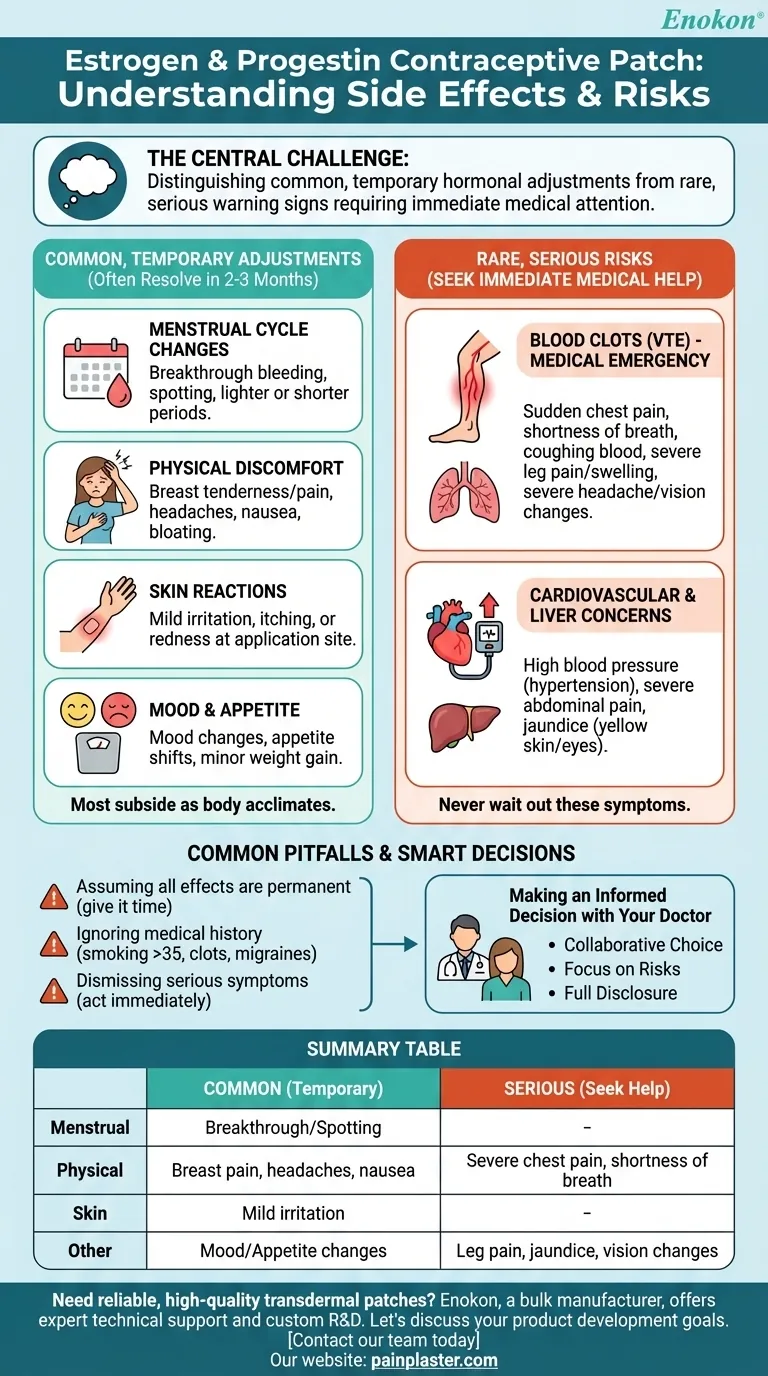
To be clear, the most common side effects of the estrogen and progestin contraceptive patch often involve temporary physical adjustments and skin reactions. These typically include skin irritation at the application site, breast tenderness, nausea, headaches, and changes to your menstrual cycle, such as bleeding between periods, especially within the first few months of use.
The central challenge is not just knowing the list of potential side effects, but learning to distinguish between common, temporary adjustments your body makes to the hormones and the rare but serious warning signs that require immediate medical attention.

Understanding Common Side Effects: The Initial Adjustment Period
When you start using the contraceptive patch, your body begins adapting to a new, steady level of hormones. Most of the side effects that arise are a direct result of this initial adjustment phase and often diminish after the first two or three cycles.
Changes to Your Menstrual Cycle
The most frequently reported side effect is a change in bleeding patterns. This is known as breakthrough bleeding or spotting and refers to bleeding that occurs outside of your expected period. Your menstrual flow may also become lighter or shorter over time.
Physical Discomforts
Many users experience mild physical symptoms as their body acclimates. These can include breast tenderness or pain, headaches, and nausea or bloating. These symptoms are generally mild and tend to resolve on their own.
Skin Reactions at the Application Site
Since the patch adheres directly to your skin, localized reactions are common. You might notice mild irritation, itching, or redness where the patch is placed. Rotating the application site each week can help minimize this.
Mood and Appetite Changes
Hormonal fluctuations can also influence mood and appetite. Some individuals report mood changes, while others may notice shifts in their appetite or a small amount of weight gain or bloating.
Serious Risks: When to Seek Immediate Medical Help
While rare, the contraceptive patch carries serious risks that you must be able to recognize. These are not minor inconveniences; they are signs of potentially life-threatening conditions.
The Risk of Blood Clots (VTE)
The most significant serious risk associated with hormonal contraceptives containing estrogen is an increased chance of developing blood clots, also known as venous thromboembolism (VTE). A clot can lead to a pulmonary embolism, heart attack, or stroke.
Seek immediate medical attention if you experience:
- Sudden, severe pain in your chest
- Shortness of breath or coughing up blood
- Pain, swelling, or redness in one leg
- Sudden, severe headache or vision changes
Cardiovascular and Liver Concerns
The patch can lead to an increase in blood pressure (hypertension). In very rare cases, it has been linked to liver or gallbladder problems. Severe abdominal pain or yellowing of the skin or eyes (jaundice) are urgent warning signs.
Long-Term Health Considerations
Studies have suggested a small, somewhat increased risk of breast cancer and cervical cancer with long-term use of combined hormonal contraceptives. This risk must be weighed against the benefits and discussed with your healthcare provider.
Common Pitfalls to Avoid
Understanding the context of these side effects is critical for making a calm, informed decision and avoiding unnecessary anxiety.
Assuming All Side Effects are Permanent
Many people discontinue the patch prematurely due to side effects that would have likely resolved on their own. It is common for issues like spotting and nausea to disappear after the first three months.
Ignoring Your Personal Medical History
The risk of serious side effects is not the same for everyone. Factors like smoking (especially if you are over 35), a personal or family history of blood clots, high blood pressure, or migraine with aura significantly increase your risk. Full disclosure with your doctor is non-negotiable.
Dismissing Serious Symptoms
Never dismiss or "wait out" the warning signs of a serious complication like a blood clot. While common side effects are manageable, the symptoms of VTE are a medical emergency.
Making an Informed Decision with Your Doctor
Your choice of contraceptive should be a collaborative decision made with a healthcare provider who understands your full health profile.
- If your primary focus is managing initial discomforts: Understand that many common side effects like spotting or nausea often resolve within the first three months of use.
- If you have a history of blood clots, high blood pressure, or are a smoker over 35: Discuss these specific risk factors with your doctor, as the patch may not be the safest option for you.
- If you experience any severe or sudden symptoms: Do not wait; seek immediate medical attention as this could indicate a serious complication.
Ultimately, being informed about both the common and the rare side effects empowers you to use the contraceptive patch safely and effectively.
Summary Table:
| Category | Common Side Effects (Often Temporary) | Serious Side Effects (Seek Immediate Help) |
|---|---|---|
| Menstrual Cycle | Breakthrough bleeding, spotting, lighter periods | - |
| Physical Discomfort | Breast tenderness, headaches, nausea, bloating | Severe chest pain, shortness of breath, severe headache |
| Skin Reactions | Mild irritation, itching, redness at application site | - |
| Other | Mood changes, minor weight gain, appetite shifts | Pain/swelling in one leg, jaundice, vision changes |
Need reliable, high-quality transdermal patches for your healthcare brand or distribution network?
As Enokon, a bulk manufacturer of dependable transdermal patches and pain plasters, we provide more than just products. We offer expert technical support for custom R&D and development, ensuring formulations that prioritize patient safety and comfort.
Let's discuss how our expertise can support your product development goals. Contact our team today to explore partnership opportunities.
Visual Guide
Related Products
- Heating Pain Relief Patches for Menstrual Cramps
- Prostate Pain Kidney Health Care Patch for Men
- Cooling Fever Patches Color Change Cold Fever Patch
- Menthol Gel Pain Relief Patch
- Icy Hot Menthol Medicine Pain Relief Patch
People Also Ask
- What are the benefits of Period Pain Heat Patches? Drug-Free, On-the-Go Relief
- What are the key benefits of heating patches for elderly individuals? Relieve Pain & Improve Mobility
- What are the different types of heat patches? Find the Right Pain Relief for Your Needs
- What are the key differences between conventional heat patches and deep heat devices? Choosing the Right Pain Relief Solution
- What percentage of people with back pain use heat patches for relief? Discover the Popular Choice for Pain Management









