
Beyond its primary role in managing high blood pressure, the clonidine patch is effectively used for a range of other conditions. These include treating menopausal hot flashes, aiding in smoking cessation, and managing the symptoms of withdrawal from substances like alcohol and opiates. It has also found applications in treating post-traumatic stress disorder (PTSD).
Clonidine's versatility stems from its core function: it acts on the brain to reduce the 'fight-or-flight' signals that cause a wide range of physical symptoms, from elevated blood pressure and hot flashes to withdrawal-related anxiety and agitation.
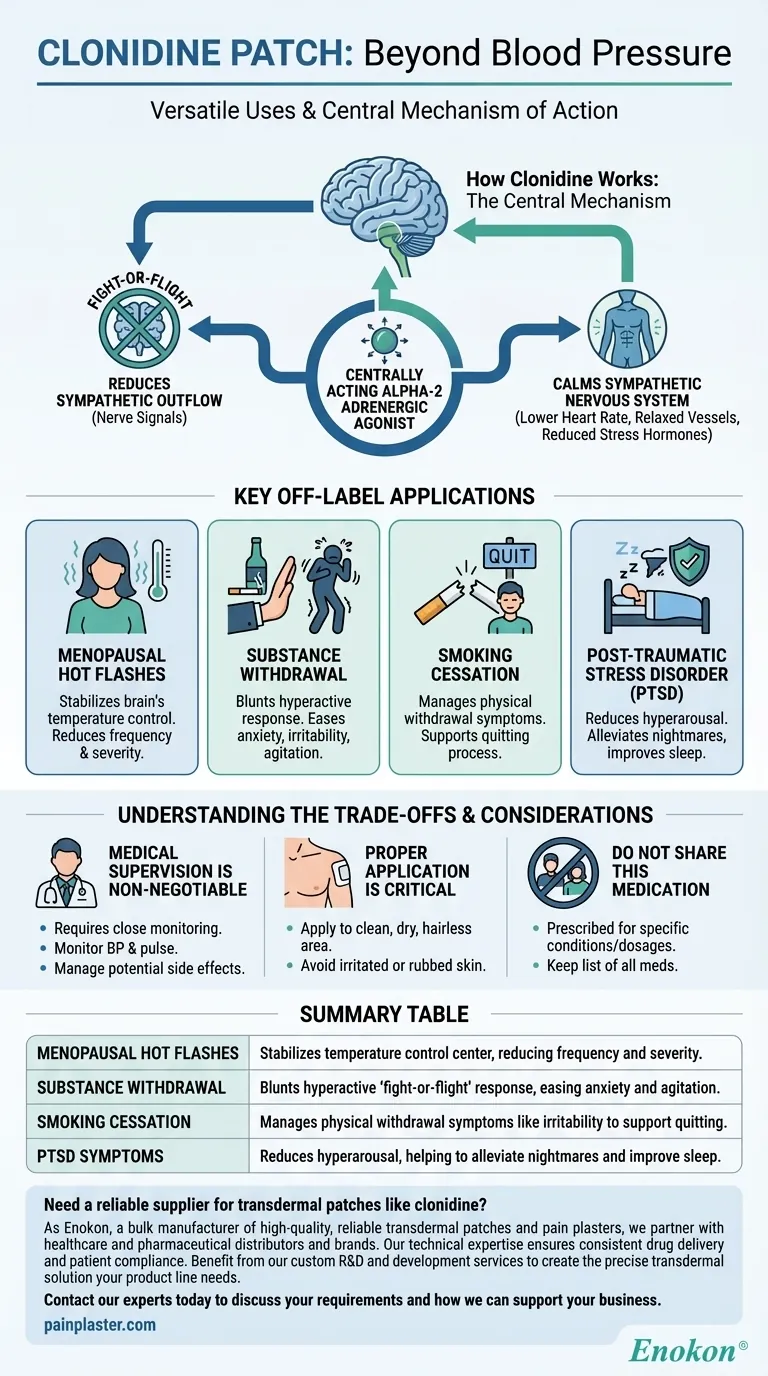
How Clonidine Works: The Central Mechanism
Beyond Simple Vasodilation
While clonidine does result in wider blood vessels, it is not a direct vasodilator. Its primary action is far more central.
Clonidine is a centrally acting alpha-2 adrenergic agonist. This means it works by stimulating specific receptors in the brain stem.
Calming the Sympathetic Nervous System
This stimulation in the brain effectively reduces sympathetic outflow—the nerve signals that control the body's "fight-or-flight" response.
By calming this system, clonidine can decrease heart rate, relax blood vessels, and reduce the release of stress hormones, which explains its wide range of therapeutic effects.
Key Off-Label Applications Explained
Menopausal Hot Flashes
Hot flashes are linked to the body's thermoregulatory center in the brain, which is influenced by sympathetic nerve activity.
By dampening this activity, the clonidine patch can help stabilize the body's temperature control system, reducing the frequency and severity of hot flashes for many women.
Substance Withdrawal and Smoking Cessation
Withdrawal from substances like opiates, alcohol, or nicotine often causes a hyperactive sympathetic state, leading to symptoms like anxiety, irritability, and tremors.
Clonidine helps blunt this overactivity, making the physical symptoms of withdrawal more manageable and supporting the cessation process.
Post-Traumatic Stress Disorder (PTSD)
A core feature of PTSD is hyperarousal, where the "fight-or-flight" system is constantly on high alert. This can manifest as nightmares, flashbacks, and hypervigilance.
By reducing sympathetic outflow, clonidine can decrease this state of hyperarousal, which is particularly helpful for managing nightmares and improving sleep.
Understanding the Trade-offs and Considerations
Medical Supervision is Non-Negotiable
All of these uses, especially those considered "off-label," require close monitoring by a physician to ensure safety and effectiveness.
Your doctor will monitor your blood pressure and may require you to check your pulse regularly to manage potential side effects.
Proper Application is Critical
The patch must be applied correctly to ensure a steady release of medication. It should be placed on a clean, dry, and hairless area of the upper arm or chest.
Avoid skin that is irritated, scarred, has folds, or is subject to rubbing from tight clothing, as this can affect absorption.
Do Not Share This Medication
Clonidine is prescribed for a specific individual's condition and dosage. Sharing this medication with others can be dangerous.
Always keep a written list of all medications and supplements you are taking to share with your healthcare providers.
Making the Right Choice for Your Goal
Understanding the root mechanism of clonidine allows for an informed discussion with your healthcare provider about its potential benefits for your specific condition.
- If your primary focus is managing menopausal symptoms: Clonidine offers an effective non-hormonal option for reducing the severity of hot flashes.
- If your primary focus is support for substance withdrawal: The patch can significantly ease the physical symptoms of agitation and anxiety driven by a hyperactive nervous system.
- If your primary focus is addressing PTSD symptoms: Clonidine may help reduce hyperarousal, particularly sleep disturbances and nightmares, by calming the central nervous system.
Ultimately, clonidine's ability to regulate the body's central alert system is what makes it a valuable tool for a diverse set of medical challenges.
Summary Table:
| Condition | How the Clonidine Patch Helps |
|---|---|
| Menopausal Hot Flashes | Stabilizes the brain's temperature control center, reducing frequency and severity. |
| Substance Withdrawal | Blunts the hyperactive 'fight-or-flight' response, easing anxiety and agitation. |
| Smoking Cessation | Manages physical withdrawal symptoms like irritability to support quitting. |
| PTSD Symptoms | Reduces hyperarousal, helping to alleviate nightmares and improve sleep. |
Need a reliable supplier for transdermal patches like clonidine?
As Enokon, a bulk manufacturer of high-quality, reliable transdermal patches and pain plasters, we partner with healthcare and pharmaceutical distributors and brands. Our technical expertise ensures consistent drug delivery and patient compliance. Benefit from our custom R&D and development services to create the precise transdermal solution your product line needs.
Contact our experts today to discuss your requirements and how we can support your business.
Visual Guide
Related Products
- Lidocaine Hydrogel Pain Relief Patch for Pain Relief
- Menthol Gel Pain Relief Patch
- Capsaicin Chili Medicated Pain Relief Patches
- Herbal Medicated Anti Diarrhea Patch for Digestive Relief
- Icy Hot Menthol Medicine Pain Relief Patch
People Also Ask
- How does the aqueous base in a lidocaine patch contribute to drug delivery? Unlocking Sustained Pain Relief Technology
- What are the advantages of topical anesthetics over invasive Lidocaine infiltration? Discover Safer, Scalable Relief
- Which pain patch is most effective for arthritis? Find the Best Relief for Your Joint Pain
- Will a GP routinely continue prescribing lidocaine patches after the initial period? Understanding Short-Term Pain Relief
- Why are lidocaine patches preferred over oral medications? Targeted Relief & Scale Your Brand with OEM R&D Solutions



















