
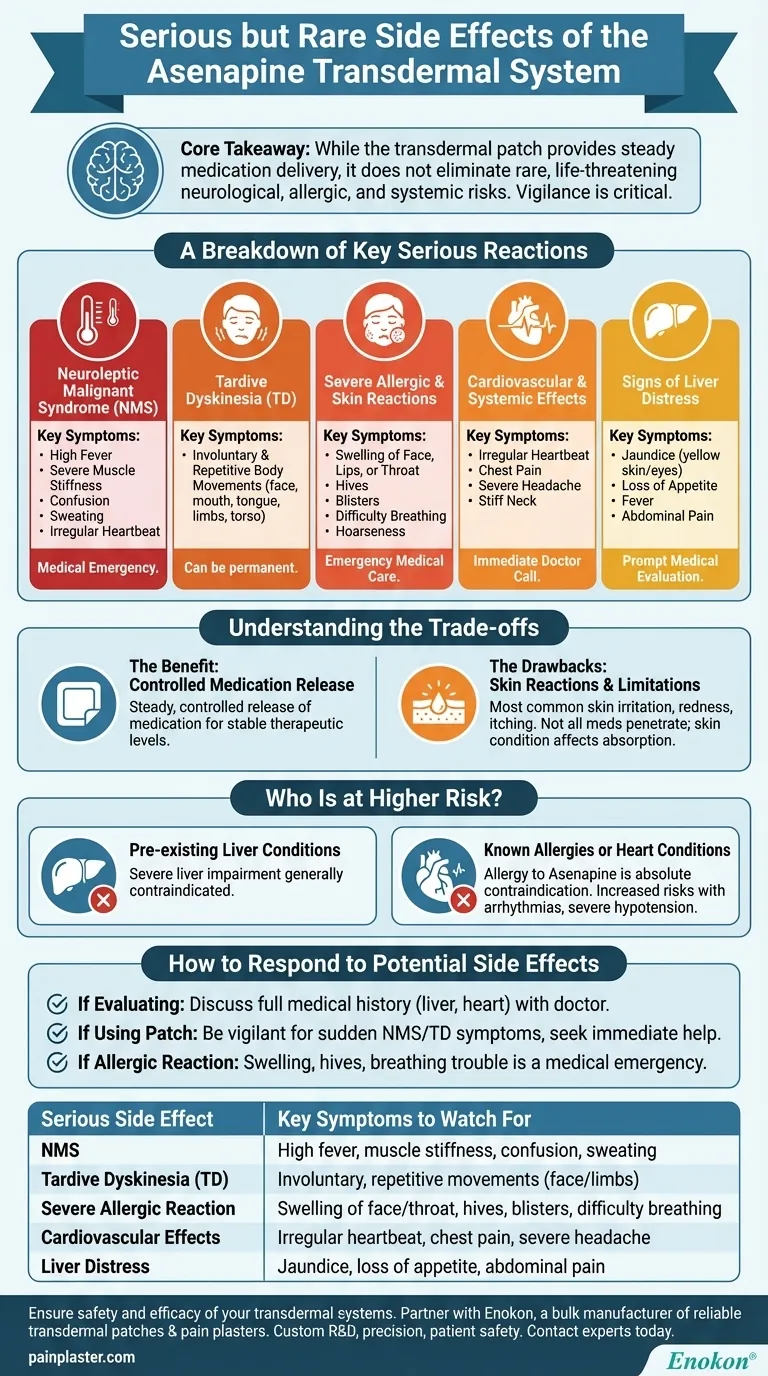
While generally effective, the Asenapine transdermal system carries the risk of several serious but rare side effects that require immediate medical attention. These primarily include life-threatening neurological conditions like Neuroleptic Malignant Syndrome, movement disorders such as Tardive Dyskinesia, and severe allergic reactions.
The core takeaway is that while the transdermal patch provides a steady dose of Asenapine, it does not eliminate the rare but significant risks associated with this class of medication. Understanding and monitoring for specific neurological, allergic, and systemic symptoms is critical for patient safety.
A Breakdown of Key Serious Reactions
While common side effects like application site irritation or drowsiness are manageable, it is essential to recognize the signs of more severe adverse events. These reactions often require immediate medical intervention.
Neuroleptic Malignant Syndrome (NMS)
NMS is a rare but life-threatening reaction to antipsychotic drugs. It is a medical emergency.
Key symptoms include a high fever, severe muscle stiffness, confusion, and sweating. Other signs can include an irregular heartbeat and nausea.
Tardive Dyskinesia (TD)
Tardive Dyskinesia is a disorder characterized by involuntary and repetitive body movements, which can sometimes be permanent even after stopping the medication.
These movements often affect the face, mouth, and tongue, but can also involve the limbs and torso.
Severe Allergic and Skin Reactions
An allergic reaction to the medication or patch components can be severe and dangerous.
Watch for swelling of the face, lips, or throat, hives, blisters, and any difficulty breathing or hoarseness. These symptoms demand emergency medical care.
Cardiovascular and Systemic Effects
Asenapine can impact other body systems, leading to serious complications.
Symptoms requiring an immediate call to your doctor include irregular heartbeat, chest pain, a severe headache, or a stiff neck.
Signs of Liver Distress
In rare cases, the medication can affect liver function.
Look for signs like jaundice (yellowing of the skin or eyes), loss of appetite, fever, or abdominal pain, which warrant prompt medical evaluation.
Understanding the Trade-offs
Choosing a transdermal system involves balancing its unique benefits against potential drawbacks, including both common and rare side effects.
The Benefit: Controlled Medication Release
The primary advantage of a transdermal patch is its ability to deliver a controlled, steady release of medication into the bloodstream over time. This can help maintain stable therapeutic levels.
The Drawbacks: Skin Reactions and Limitations
The most common disadvantage is skin irritation at the application site, such as redness or itching. This is distinct from a rare, severe allergic reaction.
Additionally, not all medications can effectively penetrate the skin barrier, and a person's skin condition can affect drug absorption.
Who Is at Higher Risk?
Certain pre-existing conditions can increase the risk of serious side effects, making it critical to share your complete medical history with your doctor.
Pre-existing Liver Conditions
Individuals with severe liver impairment are generally contraindicated from using this medication.
Known Allergies or Heart Conditions
A known allergic reaction to Asenapine is an absolute contraindication.
Patients with pre-existing heart conditions, such as arrhythmias or severe hypotension (low blood pressure), may also face increased risks.
How to Respond to Potential Side Effects
Proactive monitoring and clear communication with your healthcare provider are the most effective tools for managing risk.
- If you are evaluating this medication: Discuss your full medical history, especially any liver or heart conditions, with your doctor to properly assess your personal risk profile.
- If you are using the patch: Be vigilant for the sudden onset of symptoms like high fever, severe muscle stiffness, confusion, or new involuntary movements, and seek immediate medical help if they occur.
- If you notice signs of an allergic reaction: Any swelling of the face or throat, widespread hives, or difficulty breathing is a medical emergency requiring immediate attention.
Ultimately, your safety depends on being an informed and active partner in your own healthcare.
Summary Table:
| Serious Side Effect | Key Symptoms to Watch For |
|---|---|
| Neuroleptic Malignant Syndrome (NMS) | High fever, severe muscle stiffness, confusion, sweating |
| Tardive Dyskinesia (TD) | Involuntary, repetitive movements of the face, mouth, or limbs |
| Severe Allergic Reaction | Swelling of face/throat, hives, blisters, difficulty breathing |
| Cardiovascular Effects | Irregular heartbeat, chest pain, severe headache |
| Liver Distress | Jaundice (yellowing skin/eyes), loss of appetite, abdominal pain |
Ensure the safety and efficacy of your transdermal drug delivery systems. Partner with Enokon, a bulk manufacturer of reliable transdermal patches and pain plasters for healthcare and pharmaceutical distributors and brands. Our technical expertise in custom R&D and development ensures your products are formulated with precision and patient safety in mind. Contact our experts today to discuss your custom transdermal project.
Visual Guide
Related Products
- Far Infrared Heat Pain Relief Patches Transdermal Patches
- Silicone Scar Sheets Patch Transdermal Drug Patch
- Menthol Gel Pain Relief Patch
- Icy Hot Menthol Medicine Pain Relief Patch
- Mugwort Wormwood Pain Relief Patch for Neck Pain
People Also Ask
- Why is the selection of matrix materials critical when developing customized transdermal patches? Optimize Efficacy
- What are the physical impacts of external heat exposure on the performance and safety of transdermal patches? - Guide
- What are the clinical advantages of local transdermal delivery systems? Unlock Safer, More Effective Pain Relief Solutions
- What role does a skin tolerance scoring system play in the safety evaluation of transdermal patches? Key Safety Metrics
- How does high-purity far-infrared ceramic powder contribute to the efficacy of far-infrared physical therapy patches?













