
The primary advantages of the buprenorphine transdermal patch are its consistent drug delivery, once-weekly convenience, and its suitability for patients who have difficulty with oral medications. This delivery system provides stable, around-the-clock relief from severe, chronic pain by maintaining steady medication levels in the bloodstream.
The true value of the buprenorphine patch is not just its convenience, but its ability to provide a more stable and predictable form of pain management for a specific patient group, often with a lower potential for misuse compared to other opioid forms.
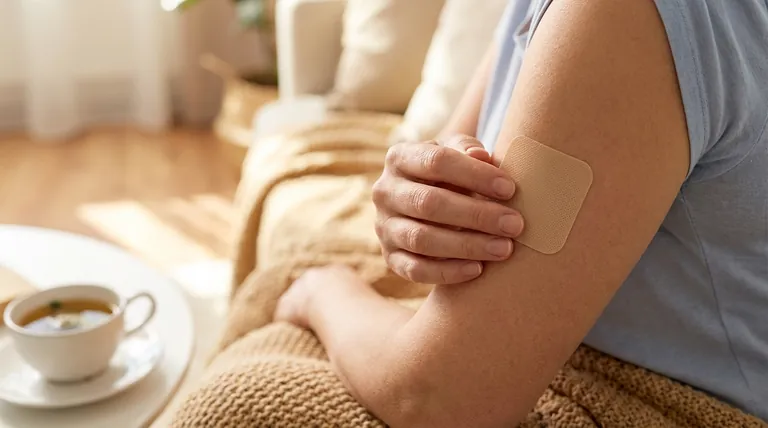
How the Patch Achieves Consistent Delivery
The effectiveness of the buprenorphine patch lies in its sophisticated design, which is engineered for slow, continuous drug release over several days.
The Technology of a Transdermal Patch
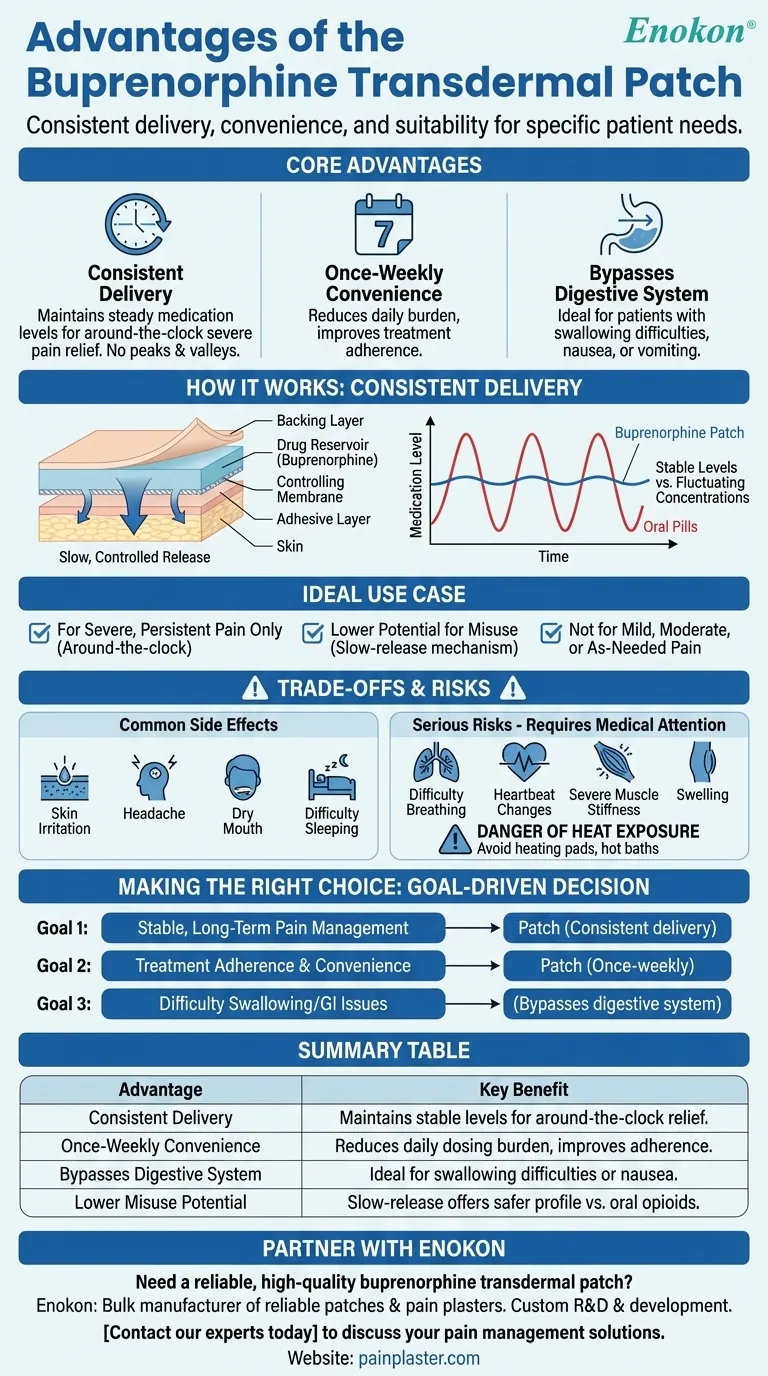
A transdermal patch consists of several distinct layers. A backing layer protects the patch from the environment, while a drug reservoir holds the buprenorphine. An adhesive layer keeps the patch secured to the skin, and a controlling membrane regulates the rate at which the medication is absorbed into the body.
Maintaining Stable Medication Levels
Unlike pills, which can cause peaks and valleys in medication levels, the patch releases buprenorphine at a controlled rate. This consistency helps to maintain stable pain control and can reduce the incidence of side effects associated with fluctuating drug concentrations.
The Benefit of Bypassing the Digestive System
By delivering medication directly through the skin, the patch is an ideal option for patients who cannot swallow pills or who suffer from nausea and vomiting. This route avoids the gastrointestinal tract entirely.
The Ideal Use Case for Buprenorphine Patches
This medication is not intended for all types of pain. Its use is highly specific and reserved for situations where other treatments are inadequate.
For Severe and Persistent Pain Only
The buprenorphine patch is indicated exclusively for severe pain that is expected to last a long time and requires around-the-clock opioid treatment. It should not be used for mild, moderate, or short-term pain that can be managed with as-needed medication.
A Lower Potential for Misuse
While not impossible, it is more difficult to misuse or abuse medication delivered via a transdermal patch compared to oral opioids. The slow-release mechanism makes it challenging to achieve a rapid, high concentration of the drug.
Understanding the Trade-offs and Risks
As an opiate analgesic, buprenorphine carries significant risks and side effects that must be carefully managed with a healthcare provider.
Common and Serious Side Effects
Common side effects can include skin irritation at the patch site, headache, dry mouth, or difficulty sleeping. More serious side effects require immediate medical attention, such as difficulty breathing, changes in heartbeat, severe muscle stiffness, agitation, or swelling of the face and throat.
Critical Safety Precautions
Before using the patch, you must inform your doctor of all allergies, existing medical conditions (like heart or liver disease), and other medications you are taking. Alcohol and other street drugs must be avoided. Users should not drive until they know how the medication affects them.
The Danger of Heat Exposure
Exposing the patch to excessive heat from sources like heating pads, electric blankets, or even hot baths can cause the medication to release too quickly. This significantly increases the risk of a dangerous overdose.
Making the Right Choice for Your Goal
Evaluating whether the buprenorphine patch is appropriate depends entirely on the specific pain management goal and the patient's medical profile.
- If your primary focus is stable, long-term pain management: The patch's consistent delivery system can prevent the peaks and troughs associated with oral medication.
- If your primary focus is treatment adherence and convenience: The simple, once-weekly application can reduce the daily burden on both patients and caregivers.
- If the patient has difficulty swallowing or has gastrointestinal issues: The transdermal route bypasses the digestive system, making it a critical and effective alternative to pills.
Understanding both the distinct benefits and the serious responsibilities of the buprenorphine patch is the first step toward effective and safe pain management.
Summary Table:
| Advantage | Key Benefit |
|---|---|
| Consistent Delivery | Maintains stable medication levels for around-the-clock pain relief. |
| Once-Weekly Convenience | Reduces daily dosing burden and improves treatment adherence. |
| Bypasses Digestive System | Ideal for patients with swallowing difficulties or nausea. |
| Lower Misuse Potential | Slow-release mechanism offers a safer profile compared to some oral opioids. |
Need a reliable, high-quality buprenorphine transdermal patch for your patients or product line?
As Enokon, a bulk manufacturer of reliable transdermal patches and pain plasters, we partner with healthcare and pharma distributors and brands. Our technical expertise ensures custom R&D and development to meet your specific needs.
Contact our experts today to discuss how we can support your pain management solutions.
Visual Guide
Related Products
- Far Infrared Heat Pain Relief Patches Transdermal Patches
- Menthol Gel Pain Relief Patch
- Silicone Scar Sheets Patch Transdermal Drug Patch
- Icy Hot Menthol Medicine Pain Relief Patch
- Mugwort Wormwood Pain Relief Patch for Neck Pain
People Also Ask
- Why is the selection of matrix materials critical when developing customized transdermal patches? Optimize Efficacy
- What role does a skin tolerance scoring system play in the safety evaluation of transdermal patches? Key Safety Metrics
- What are the physical impacts of external heat exposure on the performance and safety of transdermal patches? - Guide
- What are the clinical advantages of local transdermal delivery systems? Unlock Safer, More Effective Pain Relief Solutions
- How does high-purity far-infrared ceramic powder contribute to the efficacy of far-infrared physical therapy patches?
















