
For patients and their caregivers, the primary advantages of the transdermal rivastigmine patch over oral capsules are significantly better gastrointestinal tolerability, a simpler once-daily dosing schedule, and more stable drug delivery into the bloodstream. This leads to a more manageable and often preferred treatment experience.
The core insight is that the rivastigmine patch is engineered to provide the same therapeutic brain exposure as the highest oral dose, but by bypassing the digestive system, it drastically reduces common side effects like nausea and simplifies the daily medication routine.
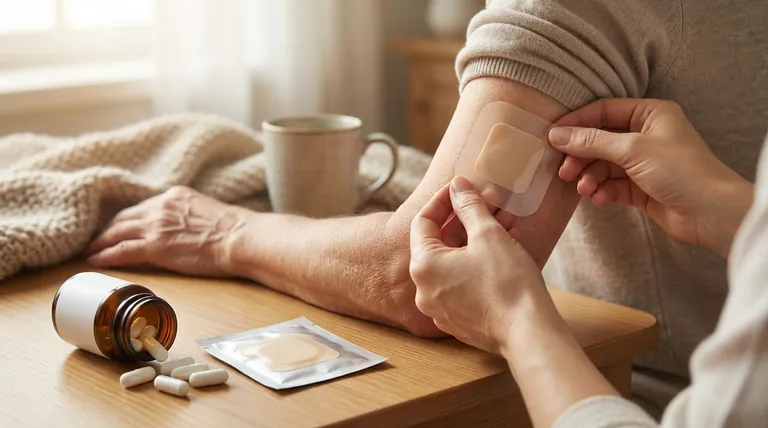
The Core Difference: How Delivery Method Changes Everything
The fundamental advantage of the transdermal patch lies in its method of delivery. By releasing medication steadily through the skin, it avoids many of the issues associated with oral administration.
Consistent Drug Delivery vs. Plasma Peaks
Oral capsules release their full dose at once, leading to sharp peaks and troughs in the drug concentration in your blood.
The transdermal patch provides a continuous and controlled 24-hour release of rivastigmine. This results in much lower plasma fluctuations and more consistent drug levels in the brain.
Bypassing First-Pass Metabolism
When a drug is taken orally, it passes through the digestive system and liver before entering the bloodstream, a process called first-pass metabolism, which can break down some of the medication.
The patch delivers the drug directly into the bloodstream through the skin, avoiding this process and allowing for a more efficient and predictable dose.
Achieving Efficacy More Reliably
The target-dose 9.5 mg/24-hour patch provides comparable drug exposure to the brain as the maximum recommended 12 mg/day oral dose.
Critically, a much higher percentage of patients are able to successfully reach and maintain this effective target dose on the patch (95.9%) compared to oral capsules (64.6%), largely due to the improved side effect profile.
A Clear Advantage in Tolerability and Ease of Use
For the person taking the medication and the person administering it, the practical benefits of the patch are often the most significant.
Minimizing Gastrointestinal Side Effects
The most common reason for stopping oral cholinesterase inhibitors is gastrointestinal distress.
Clinical data shows the rivastigmine patch is associated with three times fewer reports of nausea and vomiting compared to the capsules. This is a direct result of avoiding the digestive tract.
Simplifying the Daily Regimen
Oral rivastigmine requires twice-daily dosing, which can be a challenge for patients with memory impairment and a burden for caregivers.
The patch requires a simple, once-daily application. In clinical trials, this convenience led to 72% of caregivers stating they preferred the patch over the capsules.
A Faster Path to the Target Dose
The oral version requires a slow and careful increase in dosage to manage side effects, typically taking 12 weeks to reach the target dose.
The patch's improved tolerability allows for a much simpler and faster titration schedule, reaching the same target dose in just 4 weeks.
Understanding the Trade-offs
While the patch offers significant advantages, it's important to consider its unique characteristics to ensure it's the right choice.
Potential for Skin Irritation
By design, a transdermal patch interacts directly with the skin. This can lead to localized skin reactions, such as redness or itching, at the application site for some individuals.
Application and Adhesion
Proper application is essential for the patch to work correctly. It must be applied to clean, dry, and intact skin and must maintain good adhesion for the full 24 hours to deliver the correct dose.
Making the Right Choice for Your Goal
The decision between the transdermal patch and oral capsules should be based on the specific needs and challenges of the patient.
- If your primary focus is minimizing side effects: The patch is the clear choice, offering a threefold reduction in nausea and vomiting.
- If your primary focus is simplicity and adherence: The once-daily patch is often easier for patients and caregivers to manage consistently.
- If your primary focus is reaching an effective dose quickly: The patch's 4-week titration schedule gets patients to a therapeutic level much faster than the 12 weeks required for oral capsules.
Ultimately, the transdermal patch represents a more refined delivery system, designed to align therapeutic benefit with patient comfort and caregiver convenience.
Summary Table:
| Feature | Transdermal Patch | Oral Capsules |
|---|---|---|
| Dosing Frequency | Once-daily | Twice-daily |
| GI Side Effects (e.g., Nausea) | Significantly Reduced | More Common |
| Drug Delivery | Steady, 24-hour release | Peaks and Troughs |
| Time to Target Dose | ~4 weeks | ~12 weeks |
| Patient Preference (Caregiver Report) | 72% Preferred | - |
Partner with Enokon for Your Transdermal Patch Development
As a bulk manufacturer of reliable transdermal patches and pain plasters, Enokon provides healthcare and pharma distributors and brands with the technical expertise for custom R&D and development. Benefit from our experience to create effective, patient-preferred drug delivery solutions.
Contact our experts today to discuss your project requirements.
Visual Guide

Related Products
- Far Infrared Heat Pain Relief Patches Transdermal Patches
- Silicone Scar Sheets Patch Transdermal Drug Patch
- Menthol Gel Pain Relief Patch
- Icy Hot Menthol Medicine Pain Relief Patch
- Mugwort Wormwood Pain Relief Patch for Neck Pain
People Also Ask
- Why is the selection of matrix materials critical when developing customized transdermal patches? Optimize Efficacy
- What are the physical impacts of external heat exposure on the performance and safety of transdermal patches? - Guide
- What are the clinical advantages of local transdermal delivery systems? Unlock Safer, More Effective Pain Relief Solutions
- What role does a skin tolerance scoring system play in the safety evaluation of transdermal patches? Key Safety Metrics
- How does high-purity far-infrared ceramic powder contribute to the efficacy of far-infrared physical therapy patches?












