
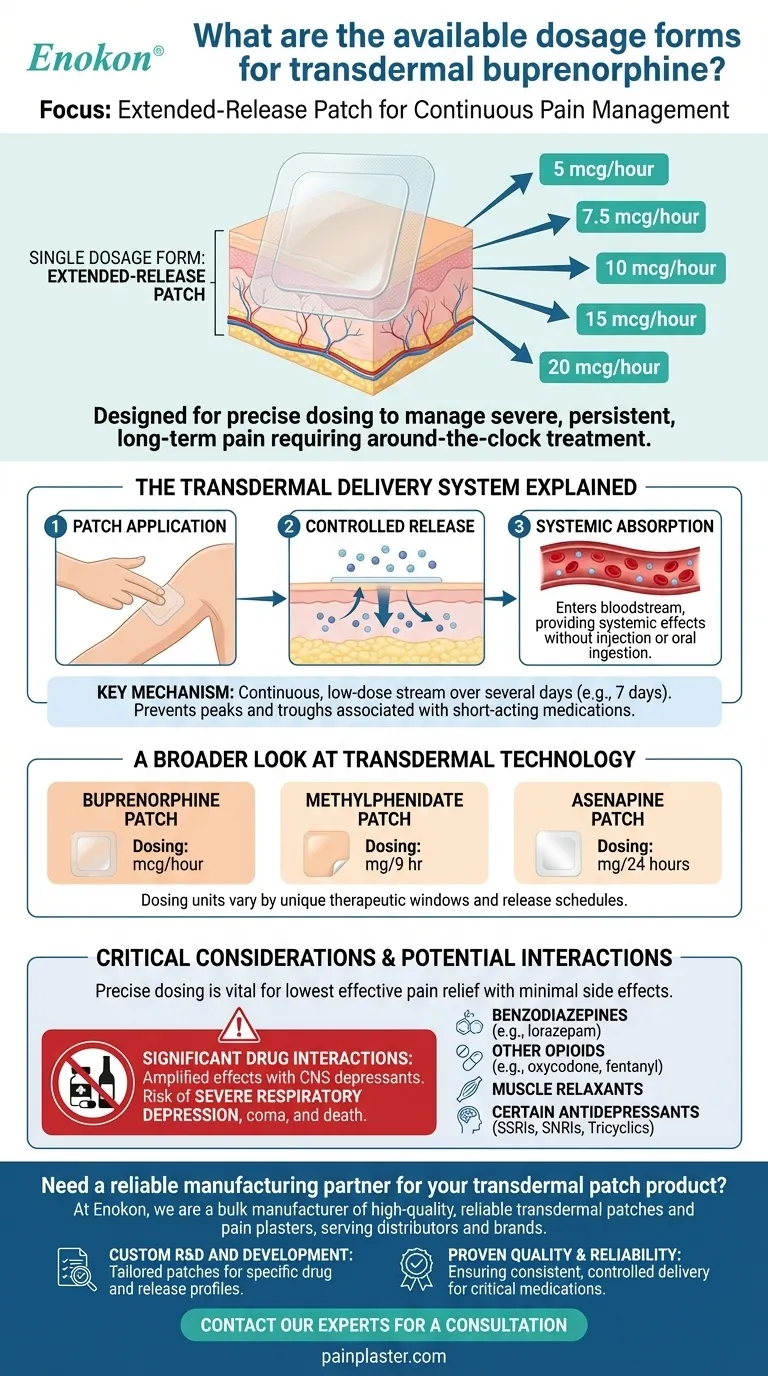
At its core, transdermal buprenorphine is available in a single dosage form: an extended-release patch. This patch is designed for application to the skin and comes in several specific strengths to allow for precise dosing: 5 mcg/hour, 7.5 mcg/hour, 10 mcg/hour, 15 mcg/hour, and 20 mcg/hour.
The key takeaway is that transdermal buprenorphine utilizes a sophisticated patch system to deliver a continuous, low-dose stream of medication through the skin. This design is specifically for managing persistent, long-term pain that requires around-the-clock treatment.
The Transdermal Delivery System Explained
How the Patch Works
A transdermal patch is a medicated adhesive film that is placed on the skin. It is engineered to release a specific medication, in this case buprenorphine, at a controlled rate.
The medication is absorbed through the skin layers and enters the bloodstream, providing systemic effects without requiring an injection or oral ingestion.
The Extended-Release Mechanism
Buprenorphine patches are classified as an extended-release system. This means they are designed to deliver the medication continuously over a prolonged period, typically several days.
This steady delivery helps maintain a stable concentration of the drug in the body, which is crucial for managing chronic pain effectively and avoiding the peaks and troughs associated with short-acting medications.
The Role of Buprenorphine
Buprenorphine is a potent opioid analgesic. Its use in a transdermal patch is reserved for patients with severe, persistent pain who require long-term, continuous opioid treatment and for whom other options are inadequate.
A Broader Look at Transdermal Technology
A Common Form, Different Drugs
The patch is a common form factor for many different types of transdermal medications.
For example, drugs like methylphenidate (for ADHD), asenapine (for schizophrenia), and testosterone are also available as extended-release patches, demonstrating the versatility of this delivery method.
Understanding Dosing Units
It is critical to note how dosing units vary between different transdermal products, as this reflects their unique therapeutic windows and release schedules.
Buprenorphine is measured in mcg/hour. In contrast, methylphenidate is dosed as mg/9 hr and asenapine as mg/24 hours. This highlights the importance of understanding the specific release rate and duration for each individual drug.
Critical Considerations and Potential Interactions
Why Precise Dosing Matters
The range of available strengths for buprenorphine patches allows healthcare providers to carefully titrate, or adjust, the dose to find the lowest effective amount for pain relief while minimizing side effects. This is not a one-size-fits-all treatment.
Significant Drug Interactions
Buprenorphine is a powerful medication that can have dangerous interactions with other substances. Its effects can be amplified when taken with other drugs that cause central nervous system (CNS) depression.
Key interacting drug classes include benzodiazepines (like lorazepam), other opioids (like oxycodone or fentanyl), muscle relaxants, and certain antidepressants (SSRIs, SNRIs, and tricyclics).
The Risk of Respiratory Depression
The primary danger of these interactions is severe CNS and respiratory depression. Combining buprenorphine with other depressants can lead to extreme sleepiness, dangerously slowed breathing, coma, and even death.
Full disclosure of all medications and substances, including over-the-counter drugs and alcohol, to the prescribing physician is absolutely essential for safety.
Making the Right Choice for Your Situation
The effective use of transdermal buprenorphine hinges on a clear understanding of its purpose and risks.
- If you are a healthcare provider: Your primary focus is on meticulous patient selection, screening for contraindications and interacting medications, and carefully titrating the dose to achieve pain control with the lowest possible risk.
- If you are a patient or caregiver: Your primary focus must be on strict adherence to the prescribed dosing schedule and providing a complete list of all other medications to your doctor to prevent dangerous interactions.
Ultimately, the transdermal patch offers a powerful method for managing chronic pain, but its safe application demands informed and diligent oversight.
Summary Table:
| Dosage Form | Strengths Available | Release Duration | Primary Use |
|---|---|---|---|
| Extended-Release Patch | 5, 7.5, 10, 15, 20 mcg/hour | Several days (e.g., 7 days) | Management of severe, persistent chronic pain |
Need a reliable manufacturing partner for your transdermal patch product?
At Enokon, we are a bulk manufacturer of high-quality, reliable transdermal patches and pain plasters. We specialize in serving healthcare and pharmaceutical distributors and brands.
Partner with us to benefit from:
- Custom R&D and Development: Leverage our technical expertise to develop patches tailored to your specific drug and release profile requirements.
- Proven Quality & Reliability: Ensure consistent, controlled delivery for critical medications like buprenorphine.
Let's discuss how we can support your product development and supply chain. Contact our experts today for a consultation.
Visual Guide
Related Products
- Far Infrared Heat Pain Relief Patches Transdermal Patches
- Silicone Scar Sheets Patch Transdermal Drug Patch
- Menthol Gel Pain Relief Patch
- Icy Hot Menthol Medicine Pain Relief Patch
- Mugwort Wormwood Pain Relief Patch for Neck Pain
People Also Ask
- Why is the selection of matrix materials critical when developing customized transdermal patches? Optimize Efficacy
- What are the physical impacts of external heat exposure on the performance and safety of transdermal patches? - Guide
- What are the clinical advantages of local transdermal delivery systems? Unlock Safer, More Effective Pain Relief Solutions
- What role does a skin tolerance scoring system play in the safety evaluation of transdermal patches? Key Safety Metrics
- How does high-purity far-infrared ceramic powder contribute to the efficacy of far-infrared physical therapy patches?













