
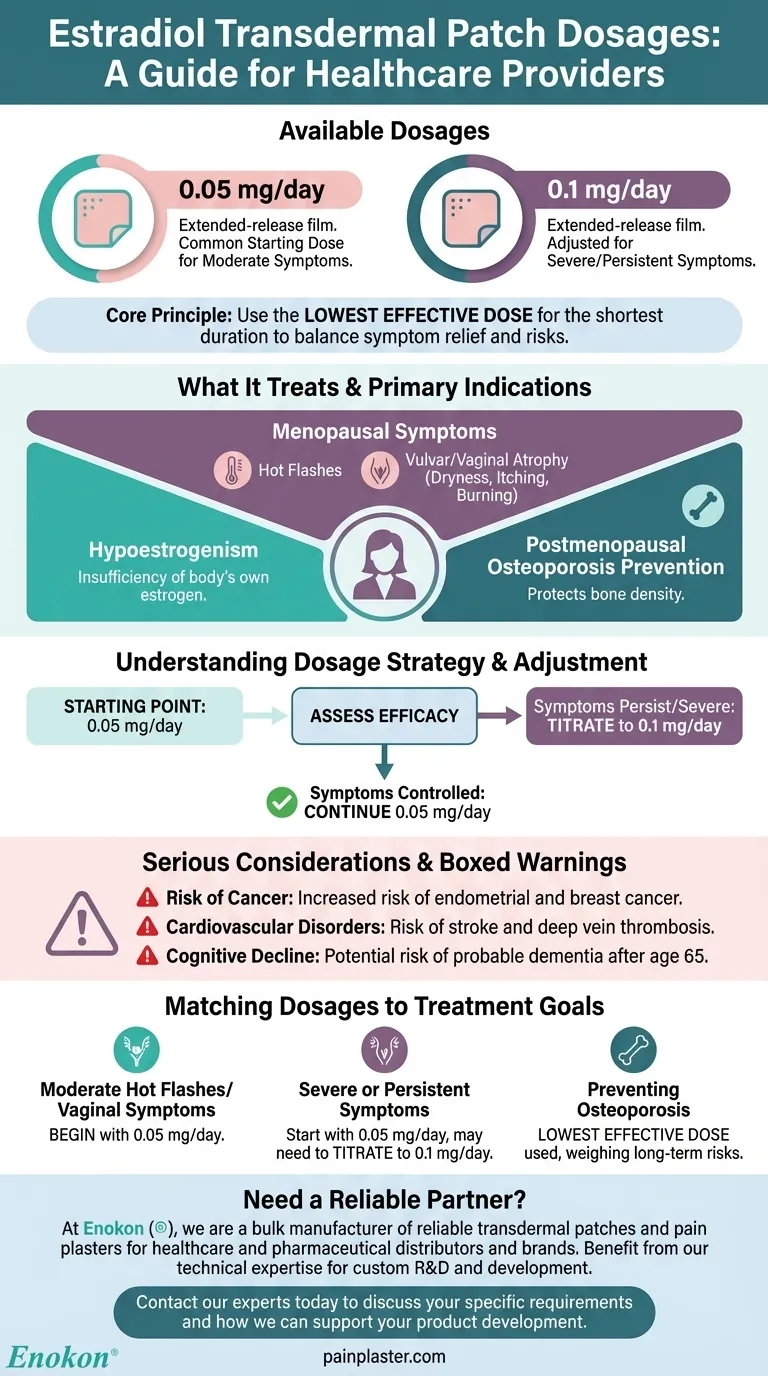
The available dosages for the estradiol transdermal patch are typically 0.05 milligrams per day (mg/day) and 0.1 mg/day. These patches are designed as extended-release films that deliver a consistent dose of estrogen through the skin.
The core principle of estradiol patch therapy is to use the lowest effective dose for the shortest duration necessary to achieve treatment goals, balancing symptom relief with potential health risks.

What is the Estradiol Patch and What Does It Treat?
The estradiol transdermal patch is a form of hormone replacement therapy. It belongs to the pharmacological class of medications known as estrogens.
Primary Indications
The primary use of the patch is to supplement the body's declining estrogen levels, most commonly associated with menopause.
Managing Menopausal Symptoms
It is prescribed to alleviate moderate-to-severe vasomotor symptoms, commonly known as hot flashes.
It is also effective for treating moderate-to-severe symptoms of vulvar and vaginal atrophy, such as dryness, itching, and burning.
Broader Estrogen-Related Conditions
Beyond typical menopausal symptoms, the patch is used to treat hypoestrogenism, a condition where the body does not produce enough estrogen on its own.
Additionally, it is approved for the prevention of postmenopausal osteoporosis, helping to protect bone density after menopause.
Understanding the Dosages
The choice between the 0.05 mg/day and 0.1 mg/day dosages is based on an individual's specific symptoms and medical needs.
The Starting Point
Treatment often begins with the 0.05 mg/day patch. This dose is frequently sufficient to manage symptoms effectively while minimizing exposure to the hormone.
Adjusting for Efficacy
If symptoms are not adequately controlled on the lower dose, a healthcare provider may increase the prescription to the 0.1 mg/day patch. The goal is always to find the minimum dose that provides relief.
Acknowledging the Serious Considerations
While effective, estradiol therapy carries significant risks that guide how it is prescribed and monitored. These are highlighted in the medication's boxed warnings.
Risk of Cancer
Estrogen therapy has been linked to an increased risk of endometrial cancer and breast cancer. This is a primary reason why treatment duration is carefully managed.
Cardiovascular Disorders
There is an established risk of cardiovascular events, including stroke and deep vein thrombosis, associated with estrogen use.
Cognitive Decline
Studies have also indicated a potential risk of probable dementia in postmenopausal women who begin hormone therapy after age 65.
How Dosages Are Matched to Treatment Goals
The correct dosage is a clinical decision made in partnership with your healthcare provider, based on your unique health profile and objectives.
- If your primary focus is managing moderate hot flashes or vaginal symptoms: Treatment will almost always begin with the lowest dose (0.05 mg/day) to assess effectiveness.
- If your primary focus is managing severe or persistent symptoms: Your provider may start with the 0.05 mg/day dose but may need to titrate up to the 0.1 mg/day patch for adequate relief.
- If your primary focus is preventing postmenopausal osteoporosis: The lowest effective dose will be used, and the decision will be weighed against the long-term risks of hormone therapy.
Ultimately, the goal is to create a personalized treatment plan that maximizes benefits while rigorously minimizing risks.
Summary Table:
| Dosage | Primary Use & Considerations |
|---|---|
| 0.05 mg/day | Common starting dose for moderate menopausal symptoms (hot flashes, vaginal dryness). Aims for effective relief with minimal hormone exposure. |
| 0.1 mg/day | Used for more severe or persistent symptoms if the lower dose is insufficient. Provides a higher level of estrogen supplementation. |
Need a reliable partner for your transdermal patch needs?
At Enokon, we are a bulk manufacturer of reliable transdermal patches and pain plasters for healthcare and pharmaceutical distributors and brands. If you are developing hormone replacement therapies or other transdermal solutions, benefit from our technical expertise for custom R&D and development.
Contact our experts today to discuss your specific requirements and how we can support your product development.
Visual Guide
Related Products
- Far Infrared Heat Pain Relief Patches Transdermal Patches
- Menthol Gel Pain Relief Patch
- Icy Hot Menthol Medicine Pain Relief Patch
- Silicone Scar Sheets Patch Transdermal Drug Patch
- Mugwort Wormwood Pain Relief Patch for Neck Pain
People Also Ask
- Why is the selection of matrix materials critical when developing customized transdermal patches? Optimize Efficacy
- What role does a skin tolerance scoring system play in the safety evaluation of transdermal patches? Key Safety Metrics
- How does high-purity far-infrared ceramic powder contribute to the efficacy of far-infrared physical therapy patches?
- Why is an optical microscope used for the quality assessment of transdermal patches? Ensure Safety & Matrix Integrity
- How do transdermal patches and delivery systems compare to oral administration? Achieve Stable Drug Release & Results



















