
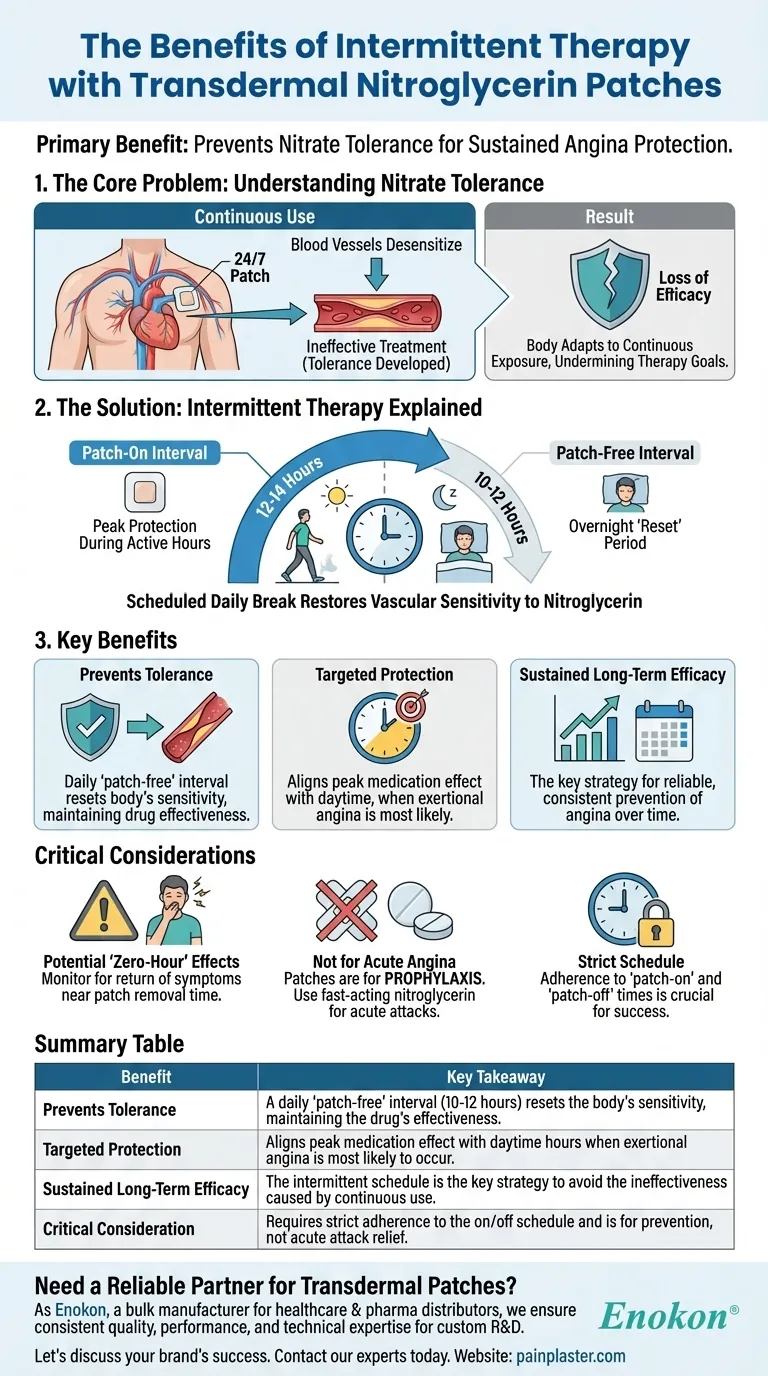
The primary benefit of intermittent therapy with transdermal nitroglycerin patches is to prevent the body from developing a tolerance to the medication. This strategy uses a daily "patch-free" period to ensure the drug remains effective at preventing angina attacks when you are most active.
The core challenge with continuous nitroglycerin use is that the body quickly becomes desensitized, rendering the treatment ineffective. Intermittent therapy solves this by scheduling a daily break, which restores the blood vessels' sensitivity to the medication.
The Core Problem: Understanding Nitrate Tolerance
To grasp the benefit of intermittent therapy, we first need to understand the problem it solves: nitrate tolerance. This is a common physiological response to continuous medication exposure.
How Nitroglycerin Works
Nitroglycerin functions as a vasodilator. It works by relaxing and widening the blood vessels in your body, particularly the coronary arteries that supply the heart. This action improves blood flow and oxygen supply to the heart muscle, preventing the chest pain known as angina.
The Body's Adaptive Response
When nitroglycerin is present in the bloodstream continuously, as with a 24-hour patch, the blood vessels adapt. They become less responsive to the drug's vasodilating effects. This phenomenon is known as nitrate tolerance.
The Consequence of Tolerance
Once tolerance develops, the nitroglycerin patch is no longer effective at preventing angina. Even though the patch is still delivering medication, your body no longer responds to it, completely undermining the goal of the therapy.
The Solution: Intermittent Therapy Explained
Intermittent therapy is a deliberate scheduling strategy designed specifically to counteract nitrate tolerance and maintain the medication's effectiveness over the long term.
Creating a "Patch-Free" Interval
This approach involves wearing the patch for a portion of the day (typically 12-14 hours) and then removing it for a "patch-free" interval of 10-12 hours.
Restoring Nitrate Sensitivity
This drug-free period allows the body's vascular system to "reset." By removing the constant presence of the drug, the blood vessels regain their sensitivity. When the patch is reapplied the next day, it will once again be effective at preventing angina.
Why the Interval is Typically Overnight
For most individuals, angina attacks are triggered by physical exertion or stress, which primarily occur during daytime waking hours. The overnight period is generally a time of rest with a lower risk of angina. Therefore, scheduling the patch-free interval overnight aligns the therapeutic benefit with the period of greatest need.
Understanding the Trade-offs and Considerations
While highly effective, the intermittent approach is not without important considerations that must be managed with a healthcare provider.
Potential for "Zero-Hour" Effects
For some patients, the end of the patch-on period can be associated with a return of symptoms. It is crucial to monitor how you feel as you approach the time for patch removal.
Not for Acute Angina Attacks
Transdermal patches are designed for prophylaxis, which means preventing attacks before they start. They are not a treatment for an angina attack already in progress. For acute relief, fast-acting nitroglycerin (like sublingual tablets or spray) is required.
The Importance of a Strict Schedule
Adherence to the prescribed "patch-on" and "patch-off" times is critical. Deviating from the schedule can either reduce the patch's effectiveness or fail to prevent tolerance from developing.
Making the Right Choice for Your Goal
The goal of nitroglycerin patch therapy is consistent, reliable prevention of angina. The intermittent schedule is the key to achieving this.
- If your primary focus is preventing exertional angina: The intermittent schedule is specifically designed to provide maximum protection during your most active hours.
- If your primary focus is long-term treatment efficacy: Adhering to the "patch-free" interval is the single most important factor in preventing nitrate tolerance.
- If you experience angina during the overnight patch-free period: You must consult your doctor, as your treatment plan may need to be adjusted or supplemented with other medications.
Ultimately, this structured approach ensures that nitroglycerin therapy remains a viable and effective tool for managing your condition over time.
Summary Table:
| Benefit | Key Takeaway |
|---|---|
| Prevents Tolerance | A daily 'patch-free' interval (10-12 hours) resets the body's sensitivity, maintaining the drug's effectiveness. |
| Targeted Protection | Aligns peak medication effect with daytime hours when exertional angina is most likely to occur. |
| Sustained Long-Term Efficacy | The intermittent schedule is the key strategy to avoid the ineffectiveness caused by continuous use. |
| Critical Consideration | Requires strict adherence to the on/off schedule and is for prevention, not acute attack relief. |
Need a reliable partner for your transdermal nitroglycerin patch supply?
As Enokon, a bulk manufacturer of reliable transdermal patches for healthcare and pharma distributors, we ensure consistent quality and performance. Our technical expertise supports custom R&D to meet specific formulation needs.
Let's discuss how we can support your brand's success. Contact our experts today to explore partnership opportunities.
Visual Guide
Related Products
- Far Infrared Heat Pain Relief Patches Transdermal Patches
- Silicone Scar Sheets Patch Transdermal Drug Patch
- Menthol Gel Pain Relief Patch
- Icy Hot Menthol Medicine Pain Relief Patch
- Mugwort Wormwood Pain Relief Patch for Neck Pain
People Also Ask
- Why is the selection of matrix materials critical when developing customized transdermal patches? Optimize Efficacy
- What are the physical impacts of external heat exposure on the performance and safety of transdermal patches? - Guide
- What role does a skin tolerance scoring system play in the safety evaluation of transdermal patches? Key Safety Metrics
- What are the clinical advantages of local transdermal delivery systems? Unlock Safer, More Effective Pain Relief Solutions
- How does high-purity far-infrared ceramic powder contribute to the efficacy of far-infrared physical therapy patches?



















