
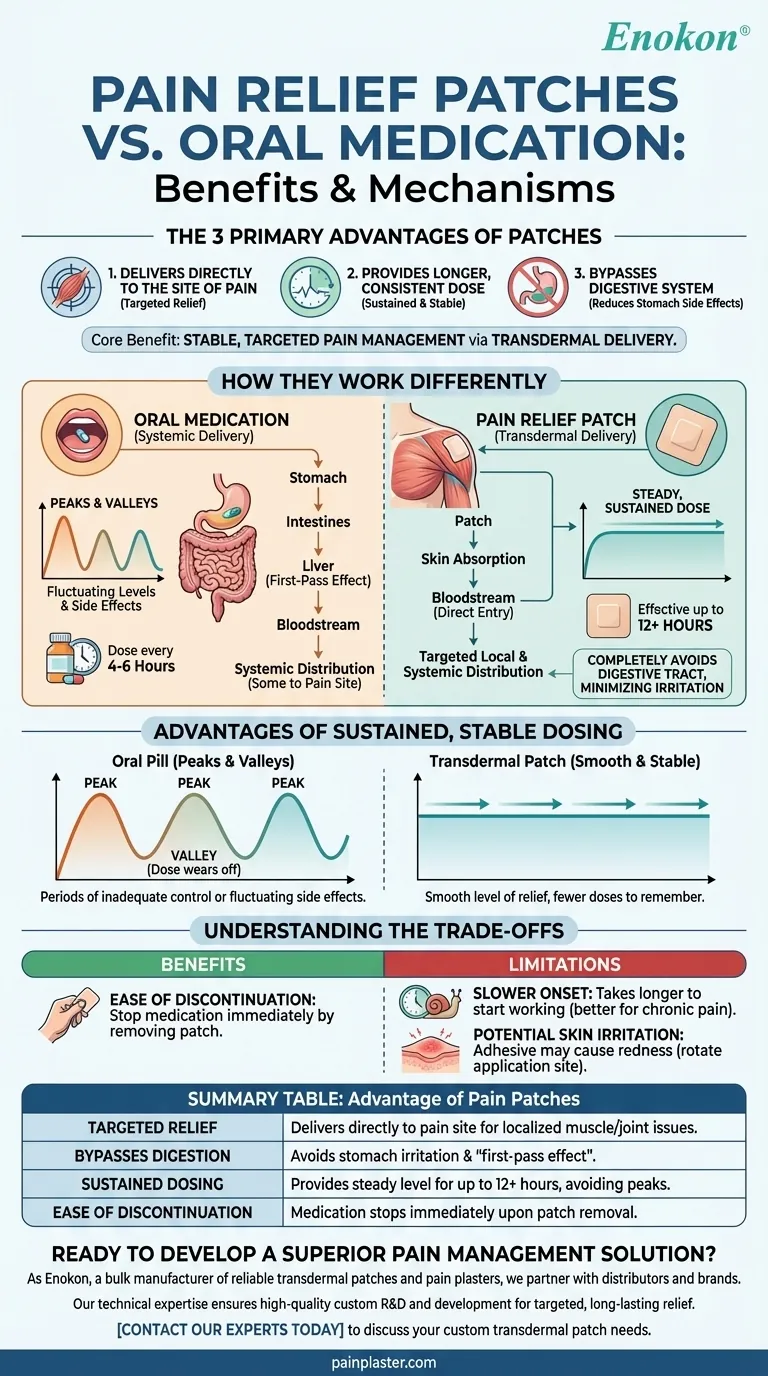
In short, pain relief patches offer three primary advantages over oral medication: they deliver medication directly to the site of pain, provide a much longer and more consistent dose, and bypass your digestive system, which can reduce certain side effects. This method, known as transdermal delivery, changes the fundamental way your body receives the medicine.
The core benefit of a pain patch is its ability to provide stable, targeted pain management. By delivering medication steadily through the skin, it avoids the inconsistent "peaks and valleys" of oral pills and minimizes exposure to your digestive tract.
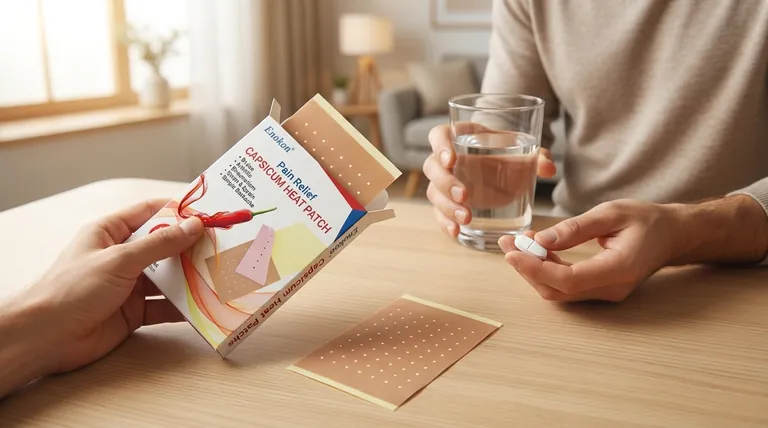
How Patches Deliver Medication Differently
The primary difference lies in the delivery route. Oral medications are swallowed and absorbed through the stomach and intestines, while patches deliver medication directly through the skin.
Targeted, Localized Relief
A patch is applied directly over the area of discomfort. This allows the active ingredient to concentrate precisely where it's needed, making it highly effective for localized muscle or joint pain.
Bypassing the Digestive System
Oral medications must pass through the stomach and liver before entering the bloodstream. This process can cause stomach irritation and can also reduce the drug's potency in what is known as the "first-pass effect".
Patches completely avoid this route, which is a significant benefit for individuals with sensitive stomachs or liver conditions.
Direct Entry to the Bloodstream
By absorbing through the skin, the medication enters the bloodstream directly. This allows for a more controlled and efficient delivery of the active ingredients throughout the body or to the local tissue.
The Advantage of Sustained, Stable Dosing
One of the most significant benefits of a patch is its ability to maintain a consistent level of medication in your body over a long period.
Avoiding Peaks and Valleys
Oral medications often create sharp spikes in drug concentration shortly after you take them, followed by a decline as the dose wears off. This can lead to periods of inadequate pain control or fluctuating side effects.
Transdermal patches release their medication slowly and continuously, creating a smooth and stable level of relief.
Longer-Lasting Effects
A single pain patch can remain effective for up to 12 hours or more. This is a stark contrast to many oral pain relievers, which often require a new dose every four to six hours.
This extended duration means fewer doses to remember, providing more consistent pain management, especially overnight.
Understanding the Trade-offs
While effective, pain patches are not a universal solution. It is critical to understand their limitations to determine if they are right for your specific situation.
Ease of Discontinuation
A unique safety benefit of patches is the ability to immediately stop the medication. If you experience an adverse effect, you can simply remove the patch to halt the delivery of the drug.
Slower Onset of Action
Because the medication must absorb through the skin, patches typically take longer to start working than oral pills. They are better suited for managing chronic or persistent pain rather than sudden, acute pain that requires immediate relief.
Potential for Skin Irritation
The adhesive on the patch can cause redness, itching, or irritation for some individuals, especially those with sensitive skin. It is often recommended to rotate the application site to minimize this risk.
Making the Right Choice for Your Pain
The best method for pain relief depends entirely on the nature of your pain and your health priorities.
- If your primary focus is managing chronic, consistent pain: A patch is often superior due to its long-lasting, stable-release formula.
- If your primary focus is treating localized muscle or joint pain: A patch provides excellent targeted relief directly at the source of the pain.
- If your primary focus is minimizing stomach-related side effects: A patch is the clear choice because it completely bypasses the digestive system.
- If your primary focus is rapid relief for acute pain: An oral medication may be more effective due to its faster onset of action.
Ultimately, understanding how each method works empowers you to choose the most effective tool for managing your pain.
Summary Table:
| Advantage of Pain Patches | How It Benefits You |
|---|---|
| Targeted Relief | Delivers medication directly to the site of pain for localized muscle or joint issues. |
| Bypasses Digestion | Avoids stomach irritation and the "first-pass effect" for individuals with sensitive stomachs. |
| Sustained Dosing | Provides a steady, consistent level of medication for up to 12+ hours, avoiding peaks and valleys. |
| Ease of Discontinuation | Medication delivery stops immediately upon patch removal if side effects occur. |
Ready to develop a superior pain management solution for your customers?
As Enokon, a bulk manufacturer of reliable transdermal patches and pain plasters, we partner with healthcare and pharmaceutical distributors and brands. Our technical expertise ensures high-quality custom R&D and development to create a product that delivers these exact benefits—targeted, long-lasting relief with minimal side effects.
Contact our experts today to discuss your custom transdermal patch needs.
Visual Guide
Related Products
- Icy Hot Menthol Medicine Pain Relief Patch
- Mugwort Wormwood Pain Relief Patch for Neck Pain
- Far Infrared Pain Patch Relief Pain Reliever for Back
- Menthol Gel Pain Relief Patch
- Far Infrared Deep Heat Relief Patches Medicated Pain Relief Patches
People Also Ask
- What alternatives exist for pain relief patches? Compare systemic meds & physical therapy
- Can the pain relief patch be used with oral pain relief products? Avoid Dangerous Drug Interactions
- What are the common side effects of pain relief patches? Risks & Safety Tips
- What should you consider when choosing between a pain relief patch and a cream? Key Factors for Effective Pain Management
- When should the pain relief patch not be used? Key Safety Rules to Avoid Risks



















