
The most common side effects of the nitroglycerin patch are directly related to how the medication works. You can typically expect headaches, dizziness or lightheadedness, flushing of the skin, and mild skin irritation at the application site. These effects are generally not severe and often lessen as your body adjusts to the treatment.
The key is to understand that while mild side effects like headaches are a frequent and often manageable sign the medication is active, it is critical to distinguish them from severe reactions that require immediate medical attention.

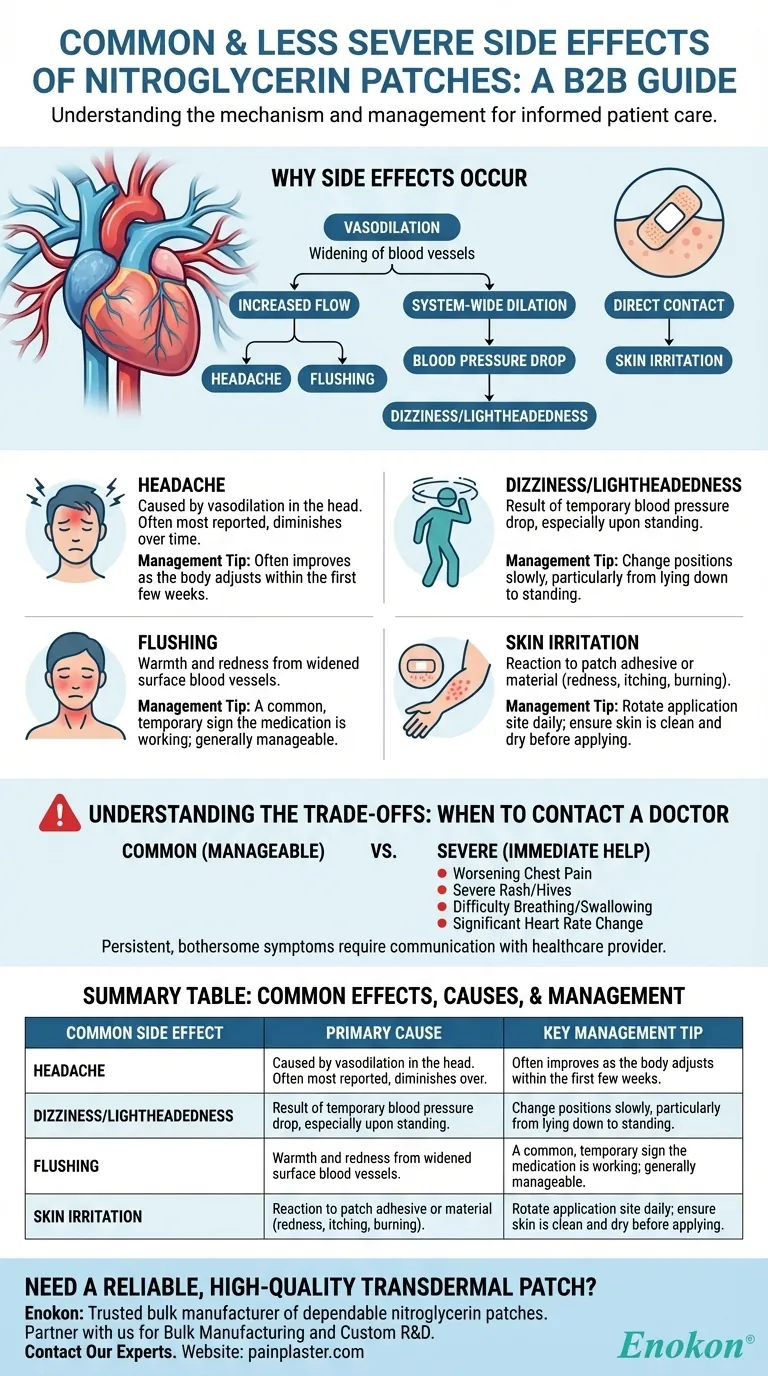
Why These Side Effects Occur
Nitroglycerin's primary function is to relax and widen blood vessels, a process called vasodilation. This improves blood flow to the heart, but it also affects blood vessels throughout your body, leading to the most common side effects.
The Vasodilation Effect: Headache and Flushing
When blood vessels in your head widen, the increased blood flow can cause a headache. This is often the most reported side effect, especially when first starting the medication.
Similarly, the widening of blood vessels close to the skin's surface can cause a feeling of warmth and a reddened appearance, known as flushing.
Blood Pressure Changes: Dizziness and Lightheadedness
Because nitroglycerin widens blood vessels system-wide, it can cause a temporary drop in blood pressure.
This effect is most noticeable when you change positions quickly, such as moving from lying down to standing up. This can lead to dizziness or a feeling of lightheadedness.
Direct Contact: Skin Irritation
The patch itself, including the adhesive, remains in direct contact with your skin for an extended period.
This can lead to localized reactions like redness, itching, burning, or a mild rash right where the patch was applied. This is a reaction to the patch itself, not a systemic effect of the drug.
Understanding the Trade-offs: When to Contact a Doctor
Knowing the difference between a common, manageable side effect and a sign of a serious problem is essential for your safety.
Persistent vs. Severe Symptoms
A mild headache that improves over time is expected. A severe, persistent headache is not.
Likewise, feeling slightly dizzy when you stand up can be normal. However, fainting, severe dizziness, or a very slow heartbeat are signs of a more serious issue.
Signs of a Serious Reaction
While common side effects are generally not cause for alarm, certain symptoms require immediate medical attention. These are not normal and could indicate a dangerous reaction.
Seek help immediately if you experience worsening chest pain, a severe rash or hives, difficulty breathing or swallowing, or a significant change in your heart rate.
The Importance of Communication
Always report side effects to your healthcare provider, even if they seem minor. If they persist or become particularly bothersome, your doctor may need to adjust your treatment plan.
How to Manage Common Side Effects
You can take simple steps to minimize the impact of the most common, less severe side effects.
- If your primary focus is managing headaches: Be aware that they often diminish within the first few weeks as your body adapts to the medication.
- If your primary focus is avoiding dizziness: Make a habit of changing positions slowly, especially when getting out of bed or standing up from a chair.
- If your primary focus is minimizing skin irritation: Rotate the location of your patch each day and ensure the skin is clean and dry before application.
Understanding these common effects empowers you to use your medication safely and effectively as part of a collaborative plan with your healthcare team.
Summary Table:
| Common Side Effect | Primary Cause | Key Management Tip |
|---|---|---|
| Headache | Vasodilation (widening of blood vessels in the head) | Often diminishes as your body adjusts to the medication. |
| Dizziness/Lightheadedness | Drop in blood pressure upon standing | Change positions slowly, especially when getting up. |
| Flushing | Vasodilation of blood vessels near the skin | This is a temporary and common sign the medication is working. |
| Skin Irritation | Reaction to the patch adhesive or material | Rotate the application site daily; apply to clean, dry skin. |
Need a reliable, high-quality transdermal patch?
As a trusted bulk manufacturer, Enokon provides pharmaceutical distributors and brands with dependable nitroglycerin patches and other transmedermal solutions. Our technical expertise ensures consistent performance and patient comfort.
Partner with us for:
- Bulk Manufacturing: Scalable production of reliable pain plasters and medicated patches.
- Custom R&D: Develop tailored transdermal solutions to meet your specific market needs.
Let's discuss your requirements → Contact Our Experts
Visual Guide
Related Products
- Herbal Medicated Anti Diarrhea Patch for Digestive Relief
- Menthol Gel Pain Relief Patch
- Lidocaine Hydrogel Pain Relief Patch for Pain Relief
- Asthma Cough and Pain Relief Patch for Adults and Kids
- Icy Hot Menthol Medicine Pain Relief Patch
People Also Ask
- What activities should be avoided while using this patch? Key Precautions for Safe & Effective Use
- What should be avoided when using the patch? Key Safety Tips for Herbal Patch Users
- What should be done if a patch falls off or a dose is missed? Quick Fixes & Safety Tips
- What should be done if a patch comes loose or falls off? Ensure Continuous & Effective Treatment
- What lifestyle factors should be considered with the patch? Ensure Safe and Effective Medication Delivery



















