
The most common side effects of transdermal methylphenidate are typically related to the application site and the drug's stimulant nature. These often include skin redness or itching where the patch was worn, sleep problems (insomnia), loss of appetite, and mood swings. While many side effects are manageable, it is crucial to be aware of less common but more severe risks.
The central challenge with transdermal methylphenidate is distinguishing between predictable, common side effects like skin irritation and the rare but serious cardiovascular, psychiatric, and circulatory events that require immediate medical attention.

Understanding the Common, Manageable Side Effects
These side effects are frequently encountered but can often be managed with guidance from your doctor.
Localized Skin Reactions
Because the medication is delivered through a patch, skin reactions are very common. You may notice redness, small bumps, or itching at the application site.
Appetite and Weight Changes
Methylphenidate is a stimulant that can significantly suppress appetite. This often leads to weight loss, which is a key reason doctors monitor growth, particularly in children.
Sleep Disturbances
Difficulty falling or staying asleep (insomnia) is a hallmark side effect of stimulant medications. The long-acting nature of the patch can sometimes exacerbate this issue.
Mood and Behavioral Shifts
Users may experience dizziness, mood swings, or an increase in tics, which are uncontrolled repetitive movements or sounds.
Recognizing Serious, Urgent Side Effects
While less common, these side effects warrant immediate medical attention. They often point to more dangerous underlying reactions to the medication.
Cardiovascular Risks
For individuals with pre-existing heart conditions or high blood pressure, there is a risk of serious events like heart attack, stroke, or sudden death. Seek emergency help for chest pain, trouble breathing, or feeling faint.
Psychiatric and Neurological Events
The medication can cause or worsen psychiatric conditions. Watch for signs of psychosis, such as hallucinations (seeing or hearing things that aren't there), paranoia, or aggression. Seizures and blurred vision also require urgent care.
Circulation Problems
Some users may develop symptoms of circulation issues in their fingers and toes (Raynaud's phenomenon). This can include numbness, pain, a cold feeling, unexplained wounds, or changes in skin color from pale to blue to red.
Severe Skin Reactions
Go beyond typical irritation. If you see significant redness, swelling, blistering, or changes in skin color where the patch was worn, contact a doctor immediately.
Priapism
In rare cases, males may experience painful or prolonged erections lasting four hours or more. This is a medical emergency that requires immediate attention to prevent long-term damage.
Key Considerations and Trade-offs
Understanding the full context of this medication is vital for making an informed decision with your healthcare provider.
The Risk of Dependence
Methylphenidate is a stimulant with habit-forming potential. It is crucial to use it exactly as prescribed to minimize the risk of dependence.
Impact on Growth in Children
Because it can suppress appetite and affect metabolism, the medication may slow a child's growth rate. Doctors will regularly monitor a child's height and weight during treatment.
Pre-existing Conditions Matter
The risk of serious side effects is significantly higher for individuals with a history of heart disease, heart defects, high blood pressure, or psychiatric disorders like psychosis.
How to Apply This Information
Your approach should be guided by the severity of the symptoms you observe.
- If you observe mild, common side effects (like minor skin redness or appetite loss): Discuss these with your doctor during regular check-ups to find management strategies.
- If side effects are persistent or worsening (like ongoing insomnia or significant weight loss): Contact your doctor promptly to see if an adjustment to your treatment is needed.
- If you experience any serious side effects (like chest pain, hallucinations, or circulation changes): Seek immediate medical attention, as these can signal a dangerous reaction.
Proactive monitoring and open communication with your healthcare provider are the keys to safely managing treatment with transdermal methylphenidate.
Summary Table:
| Side Effect Category | Common Examples | Urgent/Severe Examples |
|---|---|---|
| Application Site | Redness, itching, small bumps | Severe swelling, blistering, skin color changes |
| General/Systemic | Appetite loss, insomnia, mood swings | Chest pain, fainting, hallucinations, seizures |
| Other Specific | Weight loss, dizziness | Priapism (prolonged erection), circulation problems (Raynaud's) |
Need a reliable, high-quality transdermal patch? As Enokon, a bulk manufacturer of trusted transdermal patches and pain plasters, we provide healthcare and pharma distributors with custom R&D expertise to develop safe and effective products. Let's discuss your needs. Contact our experts today to explore how we can support your brand.
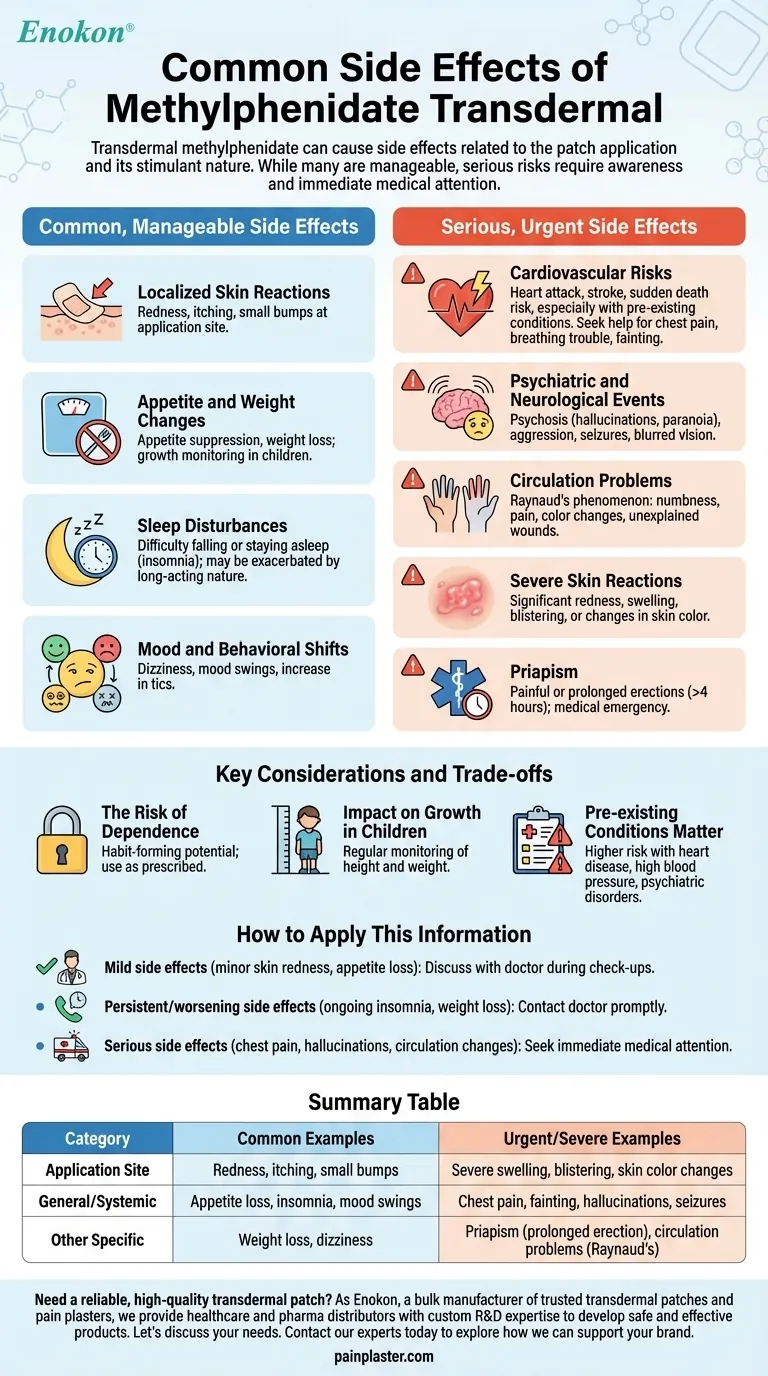
Visual Guide
Related Products
- Menthol Gel Pain Relief Patch
- Far Infrared Heat Pain Relief Patches Transdermal Patches
- Silicone Scar Sheets Patch Transdermal Drug Patch
- Icy Hot Menthol Medicine Pain Relief Patch
- Mugwort Wormwood Pain Relief Patch for Neck Pain
People Also Ask
- How effective are pain relief patches for muscle pain? Target Localized Pain with Transdermal Delivery
- How do pain relief patches compare to other pain relief methods? Discover Targeted, Long-Lasting Relief
- Who should consult a healthcare professional before using pain relief patches? Ensure Your Safety with Medical Advice
- Can pregnant women use pain relief patches? Your Essential Guide to Safe Pain Management
- What are some common applications of pain relief patches? Effective Relief for Muscle & Joint Pain















