
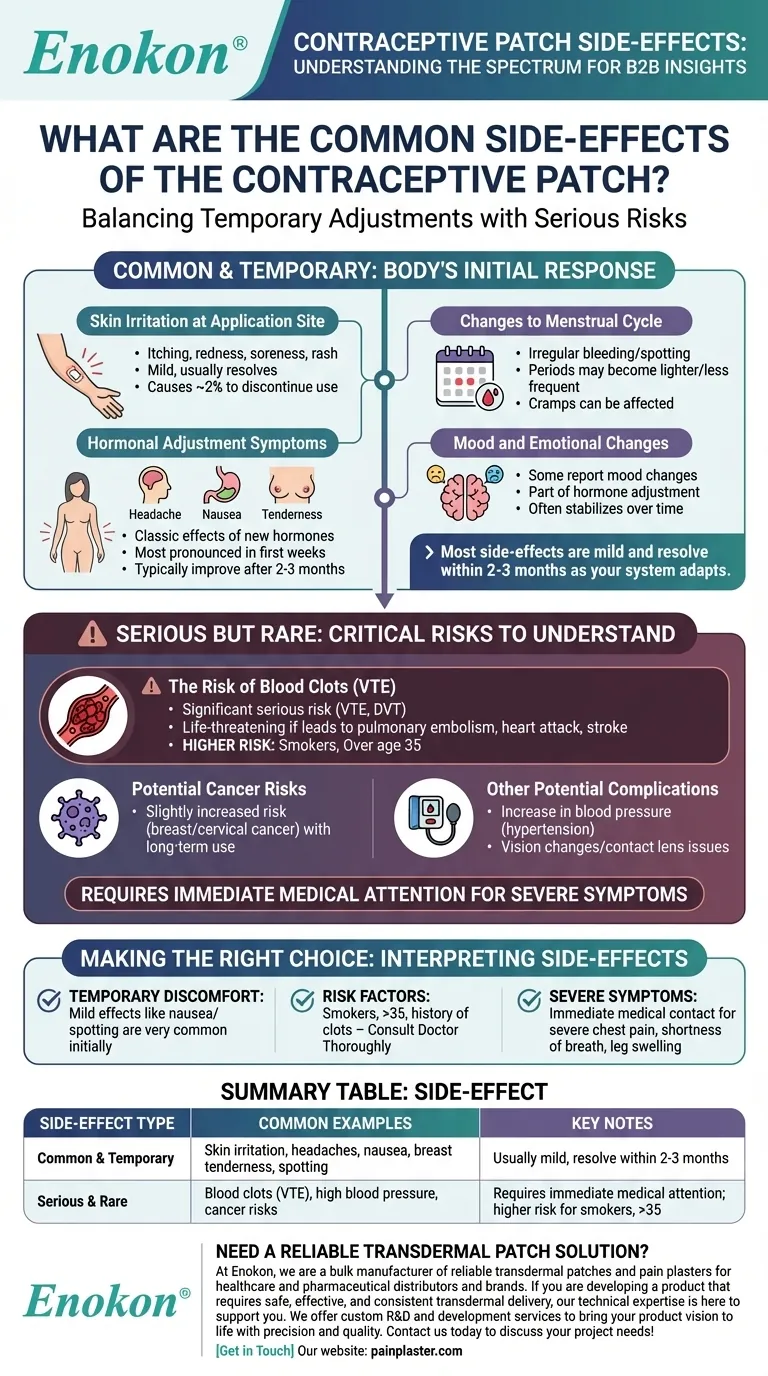
The most common side-effects of the contraceptive patch are typically mild and related to your body adjusting to the hormones. These often include skin irritation where the patch is applied, breast tenderness, headaches, nausea, and irregular bleeding or spotting between periods.
While many users experience temporary side-effects like nausea or headaches that resolve within two to three months, the most critical distinction to understand is between these common adjustments and the rare but serious risks, such as blood clots.

Unpacking the Common Side-Effects
Most side-effects are your body's initial response to the new levels of estrogen and progestin. They are often temporary as your system adapts.
Skin Irritation at the Application Site
This is a side-effect unique to the patch delivery method. You may experience itching, redness, soreness, or a rash directly where the patch is placed.
This irritation is common but usually mild. However, for about 2 in 100 women, it can be significant enough to lead them to stop using the patch.
Hormonal Adjustment Symptoms
Headaches, nausea, and breast tenderness are classic side-effects when starting many forms of hormonal contraception.
These symptoms are most pronounced in the first few weeks and typically improve significantly after the second or third month of consistent use.
Changes to Your Menstrual Cycle
It is very common to experience changes in your bleeding patterns. This can include spotting or light bleeding between your expected periods.
Your periods may also become lighter, less frequent, or stop altogether while using the patch. Menstrual cramps or pain can also be affected.
Mood and Emotional Changes
Some individuals report mood changes or mood disorders while using the patch. This is another effect of your body adjusting to the hormones and often stabilizes over time.
Understanding the Serious but Rare Risks
While uncommon, the contraceptive patch carries serious risks that are critical to understand, especially for individuals with certain health factors.
The Risk of Blood Clots (VTE)
The most significant serious risk is an increased chance of developing blood clots, also known as venous thromboembolism (VTE).
A blood clot can be life-threatening if it leads to a pulmonary embolism (in the lung), myocardial infarction (heart attack), or cerebrovascular accident (stroke).
This risk is notably higher for individuals who smoke or are over the age of 35.
Potential Cancer Risks
Some evidence suggests that long-term use of combined hormonal contraceptives, including the patch, may be associated with a slightly increased risk of breast and cervical cancer.
Other Potential Complications
In some cases, the patch can lead to an increase in blood pressure (hypertension). Vision changes or difficulty wearing contact lenses have also been reported.
Making the Right Choice for Your Health
Knowing how to interpret potential side-effects is key to using the patch safely and confidently.
- If your primary focus is managing temporary discomfort: Understand that mild side-effects like nausea and spotting are very common in the first three months and usually resolve on their own.
- If you have risk factors (e.g., you smoke, are over 35, or have a history of blood clots): You must have a thorough discussion with your doctor, as the patch may not be your safest contraceptive option.
- If you experience any severe or alarming symptoms: Immediately contact a healthcare provider if you have severe chest pain, shortness of breath, sudden severe headaches, or swelling and pain in your leg.
Understanding the difference between your body's temporary adjustment and a sign of a serious issue empowers you to make the best decisions for your health.
Summary Table:
| Side-Effect Type | Common Examples | Key Notes |
|---|---|---|
| Common & Temporary | Skin irritation, headaches, nausea, breast tenderness, spotting | Usually mild and resolve within 2-3 months as the body adjusts. |
| Serious & Rare | Blood clots (VTE), increased blood pressure, potential cancer risks | Requires immediate medical attention; higher risk for smokers and those over 35. |
Need a Reliable Transdermal Patch Solution?
At Enokon, we are a bulk manufacturer of reliable transdermal patches and pain plasters for healthcare and pharmaceutical distributors and brands. If you are developing a product that requires safe, effective, and consistent transdermal delivery, our technical expertise is here to support you.
We offer custom R&D and development services to bring your product vision to life with precision and quality.
Contact us today to discuss your project needs! Get in Touch
Visual Guide
Related Products
- Heating Pain Relief Patches for Menstrual Cramps
- Prostate Pain Kidney Health Care Patch for Men
- Silicone Scar Sheets Patch Transdermal Drug Patch
- Lidocaine Hydrogel Pain Relief Patch for Pain Relief
- Menthol Gel Pain Relief Patch
People Also Ask
- What are the benefits of Period Pain Heat Patches? Drug-Free, On-the-Go Relief
- What are the key benefits of heating patches for elderly individuals? Relieve Pain & Improve Mobility
- What are the different types of heat patches? Find the Right Pain Relief for Your Needs
- What are the key differences between conventional heat patches and deep heat devices? Choosing the Right Pain Relief Solution
- What percentage of people with back pain use heat patches for relief? Discover the Popular Choice for Pain Management













