
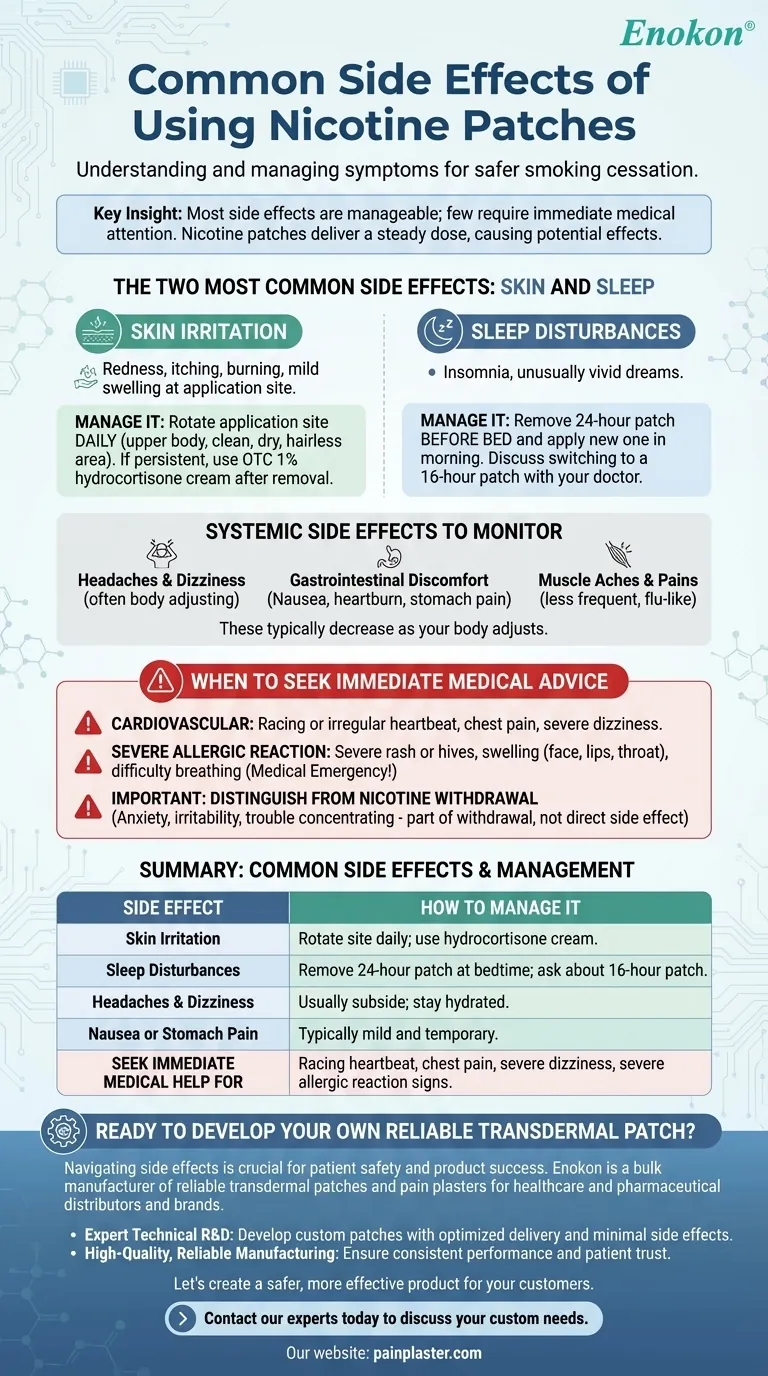
The most common side effects of nicotine patches are localized skin irritation where the patch is applied and sleep disturbances, such as insomnia or vivid dreams. Other frequently reported effects include headaches, dizziness, and nausea, which are typically mild and often decrease as your body adjusts.
While nicotine patches are a proven tool for smoking cessation, they work by delivering a steady dose of nicotine, which can cause side effects. The key is understanding that most are manageable, while a few specific symptoms require immediate medical attention.

The Two Most Common Side Effects: Skin and Sleep
The most frequent complaints are directly related to how the patch works: continuous delivery of nicotine through your skin, 24 hours a day.
Managing Skin Irritation
The single most common side effect is a reaction at the application site. This can include redness, itching, burning, or mild swelling.
These reactions are usually mild and tend to resolve within a few days. To manage this, it is critical to rotate the application site each day, choosing a clean, dry, and hairless area on your upper body.
If irritation persists, an over-the-counter 1% hydrocortisone cream can often provide relief after you remove the patch.
Addressing Sleep Disturbances
Because many patches deliver nicotine for a full 24 hours, they can interfere with your sleep patterns.
This commonly manifests as insomnia or unusually vivid dreams. Your brain is receiving a stimulant while it's trying to rest.
The simplest solution is to remove the patch before you go to bed and apply a new one in the morning. You can also speak with your doctor about switching to a 16-hour patch designed specifically for daytime use.
Systemic Side Effects to Monitor
As nicotine is absorbed into your bloodstream, it can cause effects throughout your body, though these are typically less common than skin or sleep issues.
Headaches and Dizziness
Headaches and a feeling of dizziness are fairly common when first starting the patch. This is often your body adjusting to a different level and delivery method of nicotine than it received from smoking.
Gastrointestinal Discomfort
Some users report mild nausea, heartburn, or stomach pain. These symptoms often subside after the first few days of use.
Muscle Aches and Pains
General muscle aches, similar to what you might feel with a mild flu, can also occur but are less frequent.
Understanding the Trade-offs: When to Seek Medical Advice
While most side effects are mild, it is crucial to recognize the signs that require you to stop using the patch and consult a healthcare professional.
Cardiovascular Symptoms
Nicotine is a stimulant that affects your heart and blood vessels. Do not ignore these symptoms.
If you experience a racing or irregular heartbeat, chest pain, or severe dizziness, stop using the patch immediately and contact your doctor. These can be signs of a serious reaction.
Signs of a Severe Allergic Reaction
Though rare, a true allergic reaction is a medical emergency.
Look for symptoms like a severe rash or hives, swelling (especially of the face, lips, or throat), or difficulty breathing. Seek immediate medical attention if any of these occur.
Overlapping with Nicotine Withdrawal
It is important to distinguish side effects from symptoms of nicotine withdrawal. Feelings of anxiety, irritability, and trouble concentrating can be part of the withdrawal process itself, not a direct side effect of the patch.
Making the Right Choice for Your Health
Knowing how to respond to side effects is key to using the nicotine patch successfully and safely on your journey to quit smoking.
- If your primary issue is skin irritation: Rotate the application site daily and never reuse the same spot for at least a week.
- If you are experiencing insomnia or vivid dreams: Remove the 24-hour patch before bed or ask your doctor about a 16-hour patch.
- If you feel a racing heartbeat, chest pain, or severe dizziness: This is not a normal side effect; stop using the patch and consult your healthcare provider immediately.
Understanding these potential effects empowers you to use this tool effectively and safely.
Summary Table:
| Common Side Effect | How to Manage It |
|---|---|
| Skin Irritation (redness, itching) | Rotate application site daily; use hydrocortisone cream. |
| Sleep Disturbances (insomnia, vivid dreams) | Remove 24-hour patch at bedtime; ask about a 16-hour patch. |
| Headaches & Dizziness | Usually subside as your body adjusts. Stay hydrated. |
| Nausea or Stomach Pain | Typically mild and temporary. |
| Seek Immediate Medical Help For | Racing heartbeat, chest pain, severe dizziness, or signs of a severe allergic reaction (e.g., difficulty breathing). |
Ready to Develop Your Own Reliable Transdermal Patch?
Navigating side effects is crucial for patient safety and product success. Enokon is a bulk manufacturer of reliable transdermal patches and pain plasters for healthcare and pharmaceutical distributors and brands.
Partner with us to benefit from:
- Expert Technical R&D: Leverage our deep expertise to develop custom patches with optimized drug delivery and minimal side effects.
- High-Quality, Reliable Manufacturing: Ensure consistent performance and patient trust with our bulk production capabilities.
Let's create a safer, more effective product for your customers.
Contact our experts today to discuss your custom transdermal patch development needs.
Visual Guide
Related Products
- Menthol Gel Pain Relief Patch
- Capsaicin Chili Medicated Pain Relief Patches
- Icy Hot Menthol Medicine Pain Relief Patch
- Lidocaine Hydrogel Pain Relief Patch for Pain Relief
- Mugwort Wormwood Pain Relief Patch for Neck Pain
People Also Ask
- How do pain relief patches compare to other pain relief methods? Discover Targeted, Long-Lasting Relief
- How effective are pain relief patches for muscle pain? Target Localized Pain with Transdermal Delivery
- Who should consult a healthcare professional before using pain relief patches? Ensure Your Safety with Medical Advice
- What are some common applications of pain relief patches? Effective Relief for Muscle & Joint Pain
- What are pain relief patches and how do they work? Discover Non-Invasive Pain Management

















