Voltaren Gel, a topical NSAID containing diclofenac, is widely used for localized pain relief but carries several common side effects. These primarily affect the skin at the application site (e.g., irritation, redness) but may also include systemic reactions like gastrointestinal discomfort. While convenient as an OTC option, users should follow precautions to minimize adverse effects and avoid misuse.

Key Points Explained:
-
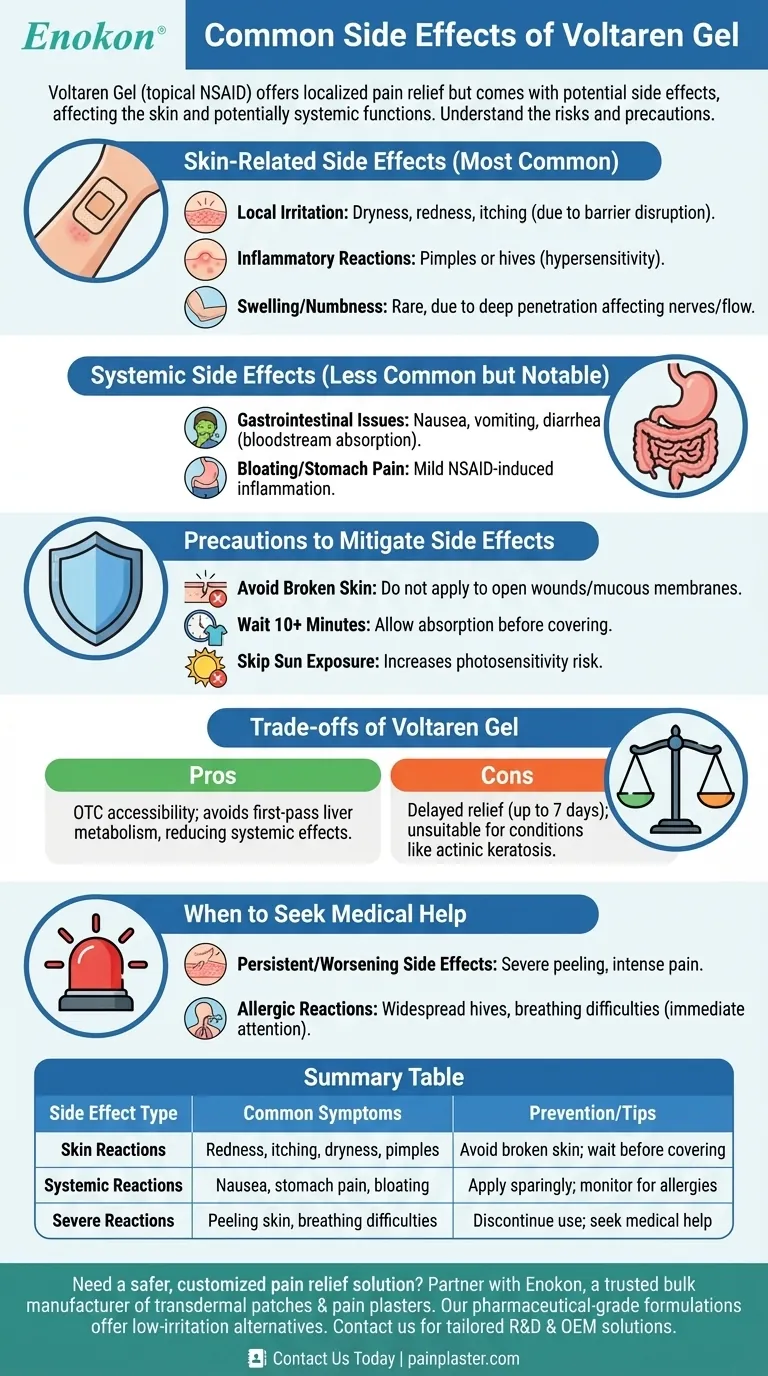
Skin-Related Side Effects (Most Common)
- Local irritation: Dryness, redness, and itching occur due to the gel’s active ingredient disrupting skin barrier function.
- Inflammatory reactions: Pimples or hives may develop from hypersensitivity to diclofenac or gel additives.
- Swelling/numbness: Rare but possible if the gel penetrates deeply, affecting nerve endings or blood flow.
-
Systemic Side Effects (Less Common but Notable)
- Gastrointestinal issues: Nausea, vomiting, or diarrhea can occur if diclofenac is absorbed into the bloodstream, irritating the stomach lining.
- Bloating/stomach pain: Reflects mild NSAID-induced gastrointestinal inflammation, though less likely than with oral forms.
-
Precautions to Mitigate Side Effects
- Avoid applying to broken skin or mucous membranes to reduce absorption and irritation.
- Wait 10+ minutes before covering the area with clothing to prevent excessive absorption or occlusion-related reactions.
- Skip sun exposure post-application, as diclofenac increases photosensitivity risk.
-
Trade-offs of Voltaren Gel
- Pros: OTC accessibility avoids first-pass liver metabolism, reducing systemic side effects compared to oral NSAIDs.
- Cons: Delayed relief (up to 7 days) and unsuitability for certain conditions (e.g., actinic keratosis) limit its use cases.
-
When to Seek Medical Help
- If side effects persist or worsen (e.g., severe skin peeling, intense abdominal pain), discontinue use and consult a healthcare provider.
- Monitor for allergic reactions (e.g., widespread hives, difficulty breathing), which require immediate attention.
For optimal safety, always apply the gel sparingly and adhere to dosage guidelines—balancing its convenience with mindful usage.
Summary Table:
| Side Effect Type | Common Symptoms | Prevention/Tips |
|---|---|---|
| Skin Reactions | Redness, itching, dryness, pimples | Avoid broken skin; wait before covering |
| Systemic Reactions | Nausea, stomach pain, bloating | Apply sparingly; monitor for allergies |
| Severe Reactions | Peeling skin, breathing difficulties | Discontinue use; seek medical help |
Need a safer, customized pain relief solution? Partner with Enokon, a trusted bulk manufacturer of transdermal patches and pain plasters. Our expertise in pharmaceutical-grade formulations ensures effective, low-irritation alternatives to topical gels. Contact us today for tailored R&D support and OEM solutions for your healthcare brand or distribution network.
Visual Guide
Related Products
- Menthol Gel Pain Relief Patch
- Lidocaine Hydrogel Pain Relief Patch for Pain Relief
- Medical Cooling Gel Patches for Fever Cooling Patches
- Herbal Pain Relief Cream Pain Relieving Creams
- Icy Hot Menthol Medicine Pain Relief Patch
People Also Ask
- How effective are pain relief patches for muscle pain? Target Localized Pain with Transdermal Delivery
- How do pain relief patches compare to other pain relief methods? Discover Targeted, Long-Lasting Relief
- Who should consult a healthcare professional before using pain relief patches? Ensure Your Safety with Medical Advice
- Can pregnant women use pain relief patches? Your Essential Guide to Safe Pain Management
- What are some common applications of pain relief patches? Effective Relief for Muscle & Joint Pain